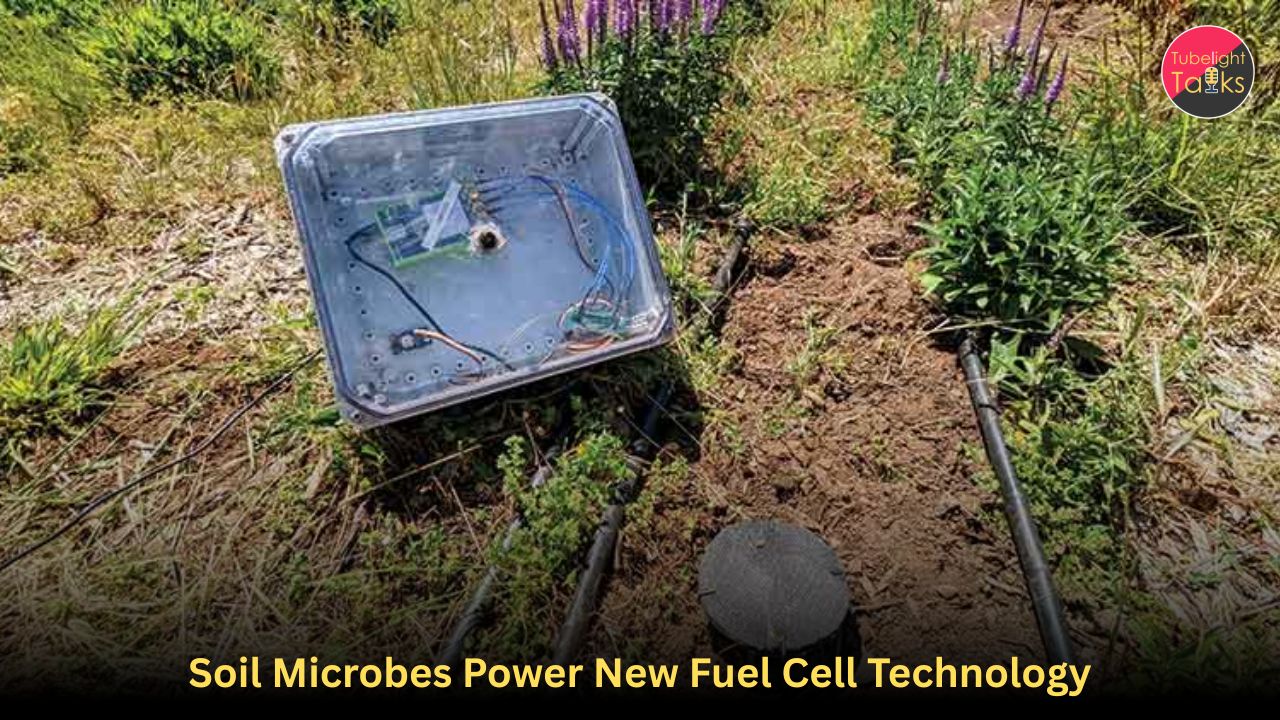
Microbial Batteries Use Soil to Generate Clean Electricity
Researchers have developed microbial fuel cell systems that use naturally occurring soil microbes to generate electricity. These soil-powered devices can support low-power sensors used in agriculture and environmental monitoring, reducing dependence on traditional batteries and solar panels.
How Soil Microbial Fuel Cells Work
Soil microbes break down organic matter and release electrons during metabolism. A microbial fuel cell captures those electrons through electrodes and converts them into usable electrical energy.
Powering Smart Agriculture
The technology can power underground sensors that monitor soil moisture, touch, temperature or other field conditions. This is especially useful where battery replacement is costly or solar panels are impractical.
Also Read: Scientists Solve the 200-Year-Old Dolomite Problem
Long-Term Sensor Operation
A 2026 Journal of Power Sources study introduced a self-powered soil sensor system based on soil microbial fuel cells. The system operated reliably for more than 250 days without external power input.
Why This Matters for Farmers
Precision agriculture depends on sensors, but maintaining batteries across large fields is difficult. Soil-powered sensors could make smart farming cheaper, cleaner and easier to scale.
Environmental Benefits
Traditional batteries can create waste and chemical leakage risks. Microbial fuel cells offer a low-maintenance, renewable and soil-integrated power source for low-energy devices.
Nature-Based Innovation
Sant Rampal Ji Maharaj teaches that nature should be respected and used responsibly. Soil-powered energy reflects how scientific understanding of nature can create sustainable solutions when guided by care and restraint.
Call to Action
Researchers, farmers and startups should explore microbial power for smart agriculture, while ensuring that deployment remains safe, affordable and farmer-friendly.
FAQs: Soil Microbes Power New Fuel Cell Technology
Q1. What is a microbial battery?
It is a device that uses microbes to generate electricity.
Q2. Does it use ordinary soil?
Yes, it uses naturally occurring microbes in soil.
Q3. What can it power?
Low-power sensors for agriculture and environmental monitoring.
Q4. Can it replace all batteries?
No, it is mainly useful for small, low-energy devices.
Q5. Why is it important?
It can reduce battery waste and support smart farming.
Related Stories










Discussion (0)