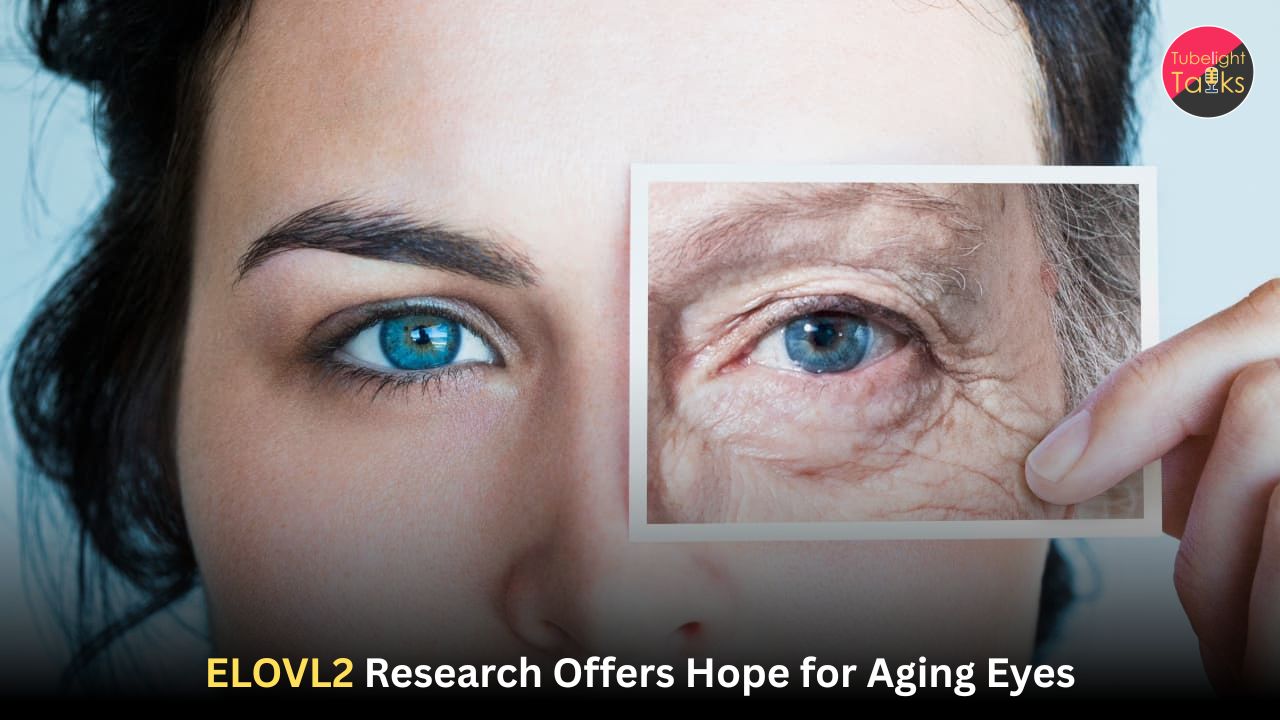
ELOVL2 Aging Gene Research Offers Hope for Vision Loss
Scientists at UC Irvine have reported promising research into age-related vision decline by targeting the ELOVL2 aging gene and restoring specific fatty acids in the retina. Experiments in mice showed improved visual function after supplementation with certain polyunsaturated fatty acids, though human treatments are not yet established.
What Is ELOVL2?
ELOVL2 is a gene involved in producing long and very-long-chain polyunsaturated fatty acids in the retina. These fatty acids help maintain healthy retinal function and visual signalling.
Why Vision Declines With Age
As people age, lipid metabolism changes in the retina. Lower levels of important fatty acids may contribute to reduced retinal function and age-related macular degeneration-like changes.
Also Read: Reversible Male Birth Control Research Enters a New Phase
Fatty Acid Supplementation in Mice
UC Irvine researchers found that supplementing aged mice with specific retinal fatty acids improved visual function. Importantly, the effect was not simply achieved by DHA alone, suggesting a more targeted lipid strategy may be needed.
Potential Link to AMD
Age-related macular degeneration is a major cause of vision loss. The research suggests ELOVL2-related pathways may help identify risk and guide future therapies, but clinical translation will require careful testing.
Research Is Still Preclinical
The results are exciting but remain early-stage. Mouse success does not automatically mean human success. Safety, delivery method, dosing and long-term outcomes must be evaluated.
Healing With Responsibility
Medical science can reduce suffering, but it must proceed with patience and ethics. Sant Rampal Ji Maharaj teaches that human welfare and truth should guide all actions. Health discoveries should never be exaggerated before proof.
Call to Action
People with vision problems should consult an eye specialist and avoid unapproved supplements or injections. Researchers should continue careful trials for age-related eye disease.
FAQs: ELOVL2 Research Offers Hope for Aging Eyes
Q1. What did UC Irvine researchers discover?
They found that specific fatty acids improved age-related vision decline in mice.
Q2. What is ELOVL2?
It is an aging-linked gene involved in retinal fatty acid production.
Q3. Is this treatment available for humans?
No, it is not an approved human treatment yet.
Q4. Does DHA alone solve the problem?
The study suggests DHA alone may not be sufficient.
Q5. Could it help macular degeneration?
It may guide future AMD therapies, but more research is needed.
Related Stories










Discussion (0)