
Sona Group Dispute: Supreme Court Urges Rani and Priya Kapur to Opt for Mediation
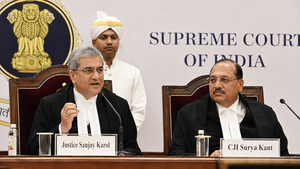
On April 28, 2026, the Supreme Court of India intervened in the long-standing legal battle surrounding the Sona Group’s family trust and the estate of the late industrialist Sunjay Kapur. The bench, recognizing the complexity and personal nature of the dispute between Rani and Priya Kapur, formally suggested that both parties explore mediation as a means of reaching a final settlement.
This recommendation underscores a broader judicial trend in India, where the highest court encourages alternative dispute resolution to preserve family relationships and prevent the clogging of the judicial system with decades-long litigation.
The Origins of the Sona Group Estate Battle
The dispute began following the passing of Sunjay Kapur, a prominent figure in the Indian automotive components industry. The legal friction centers on the interpretation of family trusts and the distribution of substantial assets within the Sona Group. Both Rani and Priya Kapur have presented conflicting claims regarding the management of these trusts and the intended succession plan outlined in the estate documents. Over the past several years, the case has moved through various lower courts, accumulating thousands of pages of testimony and legal arguments.
Why the Supreme Court Recommended Mediation
The bench noted that family disputes, particularly those involving multi-generational trusts and significant corporate stakes, are often better resolved through dialogue rather than adversarial litigation. The court expressed concern that continued legal warfare would not only deplete the estate’s resources but also cause irreparable damage to the reputation of the Sona Group. Mediation allows the parties to negotiate in a private, confidential setting, away from the public glare that typically accompanies high-profile Supreme Court hearings.
The Role of the Appointed Mediator
Should both parties agree to the court’s suggestion, a neutral mediator, likely a retired judge or a specialized legal expert, will be appointed to facilitate the discussions. Unlike a judge, a mediator does not pass a binding verdict but helps the parties find common ground. In the context of the Sona Group, this would involve intricate negotiations over shareholding patterns, board seats, and the liquid assets held within the family trust. The court has indicated it will allow a set timeframe for this process to show results.
Also Read: Supreme Court Gender Neutral Language Push Marks Shift Toward Inclusive Justice
Impact on Corporate Governance and Shareholders
The Sona Group is a critical player in the global automotive supply chain. Prolonged litigation at the promoter level often leads to uncertainty in corporate decision-making and can affect investor confidence. Analysts believe that a successful mediation would provide much-needed stability to the group’s management structure. By resolving the promoter-level dispute, the company can focus entirely on its operational goals and expansion plans in the burgeoning electric vehicle sector.
Previous Precedents of Family Mediation
The Supreme Court’s nudge toward mediation in this case follows several successful precedents in India, where major business houses settled bitter disputes through court-appointed mediators. Famous cases in the past have shown that when family members sit across a table with a neutral facilitator, they are often able to look past legal technicalities and address the emotional and practical core of the conflict. The Kapur family dispute is now at this critical junction.
Legal Standpoint on Trust Interventions
Trust law in India provides significant protection to the intentions of the settlor, the person who created the trust. However, when the beneficiaries are at odds, the court has the equitable power to intervene to ensure the trust’s objectives are not frustrated. The Supreme Court’s current intervention is an exercise of this power, aimed at ensuring the Sona Group trust continues to function effectively for the benefit of all legitimate stakeholders rather than being paralyzed by internal strife.
The Deadline for a Decision
The court has granted the parties a short window to respond to the mediation proposal. If Rani and Priya Kapur agree, the litigation will be stayed, put on hold, while the mediation sessions take place. If they decline, the Supreme Court will proceed with a final hearing on the merits of the case. Legal observers suggest that the court’s strong suggestion often acts as a catalyst for parties to rethink their strategies and move toward a compromise.
Public and Industry Reactions
The industry has welcomed the Supreme Court’s move, as many view the Sona Group as a national asset. A swift resolution through mediation is seen as the gold standard for corporate health. Meanwhile, legal experts are closely watching the case as it may set a new benchmark for how the judiciary handles high-value family trust disputes in the era of modern corporate governance. The outcome will likely influence how other business families structure their succession plans to avoid similar public legal battles.
True Peace Beyond Material Wealth
While the world focuses on the distribution of trusts and estates, Sant Rampal Ji Maharaj teaches that the greatest inheritance is the wealth of Sat-Bhakti, True Devotion. He explains that disputes over material property arise from the soul’s attachment to the temporary world, often leading to deep mental agony despite having millions in the bank. Sant Rampal Ji Maharaj guides his followers toward a life of Santosh, Contentment, and truth, as described in the holy scriptures.
He emphasizes that while worldly wealth stays behind, the spiritual assets earned through the worship of the Supreme God Kabir Sahib accompany the soul after death. To learn how to achieve inner peace and resolve the conflicts of life through spiritual wisdom, visit jagatgururampalji.org.
FAQs: Sona Group Dispute
1. Who are the main parties in the Sona Group dispute?
The primary parties are Rani and Priya Kapur, who are involved in a legal battle over the family trust and the estate of the late Sunjay Kapur.
2. What did the Supreme Court specifically recommend?
The Supreme Court recommended that both parties attempt to resolve their differences through mediation rather than continuing a prolonged legal trial.
3. What happens if mediation fails?
If the parties cannot reach an agreement through mediation, the Supreme Court will proceed with a regular hearing and deliver a binding judgment.
4. Why is mediation preferred in family trust cases?
Mediation is private, less expensive than a full trial, and focuses on finding a mutually acceptable solution that can preserve family relations.
5. How does this affect the Sona Group’s business?
A resolution through mediation would provide stability to the group’s leadership, which is beneficial for corporate governance and investor confidence.
Related Stories








Discussion (0)