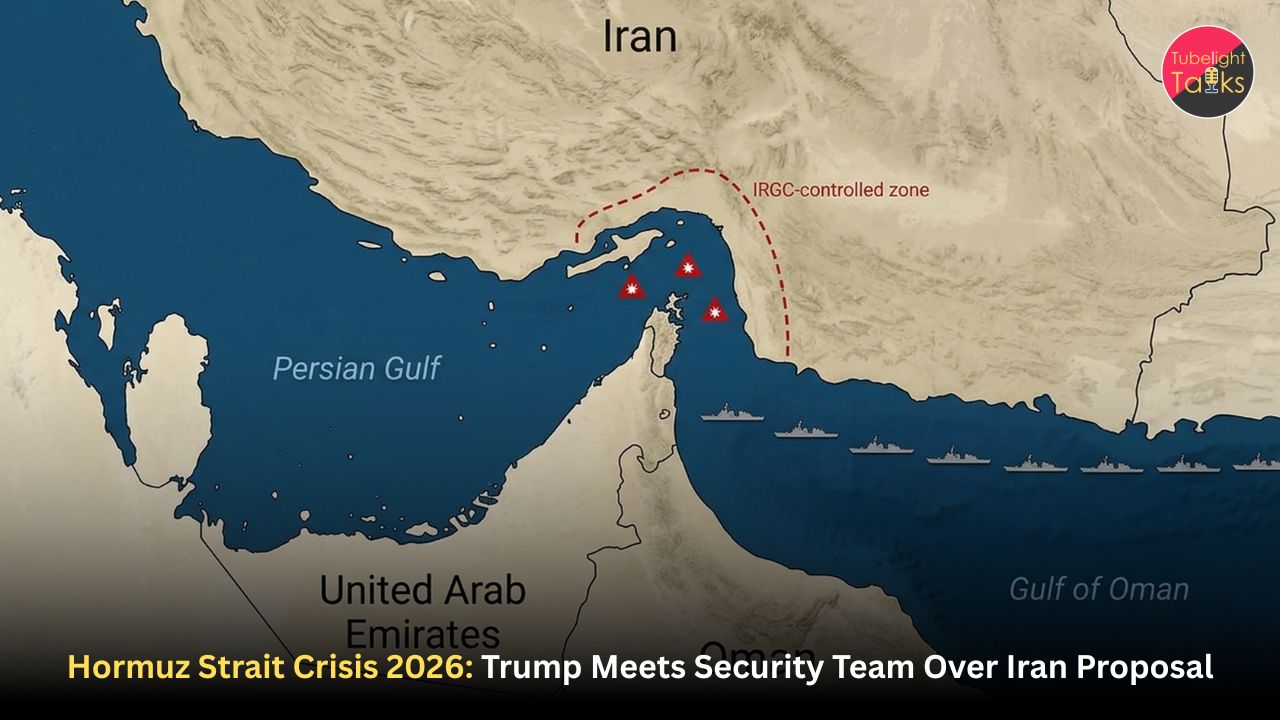
Global Energy Outlook: Trump Evaluates Iran Proposal to Reopen the Strait of Hormuz
Global energy markets remain highly sensitive as President Donald Trump convened senior national security officials on April 28, 2026, to evaluate Iran’s proposal regarding the reopening of the Strait of Hormuz. This strategic waterway carries approximately 20 percent of the world’s oil supply, making it one of the most critical energy corridors globally. Any disruption has immediate consequences for global trade, inflation, and economic stability.
The Strategic Importance of the Strait
The Strait of Hormuz serves as a vital link between the Persian Gulf and international markets. Its narrow passage makes it particularly vulnerable to geopolitical tensions. Recent incidents involving maritime activity have disrupted shipping flows, increased insurance costs, and forced rerouting of vessels, leading to higher energy prices worldwide.
Trump’s Security Consultations
President Trump’s discussions with national security advisors focused on evaluating the feasibility and reliability of Iran’s proposal. The administration is carefully considering how to maintain freedom of navigation while ensuring that any agreement includes robust verification mechanisms. Strategic caution remains a key element of the decision-making process.
Also Read: Investigation Deepens into White House Correspondents’ Dinner Shooting Suspect
Maritime Activity Amid Tensions
Despite the heightened tensions, maritime traffic continues through the region. High-value vessels, including luxury and commercial ships, have navigated the strait under strict monitoring. This ongoing activity highlights the complex balance between economic necessity and security concerns in one of the world’s most sensitive maritime zones.
Impact on Global Inflation and Markets
The instability in the Strait of Hormuz has had a cascading effect on global markets. Rising oil prices have contributed to inflationary pressures across multiple economies. Central banks are responding with policy adjustments, including interest rate changes, to manage the economic impact of sustained energy volatility.
Also Read: Crisis in the Strait of Hormuz: Can Iran’s “Ceasefire First” Plan Save the Global Oil Market?
Search for Alternative Energy Solutions
The current crisis has accelerated global interest in alternative energy sources. Nations are investing more aggressively in renewable energy, nuclear power, and hydrogen technologies to reduce dependence on volatile supply routes. This shift is expected to redefine long-term energy strategies worldwide.
Diplomatic Challenges and Delays
Efforts to reach a diplomatic resolution have faced challenges due to differing strategic interests among global powers. Negotiations have progressed slowly, with multiple stakeholders seeking assurances on security and economic stability. The outcome remains uncertain, with each development closely monitored by international observers.
Advancements in Maritime Security Technology
Modern surveillance systems, including AI-based monitoring and satellite tracking, are being deployed to enhance maritime security in the region. These technologies aim to detect potential threats early and prevent escalation caused by misinterpretation or unintended actions.
Economic Consequences of Prolonged Disruption
If tensions persist and the strait remains partially restricted, the global economy could face significant challenges. Supply chain disruptions, increased transportation costs, and reduced industrial output are among the potential consequences. Emerging economies are particularly vulnerable to sustained high energy prices.
Worldly Disputes and Divine Protection
Sant Rampal Ji Maharaj explains that conflicts over material resources are a reflection of deeper human tendencies driven by attachment and ego. He teaches that while individuals and nations must fulfill their responsibilities, true peace and security come from spiritual understanding and devotion to the Supreme God. By following the path of Satgyan, a person can attain inner stability that remains unaffected by external crises. To learn more about this spiritual path, visit jagatgururampalji.org.
FAQs: Hormuz Strait Crisis 2026: Trump Meets Security Team Over Iran Proposal
1. Why is the Strait of Hormuz so important?
It is one of the world’s most critical oil transit routes, carrying around 20 percent of global oil supply, making it vital for global energy security.
2. What is Iran’s proposal about?
Iran has proposed measures to de-escalate tensions and reopen the strait for safe passage of oil shipments, which is currently under evaluation by the United States.
3. How do these tensions affect global oil prices?
Any disruption or uncertainty in the strait increases oil prices due to supply risks, leading to higher fuel costs worldwide.
4. What impact does this have on common people?
Rising oil prices lead to increased transportation costs, higher inflation, and more expensive goods and services across economies.
5. What could happen if the situation worsens?
Prolonged disruption could lead to global economic slowdown, supply chain issues, and increased financial pressure on countries dependent on oil imports.
Related Stories







Discussion (0)