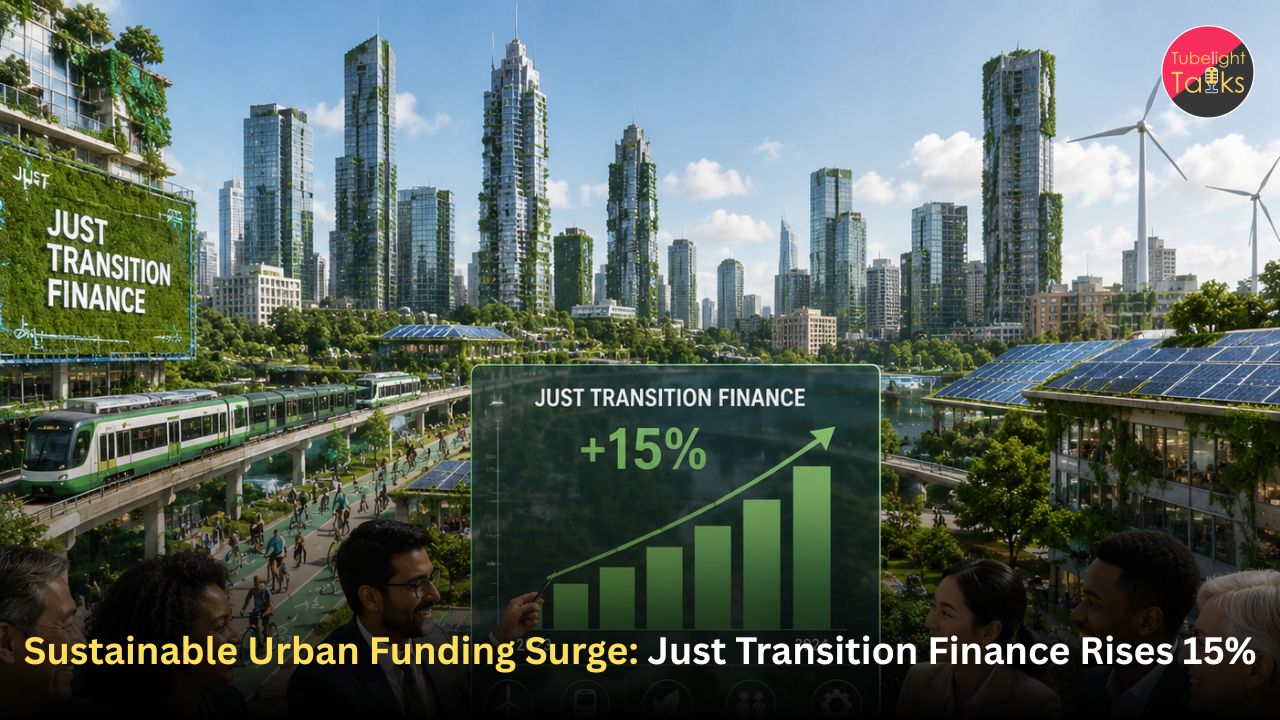
Sustainable Urban Funding Surge: Cities Receive New Boost for Just Transition and Green Energy Infrastructure
International city stakeholders associated with the World Urban Forum process have reported a 15% increase in global Just Transition funding, offering new support to cities working to shift from fossil-fuel dependence to green energy infrastructure. The rise is being seen as a positive sign for urban climate action, especially as cities face growing pressure from heatwaves, floods, air pollution, housing stress and rising energy demand.
However, the funding surge must be understood carefully. Cities still receive much less climate finance than they need, and the success of this transition will depend on whether finance reaches local governments, vulnerable communities, informal workers and low-income households.
Sustainable Urban Funding Surge: Why the 15% Increase Matters
A New Push for City-Level Climate Action
The reported 15% increase in Just Transition funding is important because cities are now on the front line of the climate crisis. Urban areas consume large amounts of energy, generate emissions through buildings, transport, waste and industry, and face rising climate risks. When heatwaves intensify, streets, homes, workers, public transport and hospitals are affected first. When floods strike, drainage systems, slums, roads, markets and water networks collapse under pressure.
The World Urban Forum is the United Nations’ major global platform for discussing sustainable urbanization, rapid city growth and the future of communities, economies and climate policy. Its discussions matter because they bring together governments, city leaders, planners, development banks, researchers, civil society and private investors. The 15% rise in Just Transition funding signals that urban climate needs are finally receiving stronger financial attention.
What Just Transition Means for Cities
Just Transition means moving toward a green economy in a way that is fair, inclusive and protective of workers and vulnerable communities. In a city context, this includes clean transport, renewable energy, energy-efficient buildings, climate-resilient housing, waste reform, green jobs, worker reskilling, affordable services and protection for the urban poor.
A city cannot call itself sustainable if its green transition displaces poor people, removes informal workers, raises rents, destroys livelihoods or excludes slum communities. A true Just Transition ensures that the move from fossil fuels to green energy infrastructure improves lives instead of deepening inequality.
Green Energy Infrastructure: Where the Funding Can Help
Clean Public Transport
One major use of Just Transition funding is clean mobility. Cities need electric buses, metro systems, cycling lanes, pedestrian-friendly roads, charging networks, low-emission freight systems and better public transport integration. Transport is a major source of urban emissions and air pollution, but it is also essential for daily life.
If funding is used wisely, clean transport can reduce pollution, cut commuting costs, support women’s safety, improve access to jobs and reduce dependence on private vehicles. But workers must be included. Drivers, mechanics, conductors, informal transport operators and small repair businesses need training and support as transport systems become electric and digital.
Renewable Urban Energy
Cities can use Just Transition finance to expand solar rooftops, municipal renewable energy, battery storage, smart grids, clean streetlighting and renewable-powered public buildings. Schools, hospitals, markets, bus depots, government offices and water-treatment plants can become energy-efficient and cleaner.
Green energy infrastructure helps cities reduce emissions and improve resilience. During energy disruptions, decentralized renewable systems can support essential services. For low-income households, community solar and energy-efficient public housing can reduce electricity costs.
Energy-Efficient Buildings
Buildings are one of the largest urban climate challenges. Poorly designed buildings increase cooling demand, electricity consumption and heat stress. Just Transition funding can support retrofits, insulation, efficient cooling, passive ventilation, rooftop solar, green materials and climate-safe housing.
This is especially important for low-income communities. If green building policies benefit only luxury apartments and commercial towers, the transition will fail socially. Climate finance must improve homes where the most vulnerable people live.
The Urban Climate Finance Gap Remains Huge
Cities Still Receive Less Than Needed
The funding surge is encouraging, but it does not close the gap. UN-Habitat’s World Cities Report 2024 warns that cities receive less than 20% of the finance required for effective climate action. This means that while more funding is arriving, the actual need remains far larger than current flows.
The State of Cities Climate Finance 2024 report estimated that tracked urban climate finance reached USD 831 billion in 2021/2022. However, cities require about USD 4.3 trillion every year for mitigation alone until 2030. This gap shows that the world is still far from financing the urban transition at the speed required.
Why Local Governments Struggle to Access Funds
Many cities, especially in developing countries, struggle to access international climate finance. Local governments may lack credit ratings, technical staff, project preparation teams, financial documentation, bankable project pipelines or legal authority to borrow. Even when global funds exist, they often do not reach municipal governments directly.
This is why Just Transition funding must include technical assistance, capacity building, project preparation support and simplified access routes. Without this, only large and wealthy cities will benefit, while smaller cities and vulnerable urban communities remain excluded.
Workers Must Be Protected in the Green Transition
Green Jobs Need Social Protection
A shift away from fossil fuels can create new jobs in renewable energy, electric mobility, building retrofits, waste management, water systems, urban forestry and climate data services. But it can also disrupt existing livelihoods. Workers in fossil-fuel supply chains, diesel transport, informal waste collection, construction and energy-intensive sectors may face uncertainty.
Just Transition funding should support training, income protection, new employment pathways and worker consultation. A fair transition must not treat workers as collateral damage in the climate fight.
Informal Workers Cannot Be Ignored
Many cities depend on informal workers. Waste pickers, street vendors, delivery workers, construction labourers, informal transport operators and domestic workers keep urban life functioning. Yet they are often invisible in official planning.
Green waste systems, clean transport reforms and urban redevelopment must include these workers. Waste pickers, for example, already contribute to recycling and circular economy goals. They should be integrated, protected and compensated, not removed from the system.
Also Read: Why Urban Gardening Is The Best Lifestyle Upgrade!
Climate Finance Must Reach Vulnerable Communities
Informal Settlements Need Priority
Informal settlements are often most exposed to climate risks. They may be located near drains, floodplains, industrial areas, railway lines or unstable slopes. Residents may lack secure housing, cooling, clean water, sanitation and drainage. A Just Transition must place these communities at the center of urban climate planning.
Funding should support safe housing, flood protection, drainage, clean water, sanitation, cooling shelters, waste systems, secure tenure and livelihood opportunities. Climate resilience is not complete if the poorest citizens remain exposed.
Women, Youth and Elderly Residents
Climate change affects different groups differently. Women may face greater risks during water shortages, unsafe transport and displacement. Youth need green jobs and skills. Elderly people are highly vulnerable during heatwaves. Children suffer from air pollution and unsafe housing.
Sustainable urban funding must therefore be gender-sensitive, youth-focused and inclusive of elderly and disabled residents. Climate finance should not only build infrastructure; it should build dignity and safety.
Also Read: Leading the Green Charge: India’s Strategic Climate Targets for 2035
Why the World Urban Forum Agenda Is Important
Urbanization Is a Global Reality
The World Urban Forum exists because urbanization is one of the biggest forces shaping the modern world. Cities are growing rapidly, especially in Asia and Africa. This growth can become either a climate burden or a climate opportunity.
If cities expand with fossil-fuel transport, inefficient buildings and weak planning, emissions and inequality will rise. If they grow with compact design, public transport, green energy infrastructure, affordable housing and climate resilience, they can become engines of sustainable development.
Housing and Resilience Are Central
The upcoming World Urban Forum 13 has the theme “Housing the world: Safe and resilient cities and communities.” This theme is directly linked to Just Transition funding. Housing is not only a social issue; it is a climate issue. Safe, affordable and energy-efficient housing protects families from heat, floods, storms and economic stress.
A city cannot be resilient if its people live in unsafe settlements, unaffordable rentals or heat-trapping buildings. Housing must be treated as climate infrastructure.
India and the Sustainable Urban Funding Debate
Indian Cities Need Major Climate Investment
India’s cities face rising heatwaves, flooding, air pollution, water stress and infrastructure pressure. As urban populations grow, climate-resilient and low-carbon infrastructure becomes essential. Reports have warned that Indian cities will need trillions of dollars in climate-related urban investment by 2050 to withstand floods, heatwaves and other risks.
For India, Just Transition funding can support electric buses, metro expansion, rooftop solar, urban cooling, water systems, waste management, climate-resilient housing, green jobs and digital urban governance.
Green Cities Must Also Be Inclusive
India’s urban transition must include migrant workers, slum residents, street vendors, informal recyclers, women commuters, elderly residents and low-income households. Smart cities must not become unequal cities. A Viksit Bharat needs sustainable cities that are clean, affordable, safe, inclusive and spiritually grounded in moral values.
Green Infrastructure and Inner Responsibility
The rise in Just Transition funding shows that the world is beginning to recognize the need for cleaner and fairer urban development. But external infrastructure alone cannot create a truly sustainable society. The teachings of Sant Rampal Ji Maharaj and Sat Gyaan emphasize truth, compassion, humility, righteous conduct and true worship according to holy scriptures. His teachings guide people away from intoxication, corruption, dishonesty, violence, greed and harmful social practices.
In the context of sustainable urban funding, this message is deeply relevant. A city may build solar plants, electric buses and green buildings, but if corruption, injustice, greed and exploitation remain, development will stay incomplete. Sat Gyaan teaches that real progress must include inner purity and moral responsibility. Sustainable cities need sustainable human conduct.
FAQs on Sustainable Urban Funding Surge
1. What is the reported sustainable urban funding surge?
International city stakeholders associated with World Urban Forum discussions have reported a 15% increase in Just Transition funding for cities, supporting green energy infrastructure and fair climate action.
2. What is Just Transition funding?
Just Transition funding supports the shift from fossil-fuel dependence to clean systems while protecting workers, vulnerable communities, low-income households and informal workers.
3. How can cities use this funding?
Cities can use the funding for electric buses, renewable energy, energy-efficient buildings, climate-resilient housing, green jobs, waste systems, water infrastructure and public services.
4. Why is urban climate finance still not enough?
Cities still receive less than 20% of the finance required for effective climate action. Current flows are growing, but the total need remains much larger than available funding.
5. Why must vulnerable communities be included?
Without inclusion, green projects can raise rents, displace informal workers or benefit only wealthy areas. A fair transition must protect slum residents, workers, women, youth and low-income families.
6. Why is green energy infrastructure important for cities?
Green energy infrastructure reduces emissions, improves air quality, lowers fossil-fuel dependence, strengthens resilience and supports cleaner public services such as transport, lighting, water systems and housing.
Related Stories





Discussion (0)