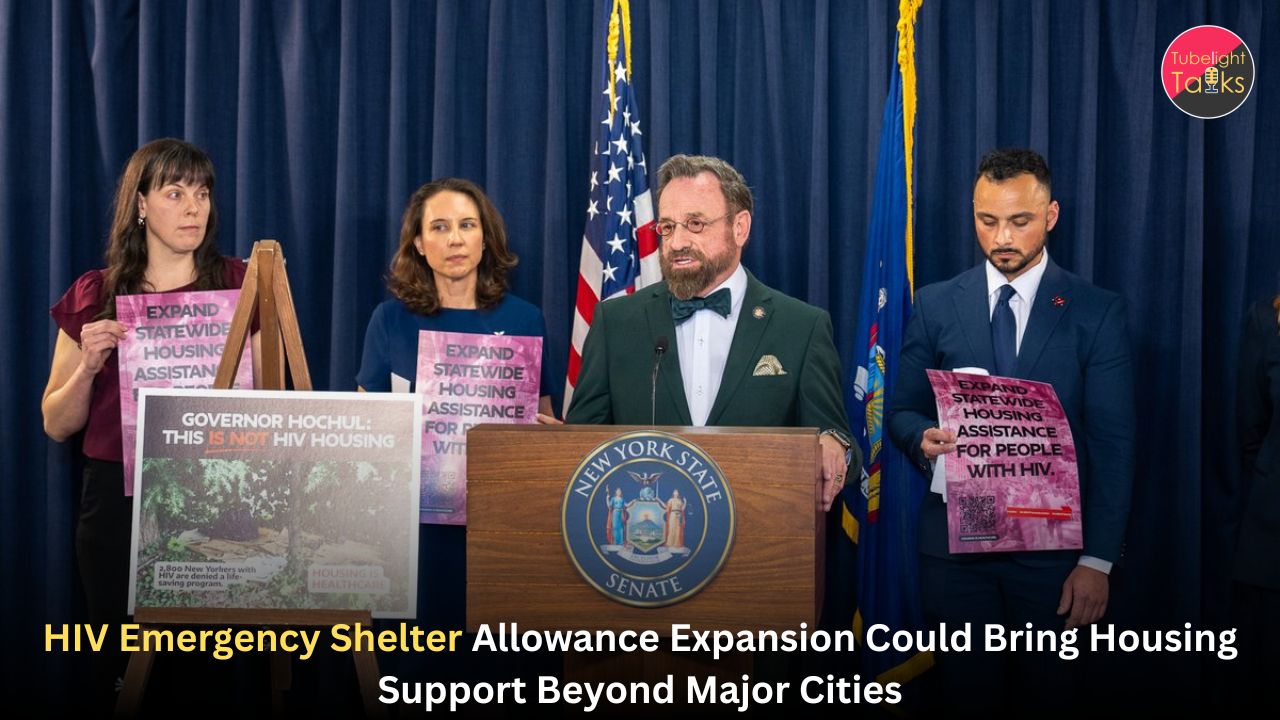
HIV-Positive Housing Expansion: Lawmakers Push to Bring Emergency Shelter Allowance Beyond Major Cities
Lawmakers and housing advocates in New York are moving to expand the HIV Emergency Shelter Allowance beyond New York City, a policy shift that could bring stable housing support to thousands of low-income people living with HIV across upstate and suburban communities. The programme has long helped eligible New York City residents with HIV avoid homelessness by limiting rent burden and supporting access to safe housing.
But advocates say the same meaningful support has not reached people outside the city. The proposed expansion would allow more localities to participate and could help an estimated 2,800 people living with HIV who remain homeless or unstably housed outside New York City.
HIV Emergency Shelter Allowance: Why Housing Is Central to HIV Care
Stable Housing Supports Stable Treatment
For people living with HIV, housing is not only a social issue; it is a public health necessity. A person who does not have a safe place to sleep may struggle to store medication, attend medical appointments, eat properly, maintain hygiene, protect personal documents and remain connected to care. Homelessness can interrupt treatment and increase stress, making long-term health management much harder.
The HIV Emergency Shelter Allowance is designed around this basic truth: housing stability improves health stability. When a low-income person living with HIV can afford rent, they are more likely to stay engaged in treatment, maintain regular medical follow-up and avoid crisis-driven emergency care.
The Current Gap Outside New York City
The central concern raised by advocates is that the programme has been meaningful in New York City but largely inaccessible or insufficient outside it. Existing rules have left many local social service districts unable to provide a practical level of rental support. In many areas, the old allowance levels are far below real market rents.
This means a person living with HIV in New York City may receive support that reflects housing costs, while someone in Buffalo, Rochester, Syracuse, Long Island, the Hudson Valley or other regions may face homelessness despite qualifying for help in principle. Lawmakers and advocates argue that this is a geographic inequity that directly affects health outcomes.
The Push for Expansion
Lawmakers Seek Statewide Fairness
State Senator April Baskin and Assemblymember Harry Bronson have been among the lawmakers calling for stronger statewide access to meaningful HIV housing support. Their position is simple: where a person lives should not determine whether they can access life-saving housing assistance.
The proposed expansion would help localities beyond New York City provide meaningful rental support. Advocates have pushed for a system in which counties and social service districts outside the city can opt in without being blocked by unaffordable local cost burdens. A major demand has been stronger state reimbursement so that localities have a real pathway to offer support.
Around 2,800 People Could Benefit
Advocacy groups estimate that around 2,800 people living with HIV outside New York City are homeless or unstably housed and could benefit from an expanded HIV Emergency Shelter Allowance. This figure is important because it shows the issue is not abstract. Thousands of individuals may be trying to manage a serious lifelong medical condition while lacking the basic security of a stable home.
For them, housing support can mean the difference between regular treatment and medical instability, between dignity and crisis, between prevention and emergency intervention.
Why Expansion Beyond Major Cities Matters
HIV Is Not Only an Urban Issue
HIV policy is often discussed through the lens of major cities, especially New York City, because urban areas have historically had high case numbers and strong service networks. But people living with HIV also live in smaller cities, rural communities, suburbs and economically struggling regions.
Outside major urban centers, challenges may be even harder in some ways. Public transport may be limited. HIV-specialized care may be farther away. Affordable housing may be scarce. Stigma may be stronger in smaller communities. Case management services may be thinner. Expanding housing support beyond New York City recognizes that HIV care must be statewide, not city-limited.
Rural and Upstate Housing Pressures
Many upstate and suburban communities face rising rents, limited affordable housing supply and long waiting lists for assistance. Even where rents are lower than Manhattan or Brooklyn, income levels may also be lower, and supportive services may be harder to access.
An outdated rent allowance can become meaningless if it cannot secure a real apartment. Advocates argue that assistance should be tied to actual housing conditions, not old formulas that no longer reflect the market.
Also Read: Twice-Yearly Injection vs. Daily Pills: A New Era in HIV Protection
Housing as a Public Health Strategy
Preventing Medical Crisis
Stable housing can reduce emergency room use, hospitalizations and treatment interruptions. When people have a place to live, healthcare providers can reach them more easily. Case managers can coordinate care. Medication routines become more manageable. Mental health support becomes more effective.
For low-income people living with HIV, a stable apartment may be as important as any clinic visit because it creates the daily foundation needed for treatment success.
Supporting Viral Suppression
Modern HIV treatment is highly effective when taken consistently. People who remain in care and maintain viral suppression can live long and healthy lives. Stable housing helps make that possible. Without housing, medication adherence can become difficult, appointments may be missed and health can decline.
This is why public health experts often say housing is healthcare. In HIV care, that phrase is especially accurate.
Economic Case for Housing Support
Prevention Is Cheaper Than Crisis
Emergency shelters, hospital admissions, untreated illness and crisis care can become far more expensive than rental support. When housing assistance prevents homelessness, it can reduce pressure on hospitals, shelters and local emergency systems.
A housing-first approach is not only compassionate; it can be financially sensible. It helps people remain healthy and reduces costly crisis interventions.
Local Communities Also Benefit
When residents have stable housing, communities benefit through better public health, lower emergency service demand and stronger social stability. People with stable homes are better able to work, volunteer, care for family members, continue education and participate in community life.
The expansion of the HIV Emergency Shelter Allowance would therefore not only help individual recipients. It could strengthen local public health systems and community resilience.
Dignity and Equity at the Center
Ending Geographic Inequality
The current debate is fundamentally about equity. If two people live with the same medical condition and the same housing instability, their access to support should not depend on whether they live inside or outside New York City.
Advocates argue that New York has long presented itself as a leader in ending the HIV epidemic. To maintain that leadership, the state must ensure that rural, suburban and upstate residents are not left behind.
Reducing Stigma
Housing instability among people living with HIV is often worsened by stigma. Some people may fear disclosing their status. Others may face discrimination in housing, employment or family settings. A strong assistance programme can reduce vulnerability and provide a safer route to stability.
Policy cannot remove stigma overnight, but it can reduce the harm caused by stigma by ensuring that people have practical support, legal protections and stable housing pathways.
Challenges in Implementing Expansion
Funding Responsibility
One major challenge is funding. Local districts may be unable to pay a large share of meaningful rental assistance. This is why advocates are calling for stronger state reimbursement. Without it, expansion may exist on paper but fail in practice.
Administrative Capacity
Counties outside New York City may need training, guidance and administrative support to implement the programme correctly. Staff must understand eligibility, rent standards, documentation, confidentiality, case management and coordination with healthcare providers.
Housing Supply
Even with rental assistance, people need available units. Some regions have very limited affordable housing. The expansion must therefore work alongside broader affordable housing policy, landlord engagement and anti-discrimination enforcement.
A Step Toward Ending the HIV Epidemic
Housing Must Be Part of the Strategy
Ending the HIV epidemic requires testing, prevention, treatment, medication access, public education, stigma reduction and healthcare equity. But without housing, many other interventions become weaker. A person cannot fully benefit from medical progress while living in constant housing crisis.
The proposed HIV Emergency Shelter Allowance expansion recognizes that ending HIV is not only a medical goal. It is also a housing, poverty, dignity and justice goal.
A Model for Other States
If New York expands meaningful HIV housing support beyond its largest city, it could offer a model for other states. Many regions across the United States face similar gaps between urban service networks and rural or smaller-city needs.
A fair HIV housing model should be portable, practical and responsive to real rent levels. It should protect confidentiality, connect people to care and reduce homelessness among those with serious medical needs.
Compassionate Governance and Inner Responsibility
The expansion of housing support for low-income people living with HIV reflects a deeper principle: society must protect vulnerable people with dignity, compassion and fairness. The teachings of Sant Rampal Ji Maharaj and Sat Gyaan emphasize truth, kindness, humility, righteous conduct and true worship according to holy scriptures. His teachings guide people away from intoxication, corruption, dishonesty, violence, hatred and social discrimination.
In the context of HIV-positive housing support, this message is meaningful because no person should be rejected, stigmatized or abandoned due to illness or poverty. Sat Gyaan teaches that human life is precious and that compassion toward suffering people is part of righteous living. A society becomes truly developed when it combines good policy with moral values, care for the weak and spiritual awareness.
FAQs on HIV Emergency Shelter Allowance Expansion
1. What is the HIV Emergency Shelter Allowance?
The HIV Emergency Shelter Allowance is a housing support programme designed to help eligible low-income people living with HIV access stable housing and avoid homelessness.
2. Why are lawmakers pushing to expand the programme?
Lawmakers and advocates say meaningful support is currently available mainly in New York City, while many people living with HIV outside the city remain homeless or unstably housed. Expansion would reduce this geographic inequality.
3. How many people could benefit from the expansion?
Advocates estimate that around 2,800 people living with HIV outside New York City are homeless or unstably housed and could benefit from expanded assistance.
4. Why is housing important for HIV care?
Stable housing helps people store medication, attend appointments, maintain treatment, reduce stress and stay connected to healthcare. It supports better long-term health outcomes.
5. What are the main challenges to expansion?
The key challenges include funding, local administrative capacity, outdated rent standards, housing supply shortages and ensuring that counties can participate without facing unsustainable costs.
6. How could this policy support ending the HIV epidemic?
By reducing homelessness and improving access to stable care, the expansion can help people living with HIV maintain treatment, improve health outcomes and reduce crisis-driven medical needs.
Related Stories










Discussion (0)