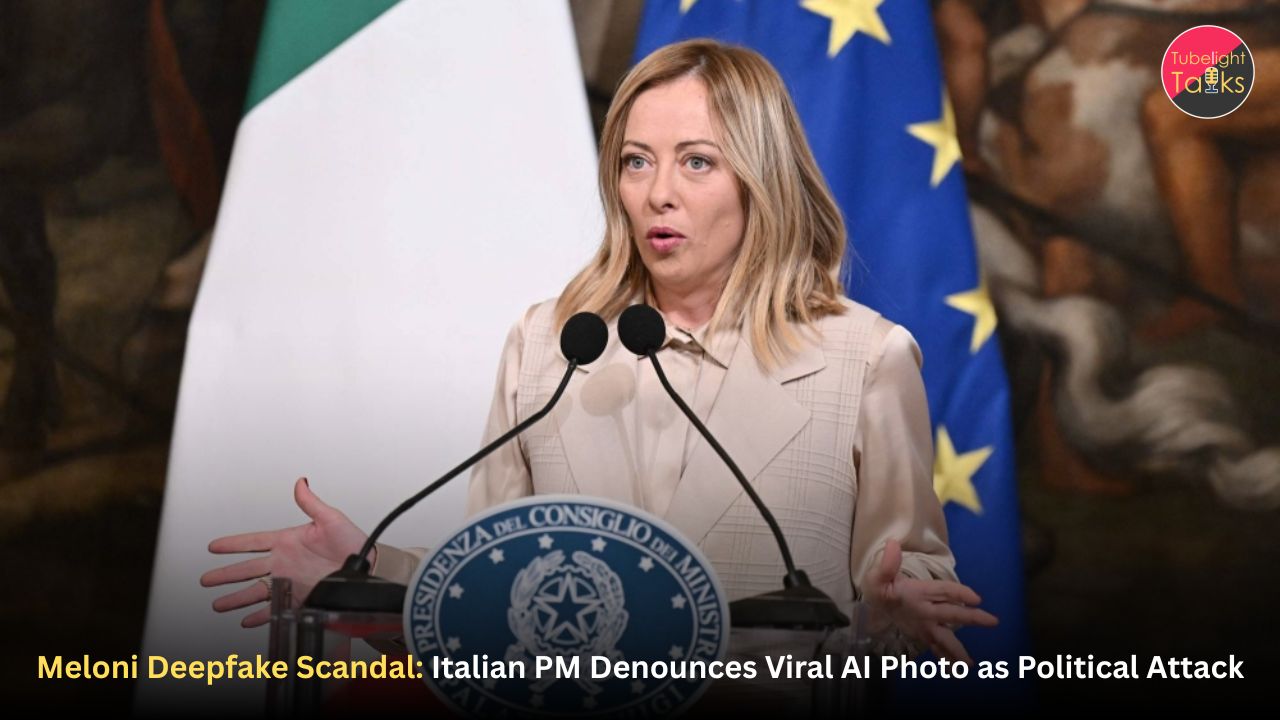
Meloni Deepfake Scandal: Italian Prime Minister Calls Viral AI Photo a Coordinated Political Attack
Italian Prime Minister Giorgia Meloni has denounced a viral AI-generated deepfake image of herself as a political attack, warning that artificial intelligence is being misused to deceive, manipulate and target public figures. The fake image showed Meloni in a compromising pose and was circulated online with insulting commentary before she shared it on Facebook to expose the deception.
Meloni said deepfakes are dangerous because they can harm anyone, especially those without the visibility or resources to defend themselves. The scandal has sparked fresh debate in Italy and across Europe about AI regulation, digital abuse, election misinformation, political dignity and the growing threat of manipulated media in public life.
Meloni Deepfake Scandal: What Happened?
Viral AI Image Sparks Political Controversy
The controversy began when an AI-generated fake image of Giorgia Meloni circulated online. The manipulated photo depicted her in bed wearing lingerie and was shared with commentary intended to shame or ridicule her. Instead of ignoring it, Meloni publicly reposted the image to call attention to the danger of deepfake manipulation.
Associated Press reported that Meloni denounced the image as a deepfake photo used to attack her and warned people against sharing such content without verifying whether it is real. She wrote that deepfakes are dangerous because they can deceive, manipulate and target anyone.
This response turned a personal attack into a public policy warning. Meloni’s message was not only about herself; it was about the larger risk that AI-generated images can be weaponized against politicians, women, private citizens, journalists, activists and ordinary social media users.
Meloni Uses Humour but Delivers Serious Warning
Meloni also reacted with characteristic sharpness and humour, joking that the manipulation had made her look “a lot better.” But behind the joke was a serious warning: people can now use almost anything to attack and fabricate lies.
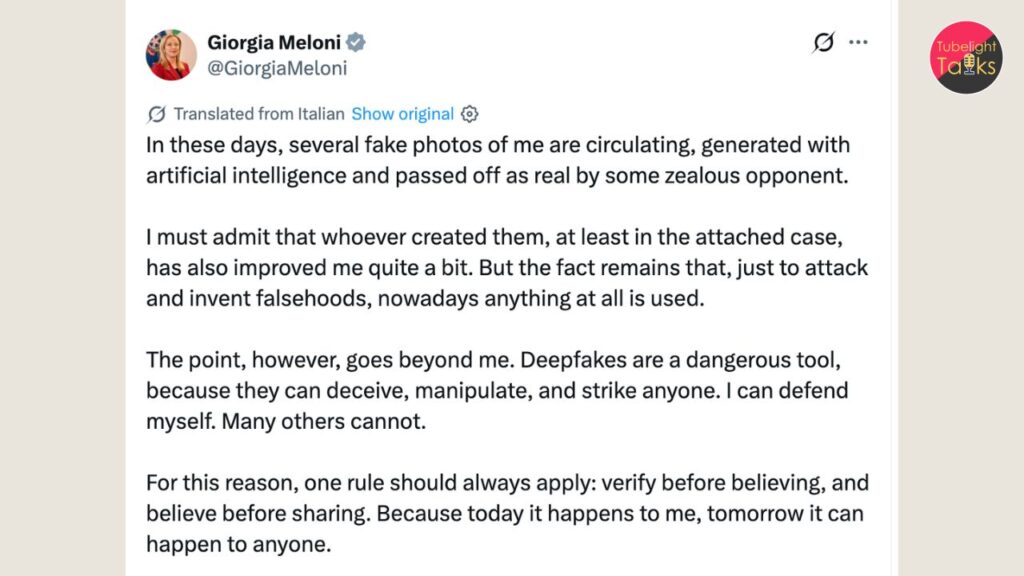
This combination of humour and alarm made her response widely discussed. She did not appear personally shaken, but she used the incident to raise concern about victims who do not have her platform, security or public influence.
That point is important. A prime minister can respond publicly, mobilize legal advice and command media attention. A private person targeted by a similar deepfake may face humiliation, blackmail, social stigma, emotional trauma and professional damage with far fewer tools to defend themselves.
Why Deepfakes Are a Political Weapon
AI Makes Fake Images More Convincing
Deepfakes are digitally manipulated images, videos or audio clips created or altered using artificial intelligence. In the past, fake images often looked crude or obviously edited. Today, AI tools can produce realistic faces, lighting, poses and settings in seconds. This makes deception easier and verification harder.
In politics, this is especially dangerous. A fake image or video can spread before fact-checkers respond. By the time it is debunked, the damage may already be done. Voters may be misled, reputations may be harmed and public trust may weaken.
The Meloni case shows how even a visible political leader can become the target of sexualized fake imagery. It also shows how deepfakes are not only about false statements; they are about humiliation, intimidation and manipulation.
Women Leaders Face Gendered Attacks
Deepfakes often target women through sexualized images and videos. This is not accidental. Such attacks use shame, misogyny and social stigma as weapons. Women in politics, journalism, cinema, activism and public life are especially vulnerable because attackers try to damage credibility by attacking dignity.
Meloni is Italy’s first female prime minister, and the fake image used a sexualized framing. That makes the incident part of a wider pattern of digital abuse against women leaders. The goal is not only misinformation but also intimidation.
This is why the scandal has become larger than party politics. Supporters and critics of Meloni may disagree on policy, but deepfake abuse raises a democratic concern that affects all women in public life.
Also Read: Online Scams & Fraud Prevention: Global Spotlight on Identity-Fraud and Prevention
Italy and Europe Face AI Regulation Pressure
Digital Manipulation Becomes a Governance Challenge
The Meloni scandal is likely to intensify calls for stronger regulation of synthetic media. Governments now face difficult questions: Should platforms be required to label AI-generated images? Should deepfake creators face criminal penalties if content is defamatory, sexualized or politically deceptive? How quickly must platforms remove harmful fake content? How should victims get legal relief?
Europe has already moved toward broader AI regulation, but real-world scandals show that enforcement and platform responsibility remain urgent. Laws must be practical enough to respond quickly without suppressing satire, art, political criticism or legitimate speech.
Verification Must Become a Public Habit
Meloni warned users not to share images without verifying them. This is one of the simplest but most important lessons from the scandal. Social media users often share shocking content quickly because it confirms their political anger or curiosity. But deepfakes thrive on that impulse.
A responsible digital citizen should pause before sharing sensational images. Questions matter: Who posted it first? Is there a credible source? Does it look manipulated? Have reliable outlets verified it? Is it designed to provoke anger or humiliation?
Digital literacy is now part of democratic responsibility.
The Threat to Elections and Public Trust
Deepfakes Can Distort Campaigns
Deepfakes can become especially dangerous during elections. A fake video of a leader making inflammatory remarks, accepting a bribe, mocking a community or engaging in misconduct could spread rapidly. Even if debunked later, it may influence voters in the critical hours before polling.
The Meloni incident involved an image rather than an election speech, but the warning is clear. AI-generated political misinformation can target reputation, emotion and identity. It can turn public debate away from policy and toward false scandal.
Trust in Reality Is Weakening
One of the most dangerous effects of deepfake technology is not just that people may believe fake content. It is also that people may stop believing real content. If everything can be dismissed as AI-generated, accountability becomes harder.
A corrupt politician may claim real evidence is fake. A victim may struggle to prove abuse is real. Journalists may face greater difficulty establishing trust. Courts and regulators may need new forensic tools. Society may enter a state where truth itself becomes contested.
This is why the Meloni scandal matters beyond one image. It is about the future of public truth.
Also Read: Think Before You Share! How to Spot & Stop Misinformation On Social Media
Platforms and Accountability
Social Media Companies Must Act Faster
Deepfake images spread through social platforms, messaging apps and online forums. Platforms must improve detection, labelling and removal systems for harmful synthetic media. They must also protect users from repeat abuse and give victims clear reporting channels.
However, platform moderation must be transparent. Users should know why content is removed, labelled or restricted. Governments must avoid using anti-deepfake rules as excuses to silence political criticism.
AI Developers Also Have Responsibility
The responsibility does not lie only with users and platforms. Developers of image-generation tools must build safeguards against non-consensual sexualized images, impersonation and political abuse. Watermarking, provenance tools and abuse reporting systems can help.
AI innovation should not become a free pass for digital harm. Technology companies must recognize that their tools can affect real lives, reputations and democracies.
Meloni’s Political Response
Turning Attack Into Warning
Meloni’s decision to repost the fake image was bold. It allowed her to control the narrative rather than letting opponents or trolls define it. She exposed the image as fake, condemned the tactic and reframed the episode as a broader warning about AI misuse.
This approach may strengthen her image among supporters as a leader who fights back. It may also appeal to people concerned about online abuse regardless of ideology.
Legal Action Still Unclear
AP reported that it was not immediately clear whether Meloni would report the incident to law enforcement, though some commenters urged her to do so.
If legal action follows, the case could become an important test of how Italian authorities handle AI-generated political abuse. If no legal case is filed, the scandal may still influence future policy debates.
Truth, Technology and Moral Discipline
The Meloni deepfake scandal shows that technology without morality can become a weapon of humiliation and falsehood. The teachings of Sant Rampal Ji Maharaj and Sat Gyaan emphasize truth, humility, compassion, righteous conduct and true worship according to holy scriptures. Sant Rampal Ji Maharaj’s teachings guide people away from dishonesty, intoxication, corruption, violence, greed and misuse of power.
In the context of deepfakes, this spiritual wisdom is highly relevant. Creating or spreading fake images to insult someone is not freedom; it is moral decline. Sat Gyaan teaches that speech, action and intention should be truthful and pure. A digital society can remain safe only when human beings reject deception and use technology with responsibility.
FAQs on Meloni Deepfake Scandal
1. What happened in the Meloni deepfake scandal?
An AI-generated fake image of Italian Prime Minister Giorgia Meloni circulated online, showing her in a compromising pose. She denounced it as a political attack and warned about deepfake dangers.
2. What did Meloni say about deepfakes?
Meloni warned that deepfakes are dangerous because they can deceive, manipulate and target anyone. She said she can defend herself, but many others cannot.
3. Why is the scandal politically important?
It shows how AI-generated content can be used to attack political leaders, distort public debate and spread misinformation or humiliation online.
4. Why are women leaders especially vulnerable?
Women are often targeted through sexualized deepfakes designed to shame, intimidate or damage credibility, making such attacks both political and gendered.
5. Could Meloni take legal action?
It was not immediately clear whether she would report the incident to law enforcement, though some commenters urged her to do so.
6. What should users do when they see shocking political images online?
Users should verify the source, check credible news reports, avoid sharing unconfirmed content and remember that AI-generated images can look realistic.
Related Stories








Discussion (0)