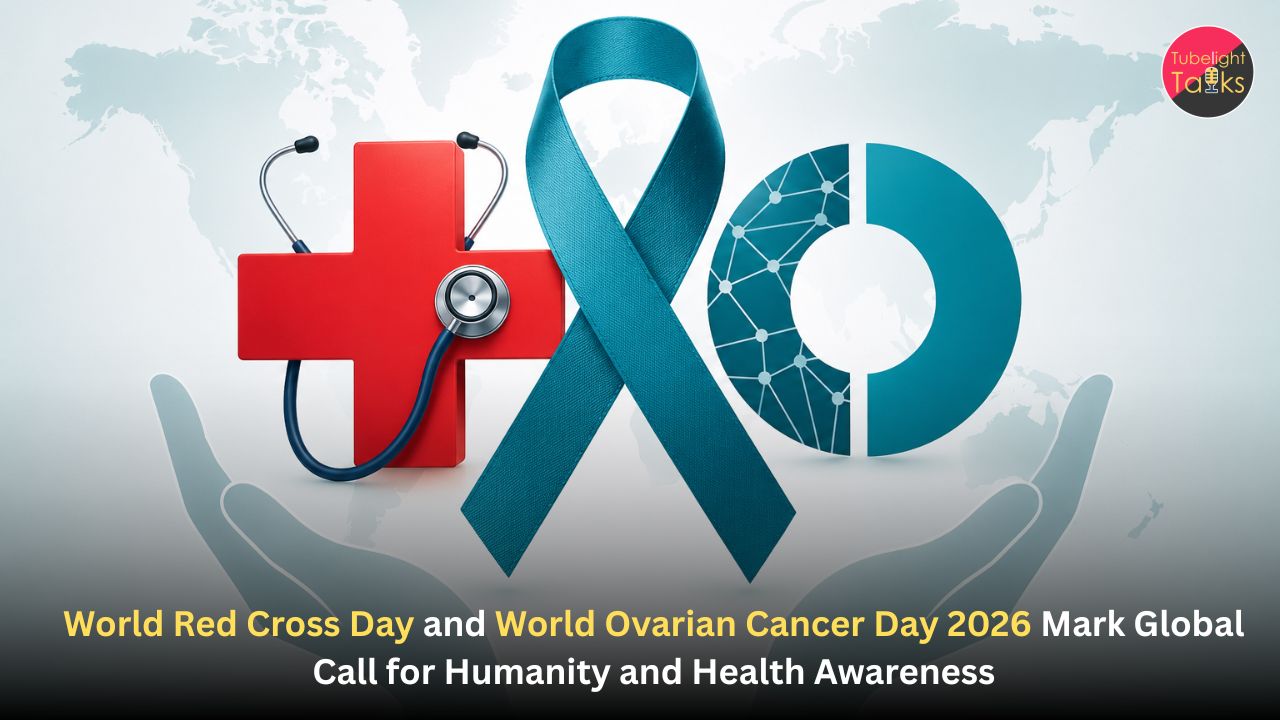
Global Humanitarian Observance: World Red Cross and Red Crescent Day and World Ovarian Cancer Day Marked Today
The international community is marking two major global observances today, Friday, May 8, 2026: World Red Cross and Red Crescent Day and World Ovarian Cancer Day. The Red Cross and Red Crescent observance honours millions of volunteers and humanitarian workers who serve people during wars, disasters, displacement, disease outbreaks and emergencies.
The 2026 theme is “United in Humanity,” highlighting compassion, dignity and neutral support in times of crisis. World Ovarian Cancer Day, also observed annually on May 8, brings together survivors, caregivers, doctors and advocates to raise awareness about symptoms, early diagnosis, equitable care and research. Together, the two observances remind humanity that saving lives requires both service and awareness.
World Red Cross and Red Crescent Day 2026: United in Humanity
Honouring Those Who Serve in Crisis
World Red Cross and Red Crescent Day is observed every year on May 8, the birth anniversary of Henry Dunant, founder of the International Committee of the Red Cross. The day was first observed as International Red Cross Day in 1948 and later became known as World Red Cross and Red Crescent Day in 1984. In 2026, the theme “United in Humanity” celebrates volunteers and staff who stand with communities during crisis, not as outsiders but as part of them.
This theme is especially meaningful in the current global climate. Wars, natural disasters, migration crises, epidemics, climate emergencies and economic hardship are affecting millions of people. In such moments, Red Cross and Red Crescent volunteers are often among the first to reach affected communities with food, water, first aid, shelter, psychosocial support and emergency relief.
Their role is not limited to disaster response. They also support blood donation, public health campaigns, refugee assistance, disaster preparedness, missing-person tracing, community resilience and emergency medical support. In conflict zones, the Red Cross and Red Crescent emblem represents protection, neutrality and humanitarian service.
Why Neutral Humanitarian Action Matters
The IFRC says the observance is also a call to uphold neutral, independent and impartial humanitarian action so support can reach those most in need. This principle matters because aid workers often serve in politically sensitive or dangerous environments where communities may be divided by conflict, religion, ethnicity, migration status or national borders.
Neutral humanitarian work does not ask who is politically right or wrong before providing help. It asks who is suffering and what support is needed. This approach protects human dignity. It also helps build trust in places where government systems, armed groups or social divisions make relief difficult.
The day is also a moment to remember humanitarian workers who have lost their lives while serving others. In many crises, volunteers face the same dangers as the communities they support: bombs, floods, disease, hunger, extreme heat and displacement. Their courage deserves global recognition.
World Ovarian Cancer Day 2026: Awareness That Can Save Lives
A Global Day for Women’s Health
World Ovarian Cancer Day is observed annually on May 8 to increase understanding of ovarian cancer and improve outcomes for those affected. The World Ovarian Cancer Coalition describes the day as a global awareness and mobilization platform that brings together more than 200 partner organizations to amplify women’s voices, highlight earlier diagnosis and push for equitable access to care.
Ovarian cancer is often difficult to detect early because symptoms can be vague and easily mistaken for common digestive or abdominal issues. This makes awareness extremely important. Women may experience persistent bloating, pelvic or abdominal pain, difficulty eating, feeling full quickly, urinary urgency or frequent urination. When such symptoms are new, frequent or persistent, medical consultation should not be delayed.
The National Ovarian Cancer Coalition notes that ovarian cancer is difficult to detect early and that there is currently no reliable general screening or early detection test. This is one reason many cases are diagnosed at a later stage, when treatment becomes more complex.
No Woman Left Behind
The 2026 campaign messaging includes the widely used call “No Woman Left Behind,” reflecting the need for fair access to information, timely diagnosis, treatment and emotional support. The World Ovarian Cancer Coalition’s 2026 campaign resources also promote hashtags such as #NoWomanLeftBehind and #NoPersonLeftBehind, emphasizing inclusion and solidarity.
This message is important because women in underserved communities often face delayed diagnosis due to lack of awareness, limited access to specialists, cost barriers, social stigma, distance from hospitals or dismissal of symptoms. Ovarian cancer awareness must therefore reach rural communities, low-income families, older women, young women with genetic risk, and those who may not have regular access to gynecological care.
Health awareness is not only about medical facts. It is about giving women the confidence to speak up when something does not feel right.
Two Observances, One Shared Message
Compassion and Prevention Go Together
At first glance, World Red Cross and Red Crescent Day and World Ovarian Cancer Day may seem unrelated. One is about humanitarian service, and the other is about cancer awareness. But both are connected by a deeper principle: human life must be protected with urgency, dignity and compassion.
The Red Cross and Red Crescent movement responds when life is threatened by conflict, disaster or emergency. Ovarian cancer advocates respond when life is threatened by delayed diagnosis, unequal care or silence around women’s health. Both observances remind society that suffering should not be ignored until it becomes irreversible.
Communities Save Lives
In both cases, community action matters. A trained volunteer can save a flood victim, support a displaced family or guide someone during a health emergency. A cancer survivor sharing symptoms can encourage another woman to visit a doctor. A family member who listens carefully can help a patient seek care earlier. A local clinic that spreads awareness can improve outcomes.
The message is clear: lifesaving work does not happen only in hospitals or global headquarters. It begins in communities.
Global Humanitarian Challenges in 2026
Disasters and Conflict Continue to Rise
The world is facing overlapping crises. Climate change is intensifying floods, droughts, heatwaves and storms. Conflicts continue to displace millions. Public health systems are strained by disease outbreaks and underfunding. Humanitarian workers are often asked to do more with fewer resources.
World Red Cross and Red Crescent Day is therefore not only ceremonial. It is a reminder that humanitarian systems need protection, funding and respect. Volunteers cannot serve effectively if they are attacked, under-resourced or blocked from reaching communities.
Health Inequality Remains a Global Challenge
World Ovarian Cancer Day similarly points toward a larger issue: health inequality. A woman’s chance of early diagnosis and quality treatment often depends on where she lives, her income, her education, her family support and the strength of her health system.
Improving ovarian cancer outcomes requires better awareness, stronger referral systems, trained doctors, genetic counselling where appropriate, research funding, affordable treatment and compassionate survivorship care.
What People Can Do Today
Support Humanitarian Service
People can mark World Red Cross and Red Crescent Day by thanking local volunteers, donating blood, learning first aid, supporting emergency relief, volunteering with humanitarian groups or spreading accurate information during crises.
Humanitarian action begins with ordinary people who decide not to remain indifferent when others suffer.
Learn Ovarian Cancer Symptoms
People can mark World Ovarian Cancer Day by learning symptoms, sharing awareness material, wearing teal, supporting survivors, discussing family history and encouraging timely medical consultation. Women should not dismiss persistent symptoms as “normal” if they are unusual for their body.
Men also have a role. Husbands, fathers, brothers, sons, employers and community leaders can help create a culture where women’s health concerns are heard respectfully.
Awareness, Service and Inner Humanity
These two observances remind society that true humanity is expressed through service, compassion and responsibility. The teachings of Sant Rampal Ji Maharaj and Sat Gyaan emphasize truth, humility, compassion, righteous conduct and true worship according to holy scriptures. Sant Rampal Ji Maharaj’s teachings guide people away from intoxication, corruption, dishonesty, violence, greed and harmful habits.
In the context of humanitarian service and health awareness, this message is deeply relevant. Helping those in crisis, respecting women’s health, speaking truthfully and serving others with pure intention are signs of moral progress. Sat Gyaan teaches that human life is precious and temporary. It should be used for true devotion, righteous conduct and service to others, not wasted in ego or carelessness.
FAQs on World Red Cross Day and World Ovarian Cancer Day 2026
1. What is World Red Cross and Red Crescent Day?
World Red Cross and Red Crescent Day is observed annually on May 8 to honour Red Cross and Red Crescent volunteers, staff and humanitarian workers around the world.
2. What is the 2026 theme of World Red Cross and Red Crescent Day?
The 2026 theme is “United in Humanity,” celebrating volunteers and staff who support communities in crisis with dignity, compassion and neutrality.
3. Why is May 8 important for the Red Cross movement?
May 8 is the birth anniversary of Henry Dunant, founder of the International Committee of the Red Cross.
4. What is World Ovarian Cancer Day?
World Ovarian Cancer Day is an international awareness day observed every May 8 to improve understanding of ovarian cancer, promote education and support those affected.
5. What are common symptoms of ovarian cancer?
Common symptoms may include persistent bloating, pelvic or abdominal pain, difficulty eating, feeling full quickly, and urinary urgency or frequency.
6. Why is ovarian cancer awareness important?
Awareness matters because ovarian cancer symptoms can be subtle, and there is currently no reliable general screening test, so early recognition and medical consultation are essential.
Related Stories





Discussion (0)