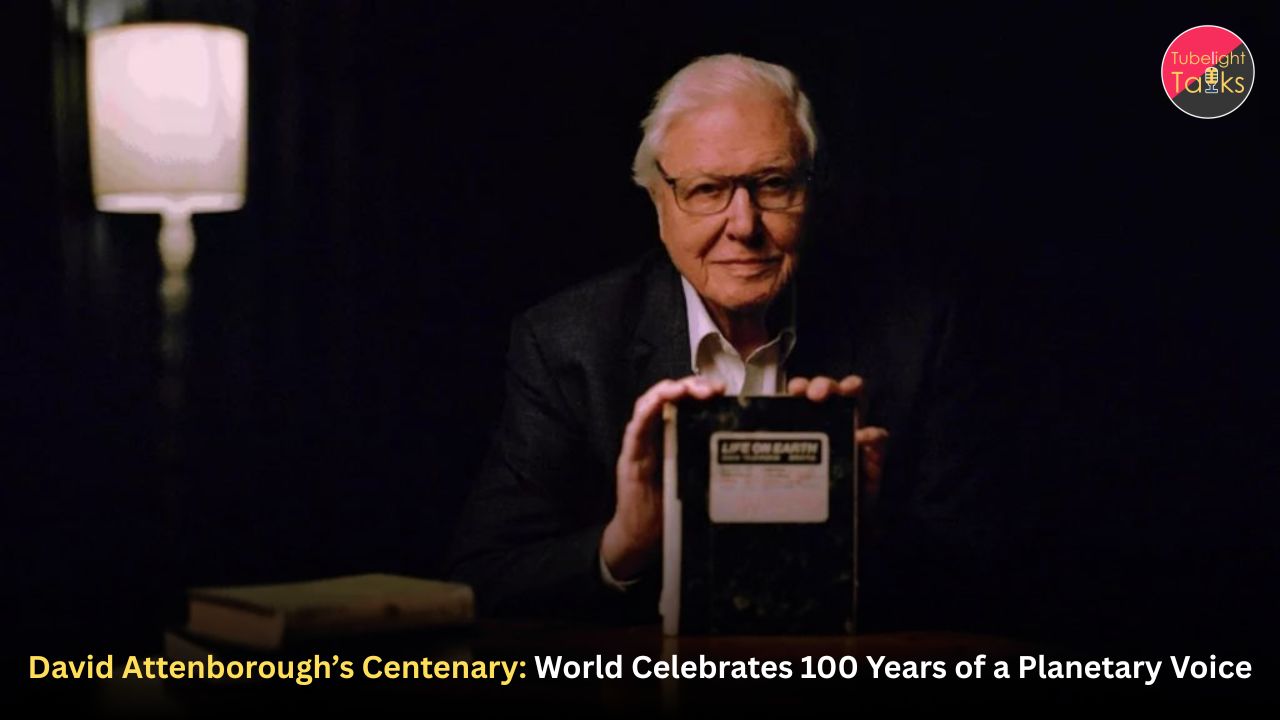
David Attenborough’s Centenary: Global Celebrations Honour 100 Years of Service to the Planet
Global celebrations are continuing for Sir David Attenborough’s centenary after the legendary British naturalist, broadcaster and environmental storyteller turned 100 on May 8, 2026. Although some public briefings are marking the celebrations on May 9, Attenborough’s birthday falls on May 8, and tributes have continued into the weekend across Britain and beyond. The broadcaster said he was “completely overwhelmed” by the worldwide birthday wishes.
Over more than seven decades, Attenborough has transformed public understanding of wildlife through landmark productions such as Life on Earth, The Blue Planet, Planet Earth and Dynasties. His centenary is not just a birthday celebration; it is a global moment of gratitude for a voice that taught humanity to see Earth with wonder, humility and urgency.
A Century of Life, A Lifetime of Nature Storytelling
The Voice That Brought the Wild Into Homes
Sir David Attenborough’s influence on modern nature storytelling is almost impossible to measure. For millions of viewers, his calm narration became the sound of the natural world itself. From rainforests and coral reefs to polar ice, deserts, oceans and hidden garden ecosystems, he helped people experience places they might never visit in person.
His work did something rare: it made science emotional without weakening its truth. He did not present wildlife as distant data; he presented it as living drama. Viewers saw courtship, survival, migration, birth, hunger, parenting, cooperation and extinction through stories that felt intimate and universal.
This is why his centenary is being celebrated not only by broadcasters but also by scientists, environmentalists, schools, governments and ordinary families. Attenborough helped create a shared language for nature at a time when the planet needed it most.
A Career Spanning More Than 70 Years
Reuters reported that Attenborough’s career has stretched across more than 70 years, during which he documented both the beauty and fragility of the natural world. His films and series shaped public awareness of biodiversity, climate change, ocean health and plastic pollution. He has been admired across generations, including by figures such as Barack Obama and the late Queen Elizabeth II.
What makes Attenborough extraordinary is not only longevity. It is relevance. Many public figures become symbols of the past as they age, but Attenborough continued to speak directly to the present. His later work became more urgent, warning that the natural world he had spent a lifetime filming was being damaged by human activity.
Royal Tributes and Public Honour
Prince William and Conservation Leaders Join Celebrations
Prince William and conservationist Robert Irwin led public birthday wishes for Attenborough in a tribute video connected with the Earthshot Prize. Prince William praised his environmental influence and thanked him for inspiring people to protect the planet. Robert Irwin, son of late wildlife conservationist Steve Irwin, also credited Attenborough with deepening global love for nature.
The royal connection is important because Attenborough has long been linked to British public life, science communication and conservation diplomacy. His relationship with the Earthshot Prize reflects his role in encouraging solutions, not just raising alarm.
Prince Harry also paid tribute, describing Attenborough as a deeply respected moral voice for the natural world. Together, these tributes show that Attenborough’s appeal crosses generations, institutions and political boundaries.
A National Treasure With Global Reach
In Britain, Attenborough is often called a national treasure. But his reach is global. His documentaries have been watched across continents, translated into multiple languages and used in classrooms, homes and conservation campaigns. He changed not only how nature was filmed but how people emotionally understood their relationship with Earth.
At 100, he remains a symbol of calm authority in a world often overwhelmed by noise. His message has never depended on shouting. It depends on observation, patience and truth.
BBC Specials, Royal Albert Hall and Google Tribute
100 Years on Planet Earth
The BBC is marking Attenborough’s centenary with special programming and events. One major celebration is David Attenborough’s 100 Years on Planet Earth, a live event at London’s Royal Albert Hall honouring his groundbreaking career. The Royal Albert Hall described the event as a national celebration of his 100th birthday, bringing together music, film and tributes to his life’s work.
This kind of celebration fits Attenborough’s legacy because his documentaries were never only television programmes. They were cultural events. Families watched together. Schools used clips to teach. Environmental groups used his narration to explain why conservation matters.
Google Marks the Moment
Google also honoured Attenborough’s 100th birthday with a special Search animation. Users searching his name saw a celebratory tribute featuring animals and a “Thank You” message, recognizing his immense contribution to wildlife documentaries and environmental awareness.
The digital tribute shows how Attenborough’s influence extends from traditional broadcasting into the internet age. He began in a world of black-and-white television and reached his centenary in a world of streaming, social media and global search platforms.
From Wonder to Warning
Early Work Celebrated Discovery
Attenborough’s early career was built on discovery. He introduced viewers to animals, habitats and behaviours that many had never imagined. He made nature feel magical without turning it into fantasy. His gift was to let reality speak for itself.
The early Attenborough message was wonder: look at this extraordinary world.
Later Work Became a Moral Warning
In later decades, his tone shifted. The wonder remained, but it was joined by warning. Climate change, biodiversity collapse, plastic pollution, deforestation, overfishing and habitat destruction became unavoidable themes.
This made his work more powerful. He was not a distant activist suddenly entering the debate. He was a witness. He had seen the planet change during his lifetime. His warnings carried the weight of lived observation.
At 100, Attenborough’s message is clear: humanity has been given a beautiful planet, but it must now choose whether to protect or destroy it.
Why His Centenary Matters in 2026
A Planet Under Stress
Attenborough’s centenary arrives at a time when climate extremes, species loss, pollution, ocean warming and ecosystem damage are major global concerns. Food systems, water security, public health and disaster risk are increasingly tied to environmental stability.
That makes this birthday more than a celebration of one man. It is a reminder of the work still unfinished.
Storytelling Can Change Behaviour
One of Attenborough’s greatest achievements is proving that storytelling can change public behaviour. Many viewers first cared about coral reefs, rainforests, whales, penguins, insects or plastic waste because his films made those issues visible and emotionally real.
Policies may be written in offices, but public concern begins in the heart. Attenborough helped awaken that concern.
His Legacy for Young People
Teaching Patience and Observation
In an age of short videos and rapid distraction, Attenborough’s work teaches patience. Nature does not reveal itself instantly. It requires waiting, watching, listening and respecting rhythms beyond human control.
That lesson matters deeply for young people. To protect the planet, they must first learn to see it properly.
Hope Without Denial
Attenborough does not offer false comfort. He acknowledges damage. But he also keeps hope alive by showing that nature can recover when humans act wisely. Restoration, conservation, protection and responsible living are possible.
His centenary should therefore inspire action, not only admiration.
Also Read: Davos 2026: Geopolitical Tensions Mount Over Greenland, Trade, and Global Cooperation
Nature, Responsibility and the SatGyaan Message
Sir David Attenborough’s centenary reminds the world that nature is not a decoration for human enjoyment; it is a divine creation entrusted to human responsibility. JagatguruRampalJi.org states that Sant Rampal Ji Maharaj has promoted environmental protection by guiding devotees to plant lakhs of trees across India and Nepal, while also working to eliminate social evils through True Spiritual Knowledge.
The same official source explains that Sant Rampal Ji Maharaj teaches humanity, peace and brotherhood, and that all human beings belong to one living race. In relation to Attenborough’s life work, this SatGyaan is deeply relevant: environmental destruction begins when humans forget humility and start treating Earth as a resource for greed. Sant Rampal Ji Maharaj’s teachings guide people away from intoxication, meat consumption, corruption, violence and harmful conduct, creating a disciplined and compassionate society.
A person who understands true spiritual knowledge will naturally respect animals, trees, rivers and all living beings, because creation is not separate from moral duty. Protecting the planet therefore requires not only scientific awareness but also inner reform, truthfulness and devotion to Supreme God Kabir.
FAQs on David Attenborough’s Centenary
1. When did Sir David Attenborough turn 100?
Sir David Attenborough turned 100 on May 8, 2026. Celebrations continued globally into the following day and weekend.
2. Why is David Attenborough’s centenary important?
His centenary is important because he has spent more than seven decades bringing nature, wildlife and environmental awareness to global audiences.
3. Which major documentaries is he known for?
He is known for landmark productions such as Life on Earth, The Blue Planet, Planet Earth, Dynasties and many other wildlife documentaries.
4. How did Google honour him?
Google marked his 100th birthday with a special Search animation featuring a “Thank You” message and celebratory animal-themed visuals.
5. What tributes did he receive?
Tributes came from public figures, environmentalists and broadcasters, including Prince William and Robert Irwin, who praised his contribution to nature awareness.
6. What is his main environmental message?
His central message is that humanity must protect the natural world, restore damaged ecosystems and live more responsibly on Earth.
Related Stories










Discussion (0)