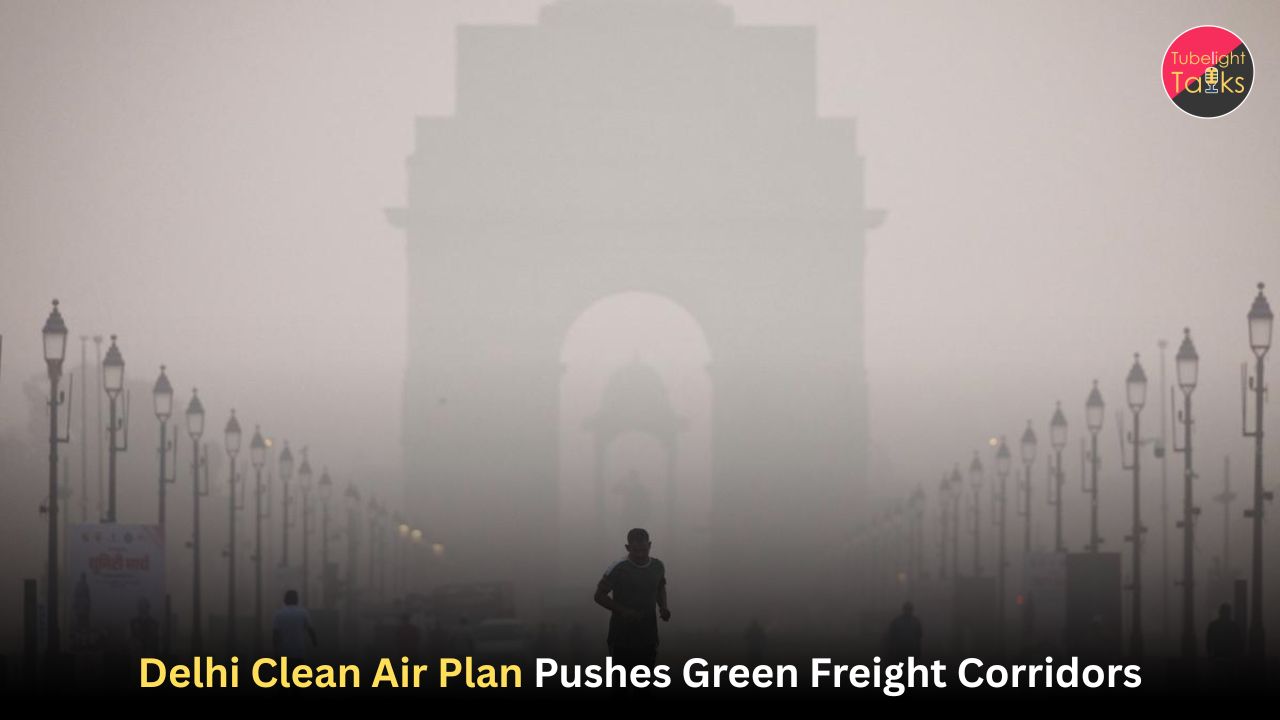
Clean Air Initiative: Delhi Pushes Green Freight Corridors and Cleaner Transport to Fight Pollution
New Delhi’s battle against air pollution has entered a new policy phase with the Air Pollution Mitigation Action Plan 2026 and logistics reforms aimed at cleaner freight movement. Delhi Chief Minister Rekha Gupta unveiled the 2026 clean-air plan after a high-level review meeting at Mukhyamantri Janseva Sadan. The plan includes stricter vehicular controls, cleaner transport, dust management, industrial monitoring, and restrictions on goods vehicles entering the capital unless they meet BS-VI norms or run on CNG or electricity.
Freight Pollution Comes Under Focus
Goods vehicles are a major contributor to congestion and emissions in Delhi. Business Standard, citing officials, reported that from November 1, entry of goods vehicles into the national capital will be restricted to those compliant with BS-VI norms or powered by CNG or electricity. This policy shift directly targets diesel freight emissions.
Green Freight Corridors and Logistics Hubs
Delhi’s draft Logistics and Warehousing Policy 2025 proposes dedicated logistics hubs, green freight corridors, and modern Urban Consolidation and Logistics Distribution Centres. These centres are meant to move freight handling away from congested city interiors and shift last-mile delivery to electric and CNG vehicles.
Also Read: Delhi Record Heat: Capital Faces Scorching Temperatures
Public Transport Expansion
The clean-air plan also focuses on expanding public transport. Officials said Delhi plans to expand its bus fleet to 13,760 by 2028-29, with priority for electric buses. Better integration of metro, RRTS, feeder buses, e-autos, and shared mobility is also part of the strategy.
EV Charging Infrastructure
To support electric mobility, the government plans to install 32,000 EV charging points over four years. The proposed EV Policy 2026 will focus on two-wheelers, commercial vehicles, and transition of government fleets to cleaner fuels.
Why This Matters for Public Health
Delhi’s pollution crisis affects children, elderly citizens, workers, and people with respiratory and heart conditions. Cleaner freight can reduce particulate matter, nitrogen oxides, and local diesel emissions. Green corridors can also reduce congestion hotspots and make logistics more efficient.
Clean Air Needs Clean Conduct
A clean-air plan is not only a government document; it is a reminder that human actions shape the environment. Sant Rampal Ji Maharaj’s teachings emphasize discipline, compassion, and responsible living. True spiritual knowledge teaches people to avoid waste, greed, and careless harm to nature. When citizens combine clean technology with clean conduct, society moves toward both environmental and spiritual welfare.
Call to Action
Make Freight Cleaner and Smarter
Delhi must implement green freight corridors with strict enforcement, reliable charging, logistics hubs, and support for small transporters.
Citizens Must Participate
Use public transport, avoid unnecessary vehicle use, maintain valid PUC certificates, and support clean mobility policies.
FAQs: Delhi Clean Air Plan Pushes Green Freight Corridors
1. What is Delhi’s clean-air plan targeting?
It targets vehicular emissions, road dust, construction activity, industrial discharge, biomass burning, and freight pollution.
2. What rule applies to goods vehicles entering Delhi?
Goods vehicles entering Delhi will be restricted to BS-VI, CNG, or electric vehicles under the announced plan.
3. What are green freight corridors?
They are cleaner logistics routes designed to reduce freight-related congestion and pollution.
4. How many EV charging points are planned?
Officials said 32,000 EV charging points are planned over four years.
5. Why are logistics hubs important?
They can reduce unnecessary truck entry into city interiors and shift last-mile delivery to cleaner vehicles.
Related Stories







Discussion (0)