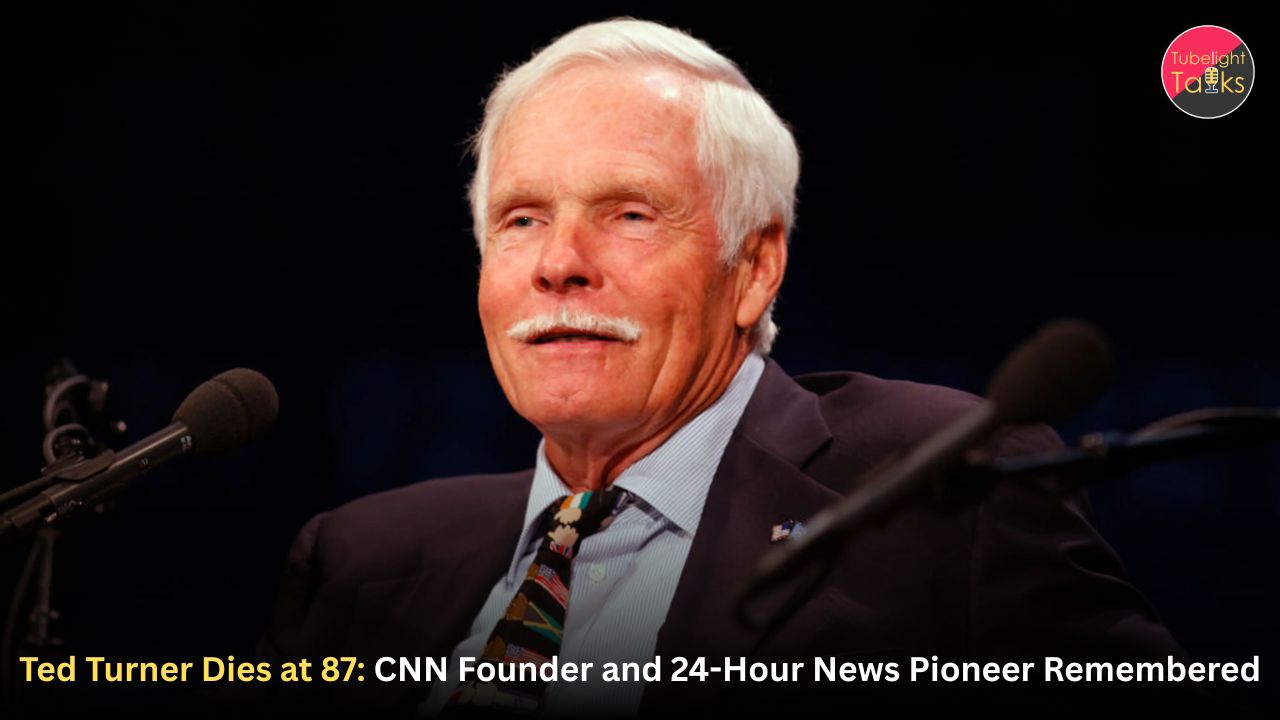
Ted Turner Passes Away: CNN Founder and 24-Hour News Pioneer Dies at 87
The global media world is mourning the death of Ted Turner, the visionary founder of CNN and one of the most influential figures in modern broadcasting. Turner died peacefully at age 87, surrounded by family, according to a statement shared on his official website on behalf of the Turner family.
Best known for launching CNN in 1980 and creating the modern 24-hour news model, Turner also built TBS, TNT, Turner Classic Movies and Cartoon Network into major media brands. His impact extended beyond television into philanthropy, environmental conservation, sports ownership, nuclear-risk reduction and global public service. With his death, the world has lost one of the boldest architects of the modern media age.
Ted Turner: The Man Who Changed Television News
From Cable Risk-Taker to Global Media Pioneer
Ted Turner was not a traditional media executive. He was bold, unpredictable, aggressive and deeply confident in ideas that many people initially dismissed. When he launched CNN in 1980, the idea of a 24-hour cable news channel seemed risky and unrealistic to many in the industry. Television news was still dominated by fixed evening broadcasts and major network anchors.
Turner saw something different. He believed news did not need to wait for prime time. He believed people would watch live news whenever major events happened. That belief changed the media industry forever. CNN became the first 24-hour cable news network and helped create the continuous global news cycle that now defines modern journalism.
The network’s defining global moment came during the 1991 Gulf War, when CNN’s real-time coverage brought war reporting into homes around the world in a new way. After that, 24-hour news was no longer an experiment; it became a standard.
TBS and the Superstation Revolution
Before CNN, Turner had already changed American television through TBS. In 1970, he bought a struggling Atlanta television station and gradually transformed it into a cable “superstation.” By using satellite distribution, Turner helped local television reach a national audience.
This model changed cable television. It created a pathway for regional stations and niche channels to become national brands. TBS carried movies, sports, entertainment and reruns, giving Turner a platform to expand further into television.
His media empire later included TNT, Turner Classic Movies and Cartoon Network, all of which shaped different corners of American and global entertainment.
A Businessman With Unusual Courage
Turning a Family Billboard Business Into a Media Empire
Turner inherited responsibility for his father’s billboard business and eventually used it as the foundation for a much larger media journey. His path was not smooth. He faced debt, skepticism, competition and personal challenges, but he had a rare appetite for risk.
He did not simply buy media assets; he used them in unexpected ways. He promoted his own sports teams on his own stations. He used cable distribution aggressively. He made bold programming bets. He understood that control over content and distribution could create enormous influence.
In 1996, Turner sold Turner Broadcasting to Time Warner in a multibillion-dollar deal, cementing his place among the most successful media entrepreneurs of the 20th century.
Known as “Captain Outrageous”
Turner’s personality was as famous as his business career. He was outspoken, competitive and sometimes controversial. He earned nicknames such as “Captain Outrageous” and “Mouth of the South” because of his blunt comments and public confidence.
But his flamboyance was part of a deeper pattern: he was willing to challenge powerful incumbents. He challenged network news. He challenged traditional sports broadcasting. He challenged assumptions about philanthropy and conservation. Whether people loved or disliked his style, few could ignore him.
Beyond CNN: Sports, Film and Pop Culture
Atlanta Braves and Sports Broadcasting
Turner owned the Atlanta Braves and Atlanta Hawks, using his television stations to give sports teams national exposure. The Braves became closely associated with TBS, and sports became a major part of Turner’s media strategy.
He also launched the Goodwill Games in the 1980s, an international sports event designed during Cold War tensions to promote competition and cooperation outside the Olympic framework. Although the Goodwill Games did not last as a permanent institution, they reflected Turner’s belief that media, sports and diplomacy could intersect.
MGM Library, TNT and Turner Classic Movies
Turner’s acquisition of film assets helped build a huge entertainment library. That archive later supported channels such as TNT and Turner Classic Movies. TCM became especially beloved by film lovers because it preserved and broadcast classic cinema with seriousness and respect.
This part of Turner’s legacy is sometimes overshadowed by CNN, but it matters deeply. He helped keep classic films in public circulation and made archival entertainment a key part of cable television.
Also Read: Ratan Tata, Titan of Indian Industry, Passes Down at 86
Philanthropy and Global Causes
$1 Billion Donation to UN Causes
Turner’s philanthropy was as dramatic as his business style. In 1997, he announced a $1 billion donation to support United Nations causes, leading to the creation of the United Nations Foundation. At the time, it was one of the most significant private philanthropic commitments ever made to global public service.
His focus included global health, population issues, environmental protection, women’s empowerment and international cooperation. Turner believed wealthy individuals had a duty to address global problems, not only build private empires.
Nuclear Threat Initiative and Peace Work
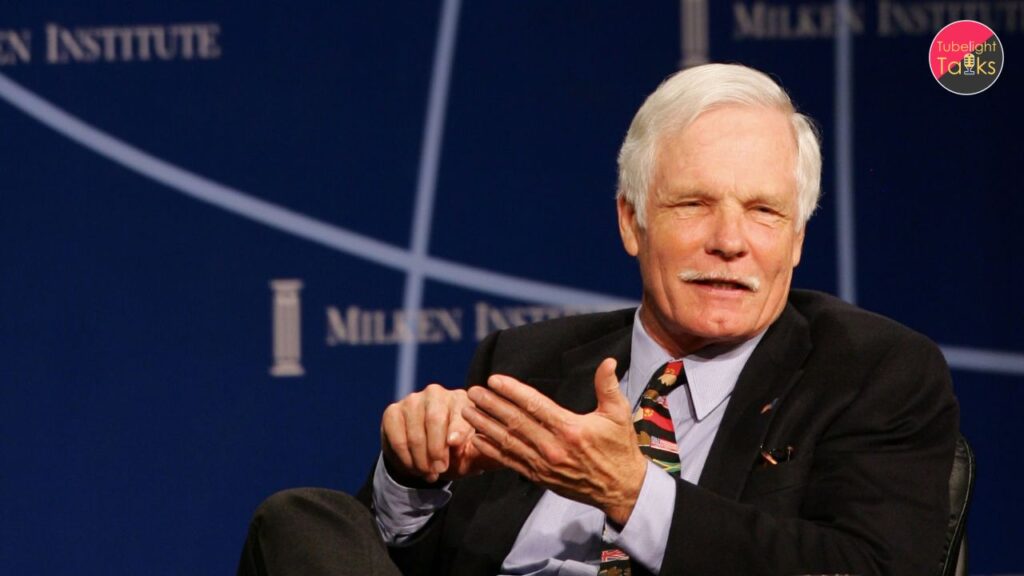
Turner also co-founded the Nuclear Threat Initiative with former U.S. Senator Sam Nunn. The organization focused on reducing nuclear, biological and chemical risks. This reflected Turner’s long-standing concern about war, weapons and human survival.
His public personality could be brash, but many of his philanthropic priorities were serious and humanitarian: peace, health, environment and global cooperation.
Environmental Legacy
Land Conservation and Bison Restoration
Turner became one of the largest private landowners in the United States and used much of his land for conservation. His official family statement highlighted his role in preserving more than two million acres of land and supporting imperiled and endangered species.
He also became closely associated with bison restoration. His ranching and conservation work helped expand awareness of bison as part of North America’s natural heritage. Through Ted’s Montana Grill and his land holdings, Turner connected business, conservation and food systems in a distinctive way.
Captain Planet and Environmental Awareness
Turner also helped bring environmental messaging into children’s programming through “Captain Planet and the Planeteers.” The animated series introduced a generation of viewers to pollution, deforestation, recycling and environmental responsibility.
This showed Turner’s understanding of media power. He knew television could entertain, but he also believed it could teach.
Later Life and Health
Lewy Body Dementia Diagnosis
In 2018, Turner publicly disclosed that he had Lewy body dementia, a progressive neurological condition. Reuters reported that he had spoken about the diagnosis in later life after decades of public visibility.
His later years were quieter compared with the dramatic business battles of his earlier career. But his foundations, conservation projects and public legacy continued to shape global conversations.
Family and Tributes
Turner is survived by five children, 14 grandchildren and two great-grandchildren, according to People and other reports.
Tributes have come from media leaders, public figures, environmental advocates, former colleagues and admirers who credit Turner with changing the way the world receives information. Jane Fonda, Turner’s former wife, also paid tribute to him, remembering his courage, humor and passion for nature.
Also Read: Eric Dane Dies at 53 After Courageous ALS Fight: Remembering the Life of Grey’s Anatomy’s McSteamy
The Legacy of 24-Hour News
A Revolution With Mixed Consequences
Turner’s CNN changed journalism permanently. It made live global news accessible in real time. It gave viewers immediate access to wars, elections, disasters, summits, market shocks and breaking events.
But the 24-hour news model also created challenges. Constant news cycles can produce pressure for speed over depth, competition for attention and an appetite for dramatic coverage. Turner created the model, but later generations of media companies expanded it into today’s always-on digital information environment.
His legacy is therefore complex: he expanded public access to information, but also helped create the speed-driven media world that modern society is still learning to manage.
Truth, Media and Moral Responsibility
Ted Turner’s life shows the power of communication. A single media idea can change how the world sees war, politics, disaster, sports and culture. But media power must always be guided by truth and responsibility. The teachings of Sant Rampal Ji Maharaj and Sat Gyaan emphasize truth, humility, compassion, righteous conduct and true worship according to holy scriptures. His teachings guide people away from dishonesty, intoxication, corruption, violence, greed and misuse of influence.
In the context of Turner’s media legacy, this message is deeply relevant. News can awaken society when it is truthful, but it can also mislead when driven by ego, profit or manipulation. Sat Gyaan teaches that real progress requires inner purity. Whether in journalism, politics or daily life, truth must remain above personal gain.
FAQs on Ted Turner Dies at 87
1. Who was Ted Turner?
Ted Turner was an American media entrepreneur, philanthropist and environmentalist best known as the founder of CNN, the first 24-hour cable news network.
2. How old was Ted Turner when he died?
Ted Turner died at the age of 87, according to a family statement and major news reports.
3. What was Ted Turner’s biggest media achievement?
His biggest media achievement was launching CNN in 1980, which pioneered the 24-hour news model and transformed global television journalism.
4. Which other networks did Turner help build?
Turner’s media empire included TBS, TNT, Turner Classic Movies and Cartoon Network, among other major cable properties.
5. What was Ted Turner known for outside media?
He was known for philanthropy, environmental conservation, bison restoration, the United Nations Foundation, the Nuclear Threat Initiative, sports ownership and land preservation.
6. What illness had Turner disclosed in later life?
Ted Turner publicly disclosed in 2018 that he had Lewy body dementia, a progressive neurological condition.
Related Stories










Discussion (0)