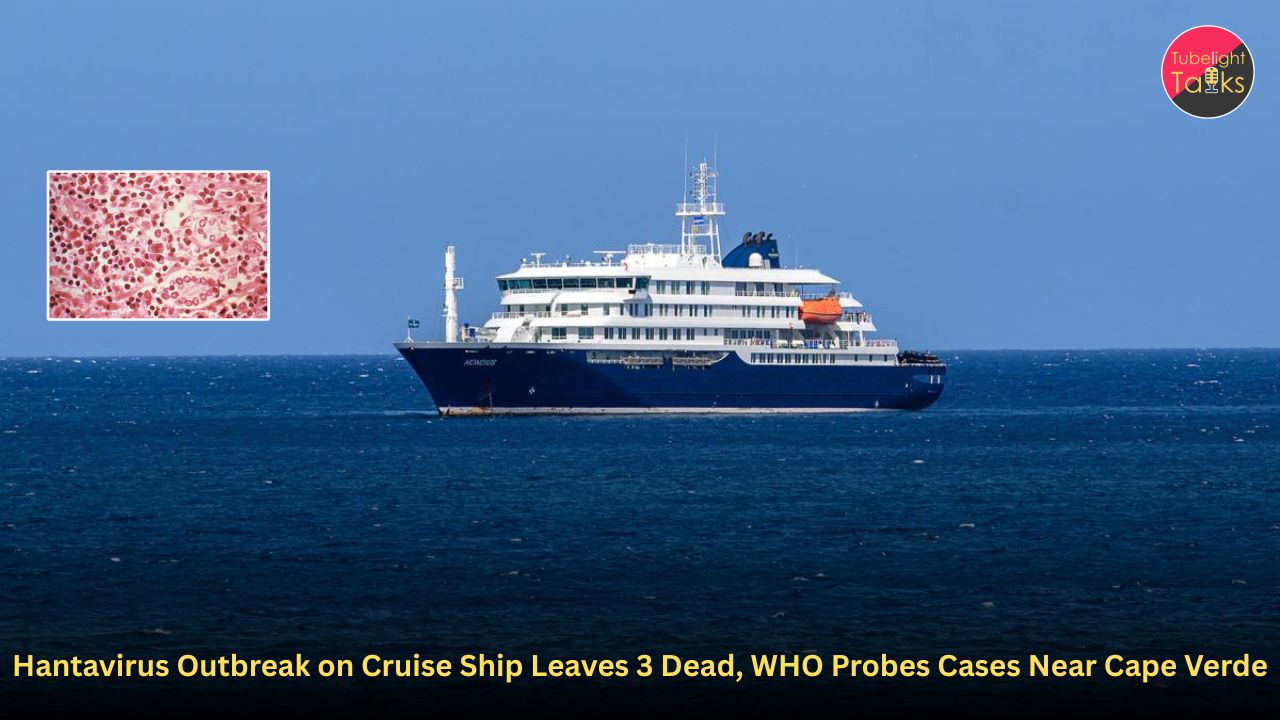
Hantavirus Outbreak on Cruise Ship: 3 Dead, WHO Probes Cases Near Cape Verde
A suspected hantavirus outbreak aboard a cruise ship in the Atlantic Ocean has left three passengers dead and several others ill, prompting a coordinated international response. The vessel, MV Hondius, operated by Oceanwide Expeditions, was sailing from Ushuaia in Argentina to Cape Verde when the outbreak was reported.
The World Health Organization (WHO) has confirmed one case of hantavirus and is investigating five more suspected infections. With one patient in intensive care and others awaiting evacuation, authorities are working to assess risks and provide urgent medical support.
Key Highlights of the Hantavirus Outbreak on Cruise Ship
- Three passengers have died following a suspected hantavirus outbreak on a cruise ship in the Atlantic
- One laboratory-confirmed case and five suspected cases reported among six affected individuals
- The outbreak occurred aboard MV Hondius travelling from Argentina to Cape Verde
- One patient is in intensive care in Johannesburg, South Africa
- Two crew members onboard require urgent medical attention
- Cape Verde authorities have not authorized disembarkation for medical care
- WHO is coordinating investigations, medical evacuation, and public health response
- Hantavirus is a rodent-borne virus that can cause severe respiratory or kidney disease
Outbreak Reported Aboard MV Hondius During Atlantic Journey
The outbreak was reported on the MV Hondius, a Dutch-flagged polar expedition cruise ship operated by Oceanwide Expeditions. The vessel departed from Ushuaia in Argentina and undertook a multi-week voyage across remote regions, including Antarctica, the Falkland Islands, South Georgia, and Saint Helena, before reaching waters near Cape Verde.
At the time of the incident, around 150 tourists were onboard, along with approximately 70 crew members. The ship, which can accommodate about 170 passengers, was anchored near Praia, the capital of Cape Verde, as authorities assessed the situation.
Confirmed and Suspected Cases Under Investigation
The World Health Organization confirmed that one case of hantavirus infection has been verified through laboratory testing, while five additional cases remain under investigation. In total, six individuals were affected.
Of these, three passengers died, and one individual is currently in intensive care in Johannesburg, South Africa. WHO stated that detailed investigations are ongoing, including further laboratory testing, epidemiological analysis, and virus sequencing to better understand the outbreak.
The agency is also facilitating coordination between countries and health authorities to arrange medical evacuation of symptomatic individuals and to assess the broader public health risk.
Victims Identified as Illness Progressed Rapidly
Among those who died were an elderly Dutch couple aged 70 and 69. The man developed symptoms onboard and later died after being taken to Saint Helena in the South Atlantic. His wife also became ill and was evacuated to South Africa, where she died in a hospital in Johannesburg.
A third passenger also died during the voyage. A 69-year-old British national who fell ill after the ship left Saint Helena is currently receiving treatment in intensive care in Johannesburg after testing positive for hantavirus.
Medical Evacuation Delays as Ship Remains Restricted
Efforts to provide urgent medical care have faced delays due to restrictions on disembarkation. Authorities in Cape Verde had not granted permission for passengers or crew requiring medical treatment to leave the ship.
Two crew members onboard have been identified as needing urgent medical care. Local health officials visited the vessel to assess the condition of symptomatic individuals, but decisions regarding their transfer to onshore medical facilities were still pending.
Oceanwide Expeditions stated that ensuring timely medical care for affected individuals remains its priority. Dutch authorities are working to coordinate repatriation efforts for symptomatic passengers and the deceased, subject to approvals from local authorities.
Understanding Hantavirus and How It Spreads
Hantavirus is a family of viruses primarily carried by rodents such as rats and mice. Humans typically become infected by inhaling airborne particles from contaminated rodent urine, droppings, or saliva.
The virus can cause two serious illnesses:
| Condition | Affected Area | Key Impact |
| Hantavirus Pulmonary Syndrome (HPS) | Lungs | Severe respiratory illness, can be fatal |
| Hemorrhagic Fever with Renal Syndrome (HFRS) | Kidneys | Kidney damage, internal bleeding |
While human-to-human transmission is extremely rare, certain strains such as the Andes virus, found in parts of South America, have shown limited transmission between people.
Also Read: Nipah Virus Detected in West Bengal: Two Healthcare Workers Infected, Government on High Alert
Symptoms and Severity of Infection
Hantavirus infection typically begins with flu-like symptoms, including fatigue, fever, and muscle aches. Patients may also experience headaches, dizziness, chills, and abdominal pain.
As the illness progresses, respiratory symptoms such as coughing and shortness of breath may develop. In severe cases, the infection can lead to lung failure.
The mortality rate for hantavirus pulmonary syndrome is estimated at around 38 to 40 percent among patients who develop respiratory complications, making early detection and treatment critical.
No Specific Cure, Treatment Focuses on Supportive Care
There is currently no specific antiviral treatment for hantavirus infection. Medical care focuses on supportive treatment aimed at managing symptoms and maintaining vital functions.
Patients with severe illness may require:
- Oxygen therapy
- Mechanical ventilation
- Intensive care monitoring
- Dialysis in cases involving kidney failure
Early medical attention significantly improves survival chances.
Unusual Nature of the Outbreak Raises Questions
Health experts have noted that hantavirus outbreaks are typically linked to environmental exposure involving rodents, making its occurrence on a cruise ship unusual.
The source of the infection onboard the MV Hondius has not yet been identified. Investigations are ongoing to determine whether exposure occurred during the voyage or at one of the ship’s stops.
Given the confined setting of a cruise ship, authorities are closely monitoring the situation to assess any potential risk to other passengers and crew.
WHO Leads International Coordination and Risk Assessment
The World Health Organization is coordinating with national authorities, the cruise operator, and other stakeholders to manage the situation. This includes facilitating medical evacuations, conducting a full public health risk assessment, and supporting those onboard.
Health authorities in South Africa have initiated contact tracing efforts to identify individuals who may have been exposed to infected passengers. Multiple countries, including the Netherlands and the United Kingdom, are involved in the response due to the nationalities of those affected.
WHO has emphasized that investigations, including laboratory testing and virus sequencing, are ongoing.
Cruise Remains Anchored as Authorities Evaluate Next Steps
The MV Hondius remains anchored near Cape Verde, with passengers and crew awaiting further instructions. Disembarkation, medical screening, and further travel decisions depend on coordination between local authorities and international health agencies.
The situation continues to develop as investigations progress and efforts are made to provide medical care and ensure safety onboard.
Spiritual Insight: Understanding Life, Death, and True Protection Through the Knowledge of Saint Rampal Ji Maharaj
Incidents like the hantavirus outbreak remind us how uncertain human life can be. Despite advanced medical systems and global coordination, situations can still become uncontrollable within moments. According to the teachings of Saint Rampal Ji Maharaj, such events highlight the deeper truth that human beings are not fully protected by material arrangements alone.
His spiritual knowledge explains that diseases, untimely deaths, and suffering are linked to karmic balance and the lack of true spiritual refuge. He emphasizes that only by taking shelter in the correct method of worship, as described in holy scriptures, can a person attain complete protection and peace.
Saint Rampal Ji Maharaj teaches that true safety lies not just in physical precautions but in spiritual awakening. By following the right path of devotion, one can overcome fear, reduce suffering, and move toward a life of stability and ultimate salvation.
This perspective encourages individuals to reflect beyond immediate events and seek deeper understanding about life, destiny, and the eternal solution to human problems.
A Rare but Serious Outbreak Highlights Ongoing Risks
The hantavirus outbreak aboard the MV Hondius has resulted in three deaths and multiple suspected cases, prompting a coordinated global health response. With investigations still underway and medical evacuations being arranged, authorities are focused on identifying the source of the infection and preventing further spread.
The incident underscores the seriousness of hantavirus infections and the challenges of managing health emergencies in isolated environments such as cruise ships, where rapid response and international coordination are critical.
FAQs on Hantavirus Outbreak on Cruise Ship
1. What happened in the hantavirus outbreak on the cruise ship?
Three passengers died and several others fell ill on MV Hondius after a suspected hantavirus outbreak. WHO confirmed one case and is investigating five more infections.
2. Where did the hantavirus outbreak on the cruise ship occur?
The outbreak occurred aboard MV Hondius sailing from Ushuaia, Argentina, to Cape Verde, currently anchored near Praia as authorities manage the health emergency.
3. How does hantavirus spread among humans?
Hantavirus spreads mainly through inhalation of airborne particles from infected rodents’ urine, droppings, or saliva. Human-to-human transmission is extremely rare and limited to certain strains.
4. What are the symptoms of hantavirus infection?
Symptoms include fever, fatigue, muscle aches, headaches, and abdominal pain, followed by severe respiratory issues like coughing and shortness of breath in advanced stages.
5. Is there any treatment for hantavirus infection?
There is no specific cure for hantavirus. Treatment focuses on supportive care, including oxygen therapy, intensive care, and ventilators to manage severe respiratory complications.
Related Stories










Discussion (0)