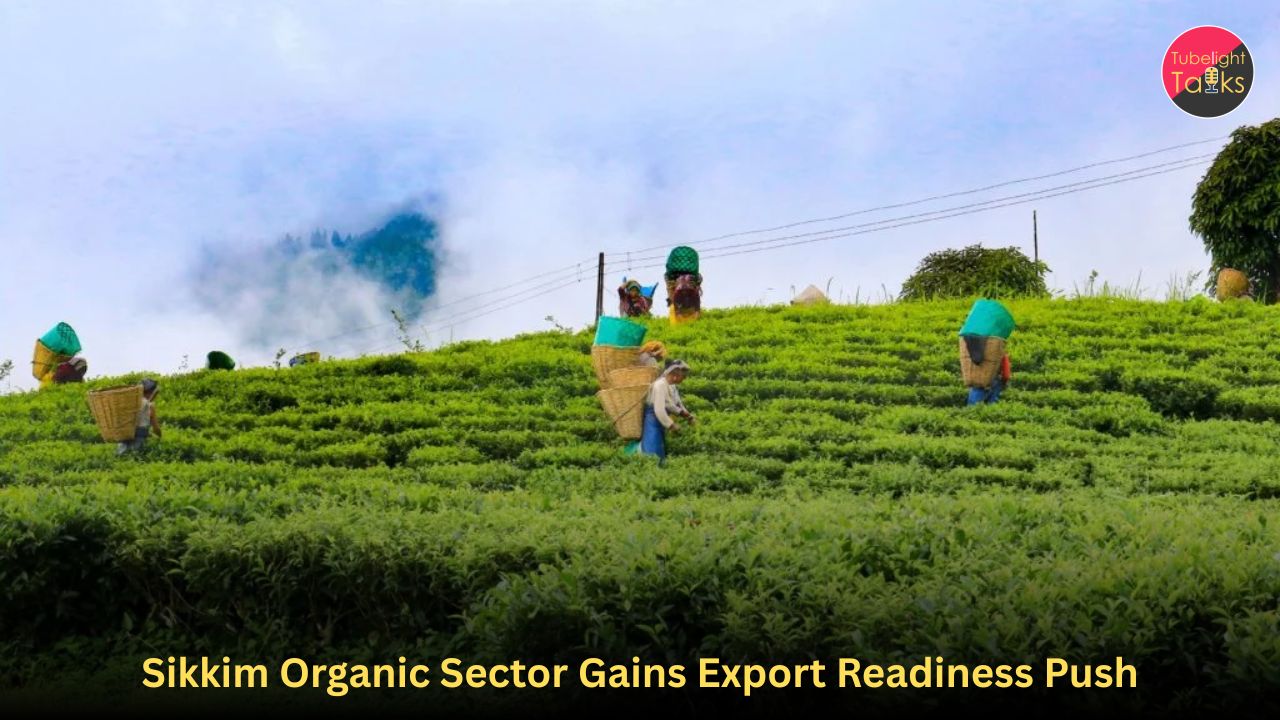
Sikkim’s Organic Milestone: Export-Readiness Push Strengthens Farmers and Global Market Access
Sikkim’s organic farming success story is receiving a fresh export-readiness push. The specific claim that Sikkim’s organic exports increased by 20% this quarter and directly benefited over 50,000 farmers could not be independently verified through official public data available so far. However, verified official sources show that APEDA organised the Sikkim Organic Conclave-cum-International Buyer Seller Meet in Gangtok and released a Knowledge Report on supply chain and export readiness of Sikkim’s organic produce.
India’s First Fully Organic State
Sikkim became India’s first fully organic state in 2016. APEDA notes that this status enabled Sikkim’s produce to gain recognition under the export certification system. The state was also conferred the Future Policy Gold Award by the United Nations Food and Agriculture Organization in 2018 for its leadership in organic agriculture.
APEDA’s Export-Readiness Initiative
The APEDA conclave in Gangtok was designed to showcase Sikkim’s organic products to international buyers and improve export linkages. Such events are important because organic farmers need not only certification but also packaging, logistics, buyer trust, cold-chain systems and market intelligence.
Sikkim’s Move Toward High-Value Organic Markets
A recent Sikkim government press release said participation in Vitafoods India 2026 was aimed at transitioning Sikkim’s organic farming sector into a high-value stakeholder in the global nutraceutical economy. It focused on “farm-to-formulation” linkages and sustainable outsourcing of organic raw materials from Sikkim.
Also Read: PM Modi Boosts Sikkim’s Infrastructure with ₹4,000 Crore Project Launch
Why Organic Exports Matter for Farmers
Organic produce can command premium prices when properly certified, packaged and marketed. For farmers in a mountainous state like Sikkim, high-value organic crops such as large cardamom, ginger, turmeric, buckwheat, medicinal plants and specialty foods can create better income opportunities if supply chains are strengthened.
Need for Verified Export Numbers
The claim of 20% quarterly growth is positive, but export figures should be supported by official data from APEDA, state departments or customs statistics. Without such confirmation, the more reliable story is that Sikkim’s organic sector is being actively positioned for stronger global market access.
Branding Can Turn Organic Farming Into Better Income
Organic farming alone does not guarantee better farmer earnings. Farmers benefit when organic produce is connected with trusted branding, processing, packaging and long-term buyers. Sikkim’s next challenge is to move from being known as an organic state to becoming a reliable supplier of premium organic products in global markets.
Mountain Agriculture Needs Special Support
Farmers in hill regions face transport difficulties, limited landholdings and higher logistics costs. Export readiness must therefore include collection centres, storage, value addition and digital market access. If these systems are built well, Sikkim’s organic model can support youth employment, women-led enterprises and sustainable rural livelihoods.
Organic Farming Needs Strong Market Linkages
Sikkim’s organic farming identity is globally admired, but farmers benefit fully only when produce reaches strong markets. Certification, packaging, storage, transport, branding, and buyer linkages are essential for turning organic farming into better income. Export-readiness initiatives can help farmers move beyond local sales and connect with premium domestic and international buyers.
A Model for Sustainable Mountain Agriculture
Sikkim’s organic journey is especially important because mountain agriculture faces unique challenges such as small landholdings, difficult transport, and fragile ecology. Organic farming can protect soil health, reduce chemical load, and promote biodiversity. If supported with value addition and farmer-centric supply chains, Sikkim can become a model for sustainable agriculture, rural entrepreneurship, and eco-friendly development.
Purity in Food and Purity in Life
Organic agriculture reflects a desire for cleaner soil, safer food and healthier living. Sant Rampal Ji Maharaj’s teachings emphasize that outer purity should be accompanied by inner purity through true worship, discipline and righteous conduct. His official teachings state that the purpose of human life is to worship the Supreme God and return to Satlok, the eternal abode.
Call to Action
Verify and Promote Sikkim Organic Data
Official agencies should publish timely export data so farmers, buyers and consumers can track real progress.
Build Farmer-Centric Export Chains
Certification, packaging, logistics, buyer linkages and processing should be strengthened to ensure farmers receive better value.
FAQs: Sikkim Organic Sector Gains Export Readiness Push
1. Did official sources confirm a 20% export increase this quarter?
No official public source confirming the exact 20% quarterly export-growth claim was found.
2. What official development is verified?
APEDA organised the Sikkim Organic Conclave-cum-International Buyer Seller Meet and released an export-readiness knowledge report.
3. When did Sikkim become fully organic?
Sikkim became India’s first fully organic state in 2016.
4. What is Sikkim doing for global market access?
The state is working on buyer linkages, export readiness and farm-to-formulation opportunities.
5. Which products have export potential?
Large cardamom, ginger, turmeric, medicinal plants and other certified organic produce have strong potential.
Related Stories







Discussion (0)