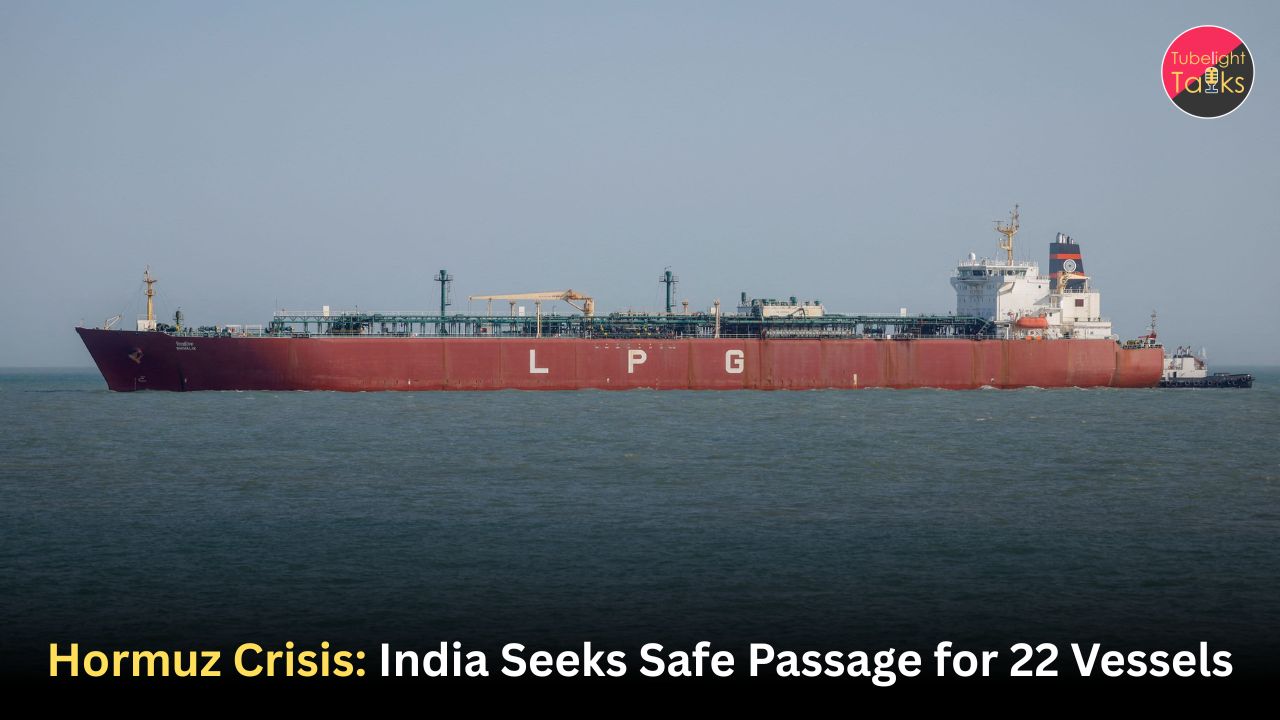
Hormuz Crisis: India Moves to Secure 22 Vessels Carrying Vital Energy Supplies
India has entered full crisis-management mode over the Hormuz crisis, with officials seeking safe passage for 22 Indian-flagged vessels and closely monitoring cargoes critical to the country’s crude oil, LNG, and LPG supply. As the Gulf conflict has sharply reduced maritime movement through one of the world’s most sensitive energy chokepoints, New Delhi has been in touch with regional stakeholders while also prioritising domestic fuel security.
Reuters reported that India’s stranded fleet includes crude, LPG, and LNG carriers, turning the Hormuz crisis into a direct test of the country’s energy resilience and diplomatic agility.
Why the Strait of Hormuz Matters So Much for India
The Strait of Hormuz is one of the world’s most important maritime choke points because roughly one-fifth of global oil and seaborne liquefied natural gas typically moves through it. For India, the route is even more critical because the country sources more than 40% of its crude imports and about 90% of its LPG imports from the Middle East. When traffic in Hormuz slows or becomes dangerous, the impact is felt not just in energy markets but also in domestic transport, cooking gas distribution, industrial supply chains, and inflation expectations.
This is why the present shipping disruption is being treated as more than a temporary logistics issue. It affects household fuel access, refinery planning, import scheduling, and broader economic stability. A conflict thousands of kilometres away can still reach Indian homes through higher fuel prices, delayed LPG cylinders, or rising freight and insurance costs.
What India Has Done So Far
Safe Passage for 22 Vessels
Reuters reported on March 14 that India sought safe passage for 22 of its vessels stranded west of the Strait of Hormuz. External Affairs Ministry spokesperson Randhir Jaiswal said India had remained in touch with all major parties in the region, with a focus “particularly on energy security.” That wording reflected New Delhi’s clear priority: protect ships, protect cargo, and protect India’s fuel lifelines without becoming drawn into the conflict itself.
By March 18 and March 19, official Indian briefings showed that 22 Indian-flagged vessels with 611 Indian seafarers still remained in the western Persian Gulf region under close monitoring by the Directorate General of Shipping in coordination with ship owners, agencies, and Indian missions. The government also said the DG Shipping Control Room had been running 24×7 and had handled thousands of calls and emails from seafarers, families, and maritime stakeholders.
Monitoring, Repatriation and Domestic Coordination
The Indian government has paired external diplomacy with operational monitoring. According to PIB, more than 472 Indian seafarers had already been safely repatriated by the time of the latest briefing, while all Indian seafarers in the region were reported safe and no recent shipping incident involving Indian-flagged vessels had been reported in the preceding 24 hours. That matters because the Gulf crisis is not only about cargo security but also about the safety of Indian crews serving aboard merchant vessels.
This response shows that India’s Hormuz strategy is not limited to waiting for events to calm down. It is an active combination of diplomacy, shipping surveillance, domestic fuel management, and seafarer assistance.
Also Read: Brent Crude Price Surge Above $111 as Qatar LNG Damage Shocks Global Markets
Which Cargoes Are at Stake
Crude Oil, LPG and LNG
Reuters reported that the stranded or affected Indian vessels included four crude oil ships carrying a total of 1.6 million metric tons of crude, six tankers carrying 320,000 tons of LPG, and one ship carrying 200,000 tons of LNG. That mix explains why the crisis is so serious. Crude is essential for refining and fuel supply, LPG is critical for household cooking gas, and LNG supports power, industry, and city gas systems.
One Indian source told Reuters that India was especially keen for the passage of LPG vessels first because the country was already experiencing cooking gas stress. When LPG cargoes are delayed, the effect is visible faster at the household level than many other energy products. This is why the government has been especially sensitive to public messaging on panic buying and alternative energy access.
The Importance of Shivalik and Nanda Devi
Two Indian-flag LPG carriers, Shivalik and Nanda Devi, became important symbols of cautious progress. PIB said they had crossed the Strait of Hormuz on March 14 carrying about 92,712 metric tonnes of LPG and were scheduled to reach Mundra and Kandla. In the later official update, the government said both vessels were already discharging cargo as per the schedule of oil handling companies. That offered some relief, but it did not eliminate the wider threat still facing the remaining ships.
Another Indian-flag vessel, Jag Laadki, carrying about 80,800 metric tonnes of Murban crude oil, also sailed safely and was reported to be en route to India. These successful movements showed that limited passage was still possible, but only under highly uncertain conditions.
Why This Is More Than a Shipping Story
India’s Worst Cooking Gas Stress in Years
Reuters described the present situation as India’s worst cooking gas crisis in decades. The government has already invoked emergency powers to maximise LPG production, cut industrial sales in order to shield households, and encourage consumers to shift to piped natural gas where possible. Reuters also reported that India added 120,000 new piped gas connections in two weeks as part of this response.
This means the Hormuz crisis is now tied directly to daily life inside India. A disruption in sea lanes can lead to longer waits for cylinders, pressure on distribution chains, and concern among low- and middle-income households that depend heavily on LPG for cooking.
Risk to Inflation and Industrial Activity
Beyond household fuel, prolonged disruption could raise input costs across the economy. Higher crude prices affect petrol, diesel, aviation fuel, and freight. LNG disruptions can hit industrial users and city gas networks. LPG shortages affect both homes and commercial consumption. When all three face simultaneous strain, policymakers must manage both physical supply and inflation psychology.
That is why India’s response has included both maritime diplomacy and domestic market management. The message has been consistent: secure what can move, prioritise local demand, and avoid panic in the system.
The Wider International Context
The global shipping picture around Hormuz remains highly unstable. Reuters reported on March 18 that several countries proposed a safe maritime corridor at the International Maritime Organization to help free around 20,000 seafarers stranded in the Gulf.
Hundreds of vessels had halted operations after threats and attacks linked to the regional conflict. That provides important context for India’s efforts: New Delhi’s shipping challenge is part of a much larger international emergency at sea.
In that environment, even limited success in moving a few Indian vessels becomes strategically important. It helps secure supplies, reassures markets, and demonstrates that diplomatic engagement can still create narrow windows for passage even during a wider blockade-like situation.
What Comes Next for India
India’s next challenge is managing the gap between partial relief and full normalisation. The arrival of a few LPG and crude cargoes helps, but it does not end the risk while 22 vessels remain under watch in the western Persian Gulf. The government will need to keep balancing diplomacy, seafarer safety, shipping coordination, and domestic fuel allocation in the days ahead.
If the Strait of Hormuz remains volatile, India may continue diversifying supplies, prioritising household fuel consumption, and using administrative controls to protect essential sectors. The crisis has again highlighted a long-term lesson: energy security is not only about buying fuel, but also about securing routes, building buffers, and preparing for geopolitical shocks.
From Fragile Sea Lanes to Lasting Peace: A Sat Gyaan Perspective
The Hormuz crisis reminds us how uncertain worldly systems can be. A narrow sea route, a sudden conflict, or fear among nations can disturb fuel supplies and bring anxiety to millions of homes. Sant Rampal Ji Maharaj teaches that this material world is temporary and cannot provide permanent peace; true stability comes through correct spiritual knowledge, devotion to the Supreme God, and a life rooted in truth and harmony.
His teachings also emphasise a peaceful society free from hatred and conflict, while the path of true worship is presented as the means to lasting welfare and inner security. In that sense, this crisis is also a reminder that humanity needs not only stronger supply chains, but also higher moral and spiritual wisdom.
FAQs: India Worried About the Strait of Hormuz
1. Why is India worried about the Strait of Hormuz?
Because a very large share of India’s crude and LPG imports come from the Middle East, and Hormuz is the key route for those shipments.
2. How many Indian vessels are being monitored?
The latest official briefing said 22 Indian-flagged vessels with 611 Indian seafarers remained in the western Persian Gulf region under close monitoring.
3. What cargoes are involved?
Reuters reported the affected vessels included crude oil, LPG, and LNG carriers, including four crude ships, six LPG tankers, and one LNG vessel.
4. Have any Indian ships crossed Hormuz safely?
Yes. Shivalik and Nanda Devi crossed with LPG cargoes, and Jag Laadki carrying crude was also reported safe and en route to India.
5. Could this affect LPG cylinder supply in India?
Yes. Reuters said India is facing major cooking gas strain, and the government has already taken emergency steps to protect household LPG supply.
6. What is India doing apart from diplomacy?
India is running a 24×7 shipping control room, coordinating with missions and ship owners, repatriating seafarers, and prioritising domestic fuel needs.
Related Stories



Discussion (0)