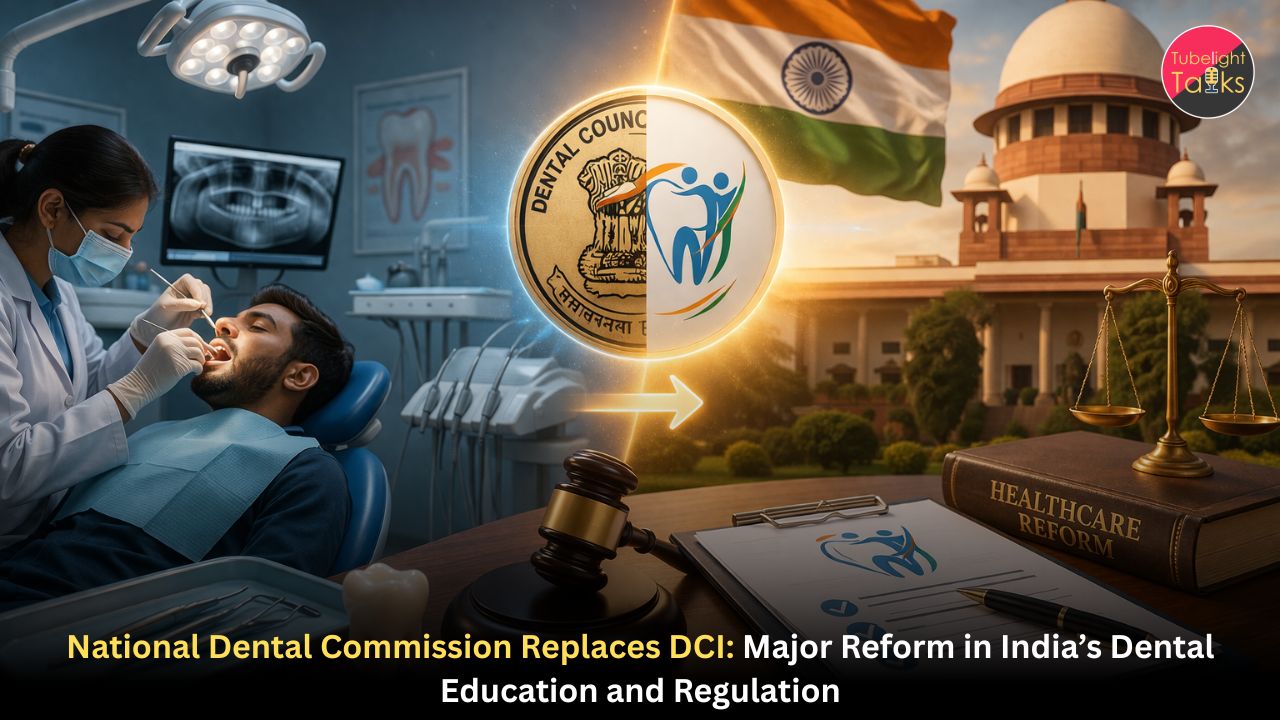
National Dental Commission Replaces DCI: A Major Reform in India’s Healthcare Governance
India has taken a significant step toward reforming its healthcare education and regulatory framework with the official constitution of the National Dental Commission (NDC). This move replaces the long-standing Dental Council of India (DCI), marking a major shift in how dental education and professional standards are governed in the country.
The reform is part of a broader effort by the government to modernize healthcare institutions, improve transparency, and ensure better quality standards in medical and dental education.
Why the Dental Council of India Was Replaced
Limitations of the Old System
The Dental Council of India had been functioning for decades as the primary regulatory body for dental education and practice. However, over time, concerns were raised about transparency, efficiency, and outdated regulatory mechanisms.
There were also issues related to uneven standards across institutions and delays in decision-making processes.
Need for Structural Reform
The creation of the National Dental Commission reflects the need for a more modern, accountable, and efficient regulatory system. The government aims to align dental education with global standards and evolving healthcare needs.
What the National Dental Commission Will Do
Streamlining Dental Education
One of the primary objectives of the NDC is to standardize dental education across the country. This includes setting uniform guidelines for curriculum, infrastructure, and faculty requirements.
Ensuring Transparency and Accountability
The new commission is expected to introduce greater transparency in decision-making processes, including approvals and inspections of dental institutions.
Regulating the Dental Profession
The NDC will also oversee licensing, professional conduct, and ethical standards for dental practitioners, ensuring high-quality healthcare services for citizens.
Also Read: Collegium System Under Spotlight: Justice B.R. Gavai Defends Judicial Independence Framework
Impact on Students and Professionals
Better Quality Education
Students pursuing dental education can expect improved standards, better infrastructure, and more consistent training across institutions.
Increased Opportunities
With a more structured and transparent system, students and professionals may benefit from better career opportunities and recognition.
Broader Implications for Healthcare
Aligning with Global Standards
The reform is expected to bring India’s dental education system closer to international benchmarks, enhancing the country’s reputation in healthcare education.
Strengthening Public Health
Improved dental education and regulation will ultimately contribute to better oral healthcare services for the population.
Government’s Vision for Healthcare Reform
The establishment of the NDC reflects the government’s broader vision of reforming healthcare governance. Similar reforms have been seen in other areas of medical education and regulation.
The focus is on creating systems that are efficient, transparent, and capable of meeting future challenges.
Health and Ethical Conduct
Sant Rampal Ji Maharaj teaches that true well-being comes from both physical health and spiritual discipline. According to His teachings, maintaining ethical conduct and living a balanced life are essential for overall wellness.
In the context of healthcare reforms, these teachings remind us that systems should not only focus on technical excellence but also on moral responsibility and compassion.
Call to Action
Citizens and students should stay informed about changes in healthcare education and regulation, as these directly impact quality of services.
At the same time, adopting a disciplined and ethical lifestyle contributes to a healthier society.
FAQs: National Dental Commission Replaces DCI
1. What is the National Dental Commission (NDC)?
It is the new regulatory body replacing the Dental Council of India.
2. Why was the DCI replaced?
Due to concerns over transparency, efficiency, and outdated systems.
3. What are the main functions of the NDC?
Regulating dental education, licensing, and professional standards.
4. How will this affect students?
It will improve education quality and standardization.
5. Will this improve healthcare services?
Yes, better education leads to better healthcare delivery.
6. Is this part of a larger reform?
Yes, it aligns with broader healthcare governance reforms.
Related Stories










Discussion (0)