Record-Breaking IPL Franchise Valuation: RCB Sale and Rajasthan Royals Deal Redefine Cricket Business
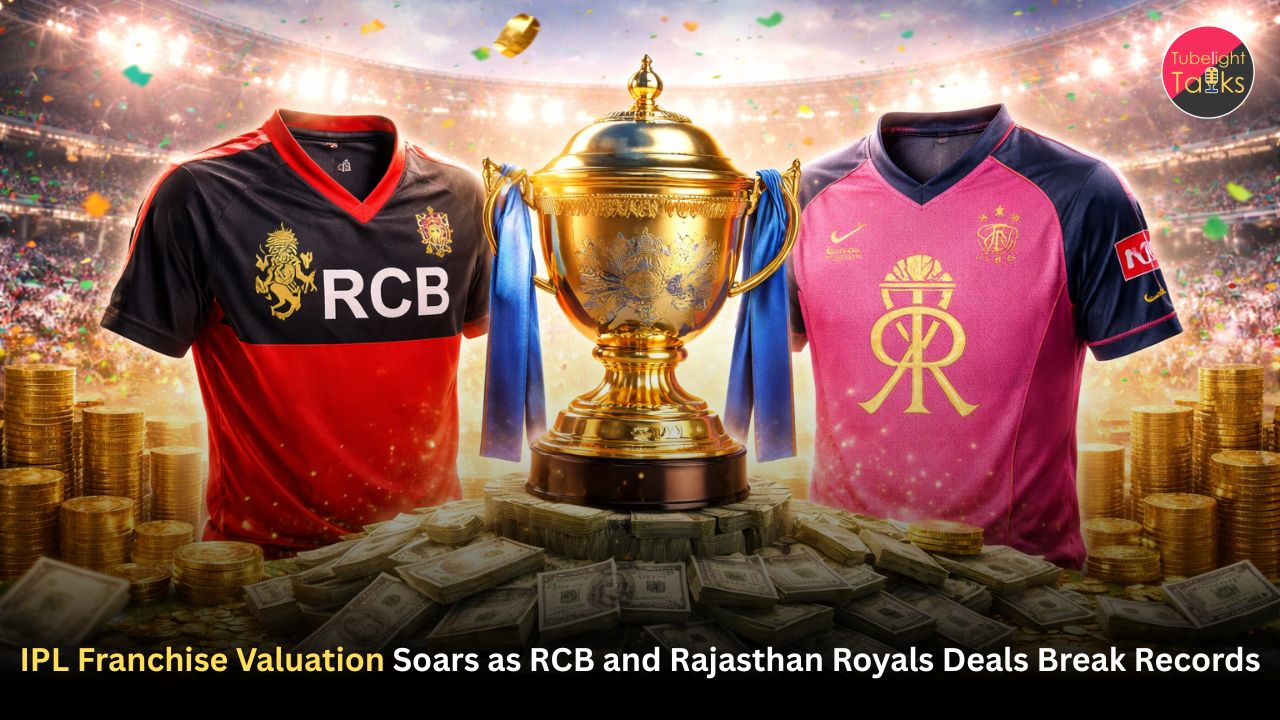
India’s cricket economy has taken a dramatic leap, and the scale of IPL franchise valuation is now impossible to ignore. A consortium including Aditya Birla Group, Times of India Group, Bolt Ventures and Blackstone has agreed to acquire Royal Challengers Bengaluru for $1.78 billion, according to Reuters. Separate Indian media reports published the same day said a Kal Somani-led consortium has acquired Rajasthan Royals for about $1.63 billion.
Even allowing for the difference in source strength between the two deals, the direction is unmistakable: IPL franchise valuations have moved into a range that forces comparison not only within cricket, but across global sports business itself.
The RCB sale is the clearest signal yet
A $1.78 billion deal for one of the IPL’s most visible brands
The most firmly established transaction is the RCB sale. Reuters reported on March 24 that the consortium led by Aditya Birla Group and including Times of India Group, Bolt Ventures and Blackstone agreed to buy Royal Challengers Bengaluru for $1.78 billion. Reuters also reported that United Spirits, owned by Diageo, chose to sell RCB after concluding that the franchise was not essential to its core alcohol business.
The acquisition covers both the men’s and women’s RCB teams and still awaits regulatory clearances from the BCCI and the Competition Commission of India. The structure of the deal matters almost as much as the price. This was not just a domestic family-office buy or a sentimental sports acquisition.
It brought together corporate capital, media capital, institutional investment, and international sports investment logic in one consortium. That combination suggests the IPL is now attracting buyers who see cricket franchises not as side assets, but as multi-platform entertainment and consumer businesses. That is an inference from the composition of the RCB consortium and the scale of the valuation.
Why RCB could command such a premium
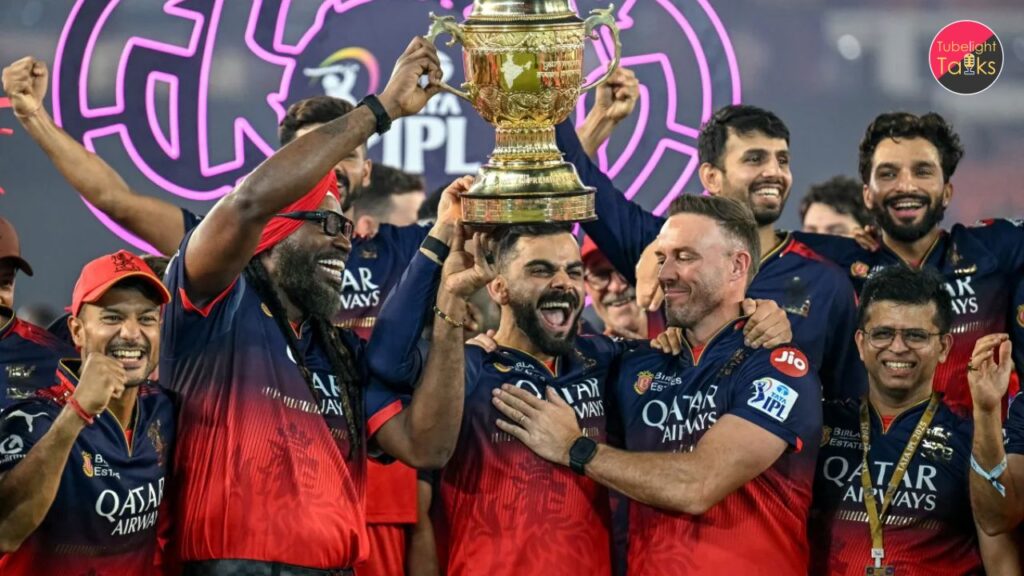
RCB is not simply another team on the IPL list. Reuters noted that the franchise recently won its first men’s IPL title in 2025 and reported revenue of $56 million for 2024-25. Earlier Reuters reporting had also noted that RCB’s women’s team won the WPL title in 2024. Add to that one of the largest fan bases in cricket, long-standing brand recognition, and consistently strong digital and sponsorship visibility, and the $1.78 billion figure begins to look less like a surprise and more like the market pricing a premium asset.
The sale also follows a competitive process. Reuters had reported in February that RCB was one of the IPL assets attracting due diligence from major investors, including David Blitzer, and that Diageo had been evaluating strategic options after deciding the team was non-core. That means the final price was reached in a contested market rather than through a quiet negotiated transfer. Competitive bidding tends to reveal what the market really believes an asset is worth, and in this case that belief was extremely strong.
The Rajasthan Royals reports deepen the story
A reported $1.63 billion valuation adds another giant marker
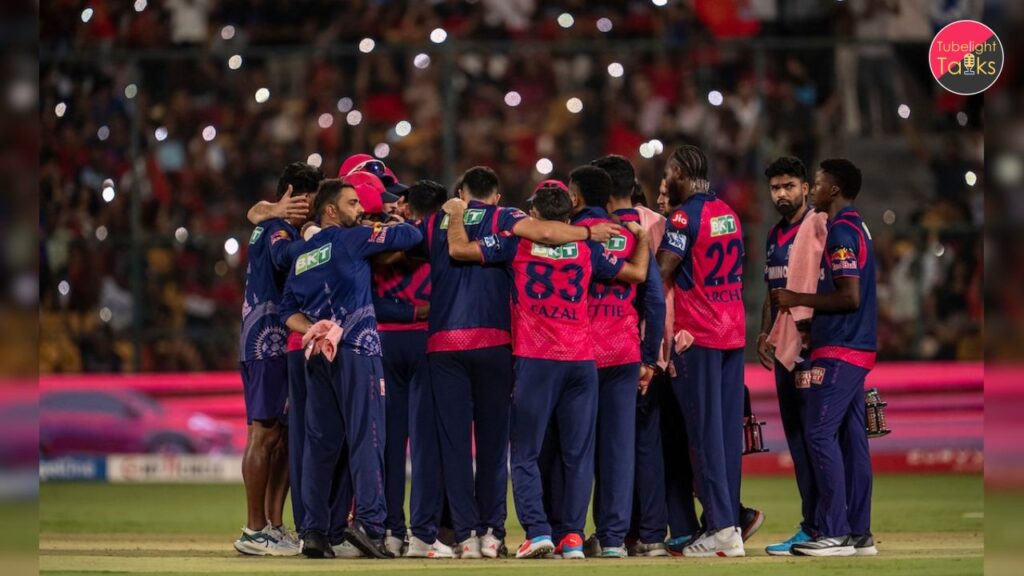
The second major valuation headline came from Rajasthan Royals. Times of India reported that a Kal Somani-led consortium acquired the Royals for $1.63 billion. Another Times of India report the same day framed the acquisition as a major pre-season business development expected to reshape the franchise’s next phase. I have not found a Reuters confirmation of that transaction today, so the Rajasthan Royals portion should be read as currently reported by Indian media rather than independently confirmed by Reuters in the sources reviewed here.
Even with that caution, the market meaning is still significant. If a second IPL franchise is indeed changing hands at roughly $1.63 billion on the heels of the RCB sale, then the pattern matters more than any single number. It suggests that franchise valuations are not being driven by one uniquely glamorous asset alone. The pricing logic appears broader: investors are valuing IPL teams as long-term media, sponsorship, and fan-engagement machines with limited inventory and strong cash-flow visibility. That is an inference based on the sequence of reported franchise deals and Reuters’ earlier reporting on league economics.
Also Read: J&K Makes History: Clinches First-Ever Ranji Trophy Title
The Royals example is powerful because of where the franchise came from
There is a symbolic layer to the Rajasthan Royals story too. The Royals have historically not been treated as the loudest glamour brand in IPL culture. They were the inaugural 2008 champions, but for years they were often seen as relatively lean, data-driven, and less extravagantly marketed than some rival teams.
If such a franchise is now reportedly valued above $1.6 billion, it tells us something profound about the league itself: the valuation story is no longer just about celebrity aura. It is about the overall strength of the IPL system. That is an interpretation supported by the reported deal size and by Reuters’ description of the league’s broader investment appeal.
Why IPL franchise valuations are exploding
Media rights are the biggest engine
The single most important economic driver is media. Reuters reported that IPL broadcast rights crossed $6 billion in 2022. That number matters because central media rights are not just top-line bragging rights; they create a large, relatively predictable revenue stream that can be shared across franchises. Reuters also reported in February that half of media rights and sponsorship proceeds are distributed equally among the 10 teams.
That revenue-sharing architecture is a huge reason global investors find the league attractive. It reduces downside risk and creates a baseline level of earnings power even before ticketing, merchandise, local sponsorships, and prize money are added.
This is where the IPL differs from many more fragile sports properties. A franchise does not need to win every year to remain economically meaningful. The central pool helps create stability, and stability is exactly what private capital values. In sports investing, the dream is not only explosive upside; it is also controlled downside. The IPL’s shared-rights model appears to deliver both. That is an inference drawn from Reuters’ description of the revenue-sharing structure and the recent franchise sale pricing.
Scarcity is making buyers pay more
Another reason IPL franchise valuations keep rising is scarcity. There are only 10 IPL teams. Reuters reported that global private equity firms and investors are attracted partly because the league has a restricted franchise count. When the number of assets is capped and demand from buyers grows, prices tend to escalate sharply. This is classic scarcity economics, but in sports it becomes even more powerful because teams are not just operating companies; they are cultural brands with emotional demand attached to them.
That means each sale becomes a price-discovery event for the entire ecosystem. A $1.78 billion RCB transaction does not affect only RCB. It changes how future bidders think about Mumbai Indians, Chennai Super Kings, Kolkata Knight Riders, Sunrisers Hyderabad, and others. Similarly, a reported $1.63 billion Rajasthan Royals sale would influence expectations across the board. One big deal re-rates the whole neighborhood. That is an inference from the nature of franchise markets and the clustering of recent IPL deal activity.
Audience scale is making cricket investable in a new way
Reuters also reported that the IPL drew 1.19 billion viewers in 2025, bigger than the NFL on that measure. Viewership of that magnitude changes how sponsors, broadcasters, and investors think. A league with that kind of reach is no longer just a national pastime monetized domestically. It is a global-scale attention platform. When sports properties can reliably aggregate mass audiences in a fragmented media world, their commercial leverage rises dramatically.
This helps explain why the league is now drawing interest from Blackstone-linked capital, private equity firms, global sports owners, and top Indian business groups. They are not merely buying cricket. They are buying recurring access to one of the largest and most engaged entertainment audiences in the world. That is an inference based on Reuters’ reporting on investor participation and the IPL’s audience and business value metrics.
Is the IPL really on par with the NBA?
The comparison needs nuance
The claim that the IPL is now economically on par with the NBA is more rhetorical than precise if treated as a one-line accounting statement. Different leagues operate with different season lengths, ownership models, media structures, and international revenue footprints.
But the comparison is not baseless in spirit. Reuters reported that the IPL’s business value reached $18.5 billion in 2025 and that on a per-match basis it ranked second globally behind only the NFL. Those are serious numbers by any standard.
So the most accurate way to frame the comparison is this: the IPL may not mirror the NBA in every financial dimension, but its franchise sale prices, league valuation, audience scale, and per-match economics are now placing it inside the same global sports-business conversation. That is a strong shift from where cricket sat even a decade ago.
It means the IPL is no longer asking to be taken seriously by global capital. Global capital is already showing up. That is an inference based on the Reuters valuation data and the new franchise transactions.
Why global investors are so interested now
The IPL looks like a rare mix of growth and protection
Reuters’ February report laid out the investor case clearly: rising media deals, strong team revenues, a limited number of franchises, and robust central revenue sharing have made IPL teams highly attractive. It also noted that some teams have delivered spectacular revenue and profit growth, with Kolkata Knight Riders doubling revenue and multiplying profit sharply in a single year. That kind of operating momentum is exactly what sports investors want to see before entering at high valuations.
At the same time, investors are also betting on India itself. The IPL sits inside one of the world’s largest consumer markets, one of the fastest-growing digital ecosystems, and one of the most emotionally attached fan cultures in global sport.
A franchise buyer is therefore not only purchasing matchday rights; they are buying into a huge branded economy that includes digital content, sponsorship, retail, events, gaming, women’s cricket, and long-term media expansion. That is an inference from the structure of IPL revenues, the audience numbers Reuters reported, and the inclusion of both men’s and women’s teams in the RCB transaction.
What this means for Indian cricket and Indian business
Cricket franchises are now major corporate assets
One of the biggest consequences of these deals is psychological. For years, IPL teams were discussed partly as passion projects backed by celebrities, conglomerates, or wealthy owners. That framing now looks outdated. At these valuations, IPL franchises must be understood as serious corporate assets. They can influence capital allocation, strategic partnerships, brand architecture, media strategy, and even cross-border investment behavior.
This also raises the bar for management quality. When a sports asset is worth more than a billion dollars, governance, legal compliance, digital monetization, fan data strategy, sponsorship efficiency, and on-field competitiveness all become sharper boardroom concerns. The days when a team could be run mainly on instinct and glamour are fading. Billion-dollar sports properties require structured decision-making. That is an inference from the valuation scale and the nature of the buyers involved.
Women’s cricket could benefit too
The fact that the RCB acquisition includes both the men’s and women’s teams is important. Reuters explicitly noted this. That suggests future IPL-related valuations may increasingly account for broader franchise ecosystems rather than just one men’s team. If that trend continues, women’s cricket could gain a stronger financial and strategic place within franchise portfolios. That would be one of the most meaningful side effects of the current valuation boom.
Risks still exist
High valuations can create pressure as well as prestige
It is easy to celebrate big numbers, but high franchise valuations also create expectations. Buyers who pay at this level will want monetization growth, not just public applause. That could increase pressure around sponsorship yield, content rights, fan conversion, and competitive performance. At the same time, Reuters has also reported that while the IPL is financially dominant, it still faces criticism over player welfare and certain league governance issues. That reminder matters because premium valuations do not automatically solve structural concerns.
There is also the question of sustainability. Sports valuations can rise fast when media optimism is strong, but future growth still depends on keeping audiences engaged, preserving scarcity, avoiding oversaturation, and handling player relations intelligently.
So while the current IPL franchise valuations are extraordinary, the next chapter will be about whether these prices can be justified over time through disciplined execution. That is an inference based on the current business momentum and the wider issues Reuters has highlighted around league standards.
Meaning of Success in a World of Giant Valuations
Teachings available through the official platforms associated with Sant Rampal Ji Maharaj place strong emphasis on humility, righteous conduct, and using worldly success responsibly. Read in that light, even a huge sports-business triumph should not become a source of ego or excess. Wealth, popularity, and fame can create influence, but Sat Gyaan reminds people that lasting worth comes from truth, discipline, and good action.
In the context of the IPL, that means success is most meaningful when it uplifts people, respects fairness, and remains grounded in ethical conduct rather than only financial excitement.
Call to Action
These record IPL franchise valuations are not just about owners changing and headlines getting bigger. They are signals that the business model of Indian cricket has reached a new level of global seriousness.
Fans, investors, and sports observers should now watch what happens next: regulatory approvals, management changes, monetization strategies, treatment of women’s teams, and whether new owners build stronger, more sustainable franchises. The IPL’s future will be shaped not only by sixes and wickets, but by governance, capital, and long-term vision.
FAQs: IPL Franchise Boom: RCB Sold for $1.78 Billion as Rajasthan Royals Deal Pushes Cricket Into a New Financial Era.
1. Who is buying Royal Challengers Bengaluru?
Reuters reports that a consortium including Aditya Birla Group, Times of India Group, Bolt Ventures and Blackstone has agreed to acquire RCB.
2. What is the reported RCB valuation?
Reuters reported the agreed sale price at $1.78 billion.
3. Does the RCB deal include the women’s team?
Yes. Reuters said the transaction includes both the men’s and women’s RCB teams.
4. What about Rajasthan Royals?
Indian media reports say a Kal Somani-led consortium has acquired Rajasthan Royals for about $1.63 billion. I have cited those reports directly because I did not find a Reuters confirmation in the sources reviewed here.
5. Why are IPL franchise valuations rising so quickly?
Reuters points to huge media-rights income, strong revenue sharing, restricted franchise supply, rising fan engagement, and growing investor demand.
6. Is the IPL now one of the biggest sports leagues financially?
Reuters reported that the IPL’s business value reached $18.5 billion in 2025 and that on a per-match basis it ranked second globally behind the NFL, which places it among the world’s most powerful sports properties.
Related Stories
![US Treasury Secretary Scott Bessent discussing foreign exchange and the Japanese Yen intervention.] | [Source: US Treasury Official Feed](https://tubelighttalks.com/wp-content/uploads/2026/08/Scott-300x169.webp)







Discussion (0)