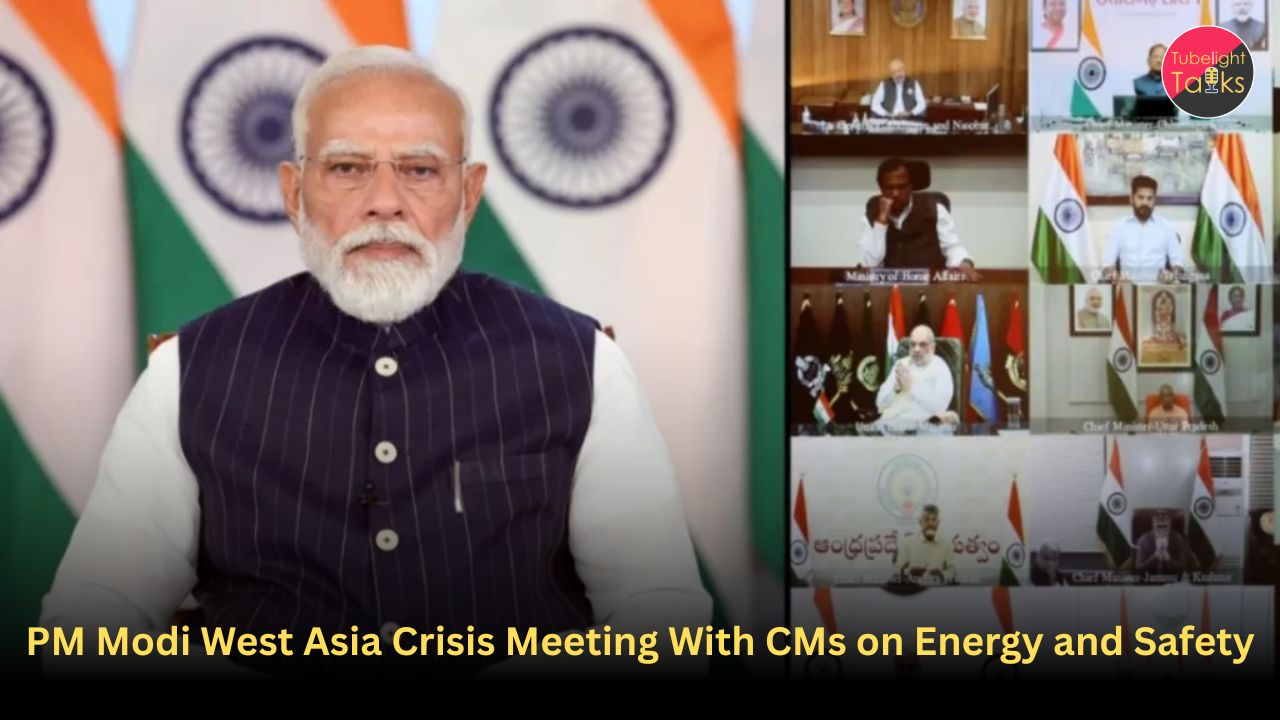
PM Modi West Asia Crisis Meeting Signals National Preparedness Push
India’s response to the escalating West Asia conflict is now moving beyond diplomacy and into coordinated domestic preparedness, with the PM Modi West Asia crisis meeting set to bring Chief Ministers together.
According to Indian media reports published on March 27, Prime Minister Narendra Modi is scheduled to hold a virtual meeting with Chief Ministers from non-poll-bound states to review readiness in light of the ongoing crisis. The reported purpose is to assess how states are preparing for contingencies linked to the conflict, including energy-security stress, price pressures and broader spillover risks.
This matters because the crisis is no longer being handled purely as a foreign-affairs issue. It has now become a Centre-state coordination issue too. That is a significant shift in tone. It suggests New Delhi believes the conflict’s consequences could touch multiple parts of domestic life, from fuel supply and LPG management to inflation expectations and the safety of Indian citizens with family ties across the Gulf. That reading is an inference from the reported decision to convene Chief Ministers specifically on preparedness.
Why the Prime Minister’s reported meeting with Chief Ministers is important
The reported consultation shows the government is trying to revive a “Team India” style coordination model in response to an international shock. Economic Times reported that Modi is expected to virtually meet non-poll-bound Chief Ministers to assess preparedness and contingency planning. Hindustan Times also reported that poll-bound states are expected to be outside the exercise because of the Model Code of Conduct.
That tells us something important about how the Centre is reading the moment. If the issue were only about diplomatic signaling, a statement from Delhi would be enough. But when the Prime Minister reportedly brings Chief Ministers into the loop, it indicates concern that the fallout may require state-level preparedness on supply management, communications and public reassurance. This is an analytical conclusion based on the nature of the proposed meeting.
The likely focus: energy, prices, and Indians in the Gulf
The reported agenda aligns closely with issues the Prime Minister has already raised publicly. Reuters reported on March 24 that Modi told Parliament India had adequate supplies of petroleum, fertilizers and coal despite disruptions and that India depends on the Strait of Hormuz for about 40% of its crude imports. Reuters also reported that Modi emphasized the importance of keeping Hormuz open.
That background makes the likely discussion areas easy to understand. State governments will want to know how to respond if international oil prices stay high, if LPG and transport costs keep rising, or if panic-driven rumor cycles begin affecting consumers. The concern about Indian nationals in the Gulf is also grounded in official statements: Modi said in Parliament that around one crore Indians live and work in Gulf countries.
So even a foreign war can become a domestic political and administrative issue through remittances, family networks, travel disruption and evacuation needs.
Also Read: Fuel Excise Duty Cut India as Government Expands LPG Supply Amid Oil Shock
Jaishankar’s France visit shows India is handling the crisis on two tracks
While the Centre reportedly coordinates with states at home, India is also deepening diplomatic engagement abroad. The Ministry of External Affairs said on March 26 that External Affairs Minister S. Jaishankar would visit Abbaye des-Vaux-de-Cernay, France on March 26 and 27 to participate in the G7 Foreign Ministers’ Meeting with partner countries, at the invitation of France’s foreign minister.
Reuters reported that the G7 foreign ministers’ meeting in France is taking place under the shadow of the wars in Iran and Ukraine, with the Middle East conflict and the disruption of global energy and shipping routes central to the discussions. Reuters also reported today that Jaishankar met Ukrainian Foreign Minister Andrii Sybiha on the sidelines and that the two discussed the Middle East and the secure functioning of key global supply chains.
That creates a clear two-track Indian strategy. One track is external: engage major powers and partners on stabilization, shipping, and energy. The other is internal: ensure Indian states are prepared for the domestic fallout of an international crisis. This is an inference from the parallel timing of the reported PM-CM meeting and Jaishankar’s participation in the G7 meeting.
Why this matters politically and economically
The market and currency turmoil of March 27 has made the crisis harder to compartmentalize. Reuters reported that Indian shares fell sharply and that the rupee hit a record low as war-linked oil fears intensified. That means the domestic cost of the conflict is no longer abstract. It is showing up in asset prices, fuel calculations and fiscal choices.
That is probably why a Chief Ministers’ consultation makes sense now. If the conflict persists, states may face questions about LPG distribution, consumer sentiment, public transport costs, and support systems for families linked to Gulf workers. A meeting like this is therefore about more than optics. It is about showing that the Centre wants state administrations aligned before the crisis deepens further. This is an inference from the market shock and the timing of the reported consultation.
The value of collective responsibility
Teachings associated with Sant Rampal Ji Maharaj emphasize responsibility, compassion and acting with foresight in times of collective difficulty. In that spirit, a whole-of-government response to crisis has deeper value when it is guided by public welfare rather than politics alone. When leaders coordinate to reduce fear, protect citizens and keep essential systems functioning, governance becomes closer to service. This is a spiritual reflection, not a factual claim.
FAQs: PM Modi West Asia Crisis Meeting
1. Is PM Modi officially confirmed to be meeting Chief Ministers today?
As of the sources reviewed, Indian media reports say Modi is scheduled to hold a virtual meeting with Chief Ministers of non-poll-bound states on March 27 to review preparedness related to the West Asia crisis. I have not cited an official PMO release confirming the meeting yet.
2. What is the likely focus of the PM’s consultation?
Reported focus areas include preparedness for the West Asia crisis, especially energy security, the impact of oil-price surges, and broader contingencies. Those concerns also align with Modi’s recent public remarks on fuel supplies and Hormuz.
3. Why is the Strait of Hormuz so central to India’s concerns?
Reuters reported that India depends on the Strait of Hormuz for about 40% of its crude imports, which is why energy security and shipping access remain critical.
4. Where is Jaishankar right now?
The MEA said Jaishankar is in France on March 26-27 to participate in the G7 Foreign Ministers’ Meeting with partner countries.
5. What has Jaishankar done at the G7 meeting so far?
Reuters reported that he met Ukraine’s foreign minister on the sidelines and that they discussed the Middle East situation and the importance of secure global supply chains.
6. Why is the Centre involving states in an international crisis?
Because the West Asia conflict is affecting domestic concerns such as fuel prices, supply chains, and the welfare of Indians connected to the Gulf. That makes it both an external and internal governance issue. This is an inference supported by the current market, energy and diplomatic context.
Related Stories

Discussion (0)