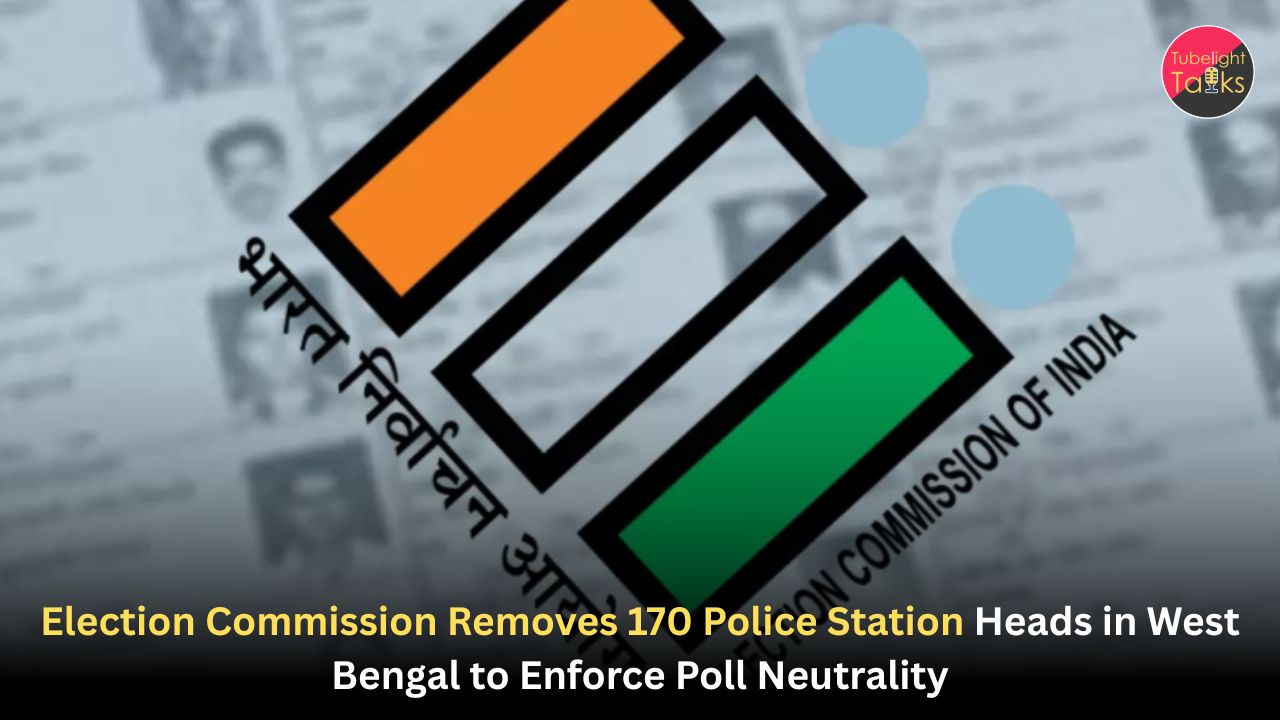
Election Commission Removes 170 Police Station Heads in West Bengal to Ensure Neutrality
The Election Commission has ordered the removal of the officers-in-charge of 170 police stations in West Bengal in a major administrative intervention ahead of the Assembly elections. Government-linked reporting said the move is part of a broader reshuffle of 184 police officials, including 11 higher-ranking officers, and covers politically significant constituencies such as Bhowanipore and Nandigram.
This is one of the clearest signals yet that the Commission wants to tighten control over the election environment at the police-station level, where complaints of intimidation, local influence, and biased law-and-order handling often matter most. In a state where election neutrality is regularly contested, changing police station heads is not a minor clerical step. It is a direct intervention into the machinery that shapes voter confidence on the ground. This is an inference based on the scale and timing of the EC action.
What exactly the Election Commission has done
According to News on AIR’s reporting, the EC removed the officers-in-charge of 170 police stations across West Bengal. The same report said the Commission approved the transfer and realignment of a total of 184 police officials, including 11 high-ranking officers, based on recommendations from the Chief Electoral Officer’s department.
Times of India’s reporting adds detail to the scale of the operation. It described the move as one of the EC’s biggest administrative reshuffles and said 173 police officers were shifted, including 31 in Kolkata, alongside changes involving 83 Block Development Officers who also serve as assistant returning officers. That means the police reshuffle is part of a much wider administrative cleanup ahead of polling.
Why this move matters so much
Police station heads are among the most important local actors during elections. They influence preventive action, response speed, deployment patterns, and how seriously complaints of violence, intimidation, or booth-area tension are treated. When the Election Commission changes them in large numbers, it is usually trying to break any perception that local policing has become too politically entangled. This is an inference based on the role of OCs and the EC’s election-time intervention pattern.
The importance of neutrality has already been visible in other recent EC actions in the state. Times of India reported that the Commission suspended the Basanti police-station in-charge over poll-related violence and failure to deploy available central forces despite prior warning. In another case, it took action against CAPF personnel for violating election protocol. Together, these actions show the EC is operating with a low tolerance for any sign of negligence or compromised conduct.
The West Bengal election context
West Bengal elections are often marked by intense scrutiny over law and order, voter intimidation, and the role of local administration. That is why the EC’s action is being read not only as a transfer order, but as a message. The Commission appears to be saying that confidence in the electoral process starts with confidence in those who police the polling landscape. This is an inference drawn from the EC’s repeated focus on intimidation, rapid response, and officer accountability.
The Commission has also warned that intimidation outside booths, at homes, or in localities may be treated as booth-capturing and could lead to a re-poll after inquiry. That tougher line helps explain why the EC would want police leadership at the station level reset before nominations and polling intensify.
Why this is bigger than a transfer list
At one level, this is a bureaucratic reshuffle. At another, it is a preventive political intervention. Elections are often won or lost not only through speeches and campaigns, but through whether ordinary voters feel free enough to leave home, reach the booth, and cast a ballot without fear. A police-station head seen as compromised can damage that confidence quickly. This is an analytical conclusion based on the EC’s stated neutrality focus and the pre-poll environment in West Bengal.
The inclusion of high-profile constituencies also matters. It suggests the Commission is not limiting itself to remote or low-visibility districts. It is moving into politically charged zones where perception, visibility, and contest intensity are highest. That makes the reshuffle both practical and symbolic.
Fair public conduct
Teachings associated with Sant Rampal Ji Maharaj emphasize honesty, fairness, and responsibility in positions of authority. In that spirit, public institutions earn trust only when they act without bias and protect every person equally. Election administration has real moral value only when fear is removed and justice is seen in action.
Call to Action
The true test of this reshuffle will not be the transfer numbers alone. It will be whether voters in West Bengal actually experience calmer, fairer, and less intimidating polling conditions. Administrative action matters most when it changes public confidence, not just internal files.
FAQs: Election Commission Removes 170 Police Station Heads in West Bengal to Enforce Poll Neutrality
1. How many police station heads were removed in West Bengal?
The Election Commission removed the officers-in-charge of 170 police stations, according to government-linked reporting.
2. Was this only about police station heads?
No. Reports say the broader realignment covered 184 police officials, including 11 senior officers. Times of India also reported shifts involving 83 BDOs.
3. Why did the EC take this step?
The reshuffle was aimed at ensuring neutrality and strengthening confidence in election administration ahead of polling. That purpose is reflected in the reporting and the context of other recent EC actions in the state.
4. Did the action include major constituencies?
Yes. Reports say constituencies such as Bhowanipore and Nandigram were among the affected areas.
5. Has the EC taken other strict pre-poll actions in West Bengal recently?
Yes. It suspended the Basanti police-station in-charge over poll violence and acted against CAPF personnel for election-protocol violations.
6. Why are police station heads so important during elections?
Because they are central to local law-and-order management, complaint handling, and prevention of intimidation. This is an inference based on their role and the EC’s focus on voter safety and neutrality.
Related Stories






Discussion (0)