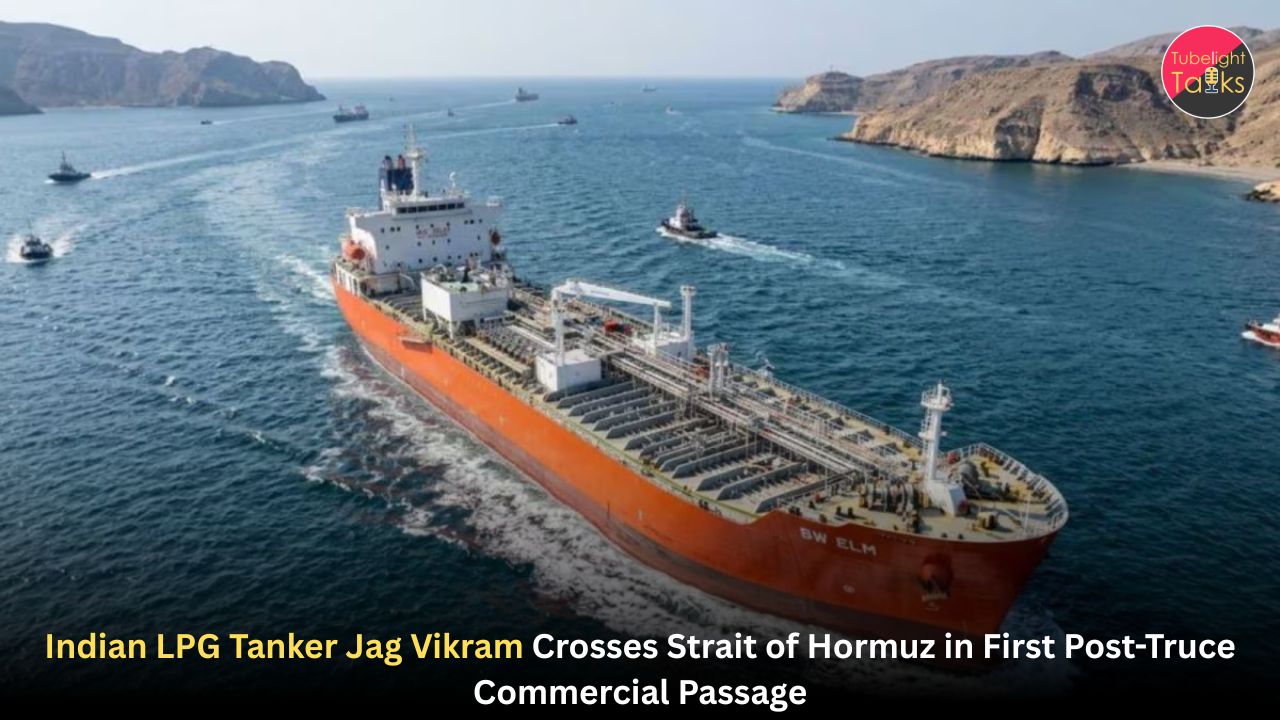
Jag Vikram Clears Hormuz: Why India’s First Post-Truce Commercial Passage Matters
The safe transit of the India-flagged LPG vessel Jag Vikram through the Strait of Hormuz is one of the clearest signs yet that limited operational normalcy may be returning to one of the world’s most critical maritime chokepoints.
India’s government said the vessel safely crossed the strait on April 11 carrying around 20,400 metric tonnes of LPG with 24 seafarers onboard, and that it is expected to arrive in Mumbai on April 15. In an environment shaped by recent conflict and disrupted shipping, that single passage carries strategic, commercial, and psychological significance.
Why One Vessel Can Be a Big Signal
At first glance, a single tanker movement may appear routine. It is not. The Strait of Hormuz is among the world’s most important routes for oil and gas shipments, and recent regional conflict sharply reduced traffic. Reuters reported that only a handful of major vessels were resuming transit following the ceasefire, compared with normal pre-war traffic volumes that are vastly higher.
That makes Jag Vikram’s crossing important not just because it is Indian-flagged, but because it signals that shippers, insurers, naval authorities, and governments are beginning to test whether the route is once again usable under controlled risk.
Why This Matters for India’s Energy Security
For India, this story goes directly to household economics and national energy planning. LPG remains essential for millions of Indian homes, and any disturbance in shipping lanes can create concern over supply, freight costs, and downstream prices. The government’s statement that domestic LPG deliveries remain normal is therefore crucial.
It suggests that while the region remains sensitive, India is trying to reassure consumers that supply chains are being monitored and protected. The safe passage of Jag Vikram supports that message because it demonstrates actual cargo movement, not just policy reassurance.
Also Read: Maritime Update: Green Asha Arrives Safely in Mumbai
The Cargo, Crew, and Timeline
The government said Jag Vikram is carrying approximately 20,400 MT of LPG and has 24 seafarers onboard. The same statement noted that all Indian seafarers in the region were safe and that no incident involving Indian-flagged vessels had been reported in the prior 24 hours. These details matter because shipping updates during regional crises are not only about fuel; they are also about people.
Every safe crossing is a reminder that commercial routes function through the work of crews who often operate closest to geopolitical danger.
Confidence Is Returning, But Slowly
Reporting in Reuters and Indian media suggests the reopening is tentative. Traffic through Hormuz remains far below normal levels, and many vessels are still waiting, rerouting, or proceeding under caution. That means Jag Vikram should be seen as a breakthrough, but not as proof that risk has disappeared. The truce has improved conditions enough for some movement to resume, yet operators remain alert to the possibility of sudden escalation. The maritime industry does not respond to headlines alone; it responds to patterns of safety over time.
A Strategic Win for Indian Shipping
There is also a quiet strategic dimension here. A successful India-flagged transit under difficult conditions reinforces confidence in Indian shipping capability and in government coordination during crises. In a geopolitical emergency, nations are judged not only by speeches but by whether they can safeguard trade, crews, and cargo.
Jag Vikram’s transit shows India’s maritime system still functioning in an environment where many operators remain cautious. It also highlights the importance of flag-state presence in sensitive waters.
Relief for Markets, Even If Partial
The wider market effect is about sentiment as much as volume. When critical chokepoints reopen even partially, traders, insurers, and importers adjust expectations. That does not instantly bring prices down or eliminate risk premiums, but it can soften worst-case assumptions. A safe transit by Jag Vikram therefore matters beyond the cargo it carries.
It serves as a data point that global and regional markets will watch closely in the coming days. If more such crossings follow without incident, confidence may strengthen. If not, anxiety will return quickly.
What Happens Next
The immediate next step is simple: whether more India-bound or India-flagged vessels follow through the same route safely. One successful passage is encouraging, but shipping lanes become reliable only when movement is repeated, schedules normalize, and insurers stop treating the corridor as exceptional. The government’s reassurance that domestic LPG deliveries remain normal is helpful, but the real test will be whether the operational pipeline continues uninterrupted over the next several days.
Calm Navigation Outside and Within
This development also offers a deeper lesson. In times of fear, steady movement becomes a form of strength. Sant Rampal Ji Maharaj teaches that right conduct, patience, and true spiritual wisdom protect a person from panic-driven decisions and inner instability.
His official teachings emphasize the value of correct action and disciplined living. In a different way, Jag Vikram’s transit reflects the same principle: when turbulence surrounds us, safe passage depends on calm direction, not chaos.
Call to Action
During geopolitical crises, fuel-related rumors spread faster than verified updates. Follow official government briefings and credible reporting before reacting to panic about shortages, price spikes, or route closures.
FAQs: Indian LPG Tanker Jag Vikram Crosses Strait of Hormuz in First Post-Truce Commercial Passage
1. What is Jag Vikram carrying?
According to the Indian government, the vessel is carrying approximately 20,400 metric tonnes of LPG.
2. Why is this transit significant?
It is the first India-flagged vessel reported to have crossed the Strait of Hormuz after the U.S.-Iran truce took effect.
3. When is the vessel expected to reach India?
The government statement says Jag Vikram is expected to arrive in Mumbai on April 15, 2026.
4. Does this mean Hormuz is fully safe now?
No. Current reporting suggests transit has resumed only slowly, and overall traffic remains well below normal.
5. Will this affect LPG supply in India?
The government has said domestic LPG cylinder deliveries remain normal, which is intended to reassure consumers about immediate supply continuity.
Related Stories







Discussion (0)