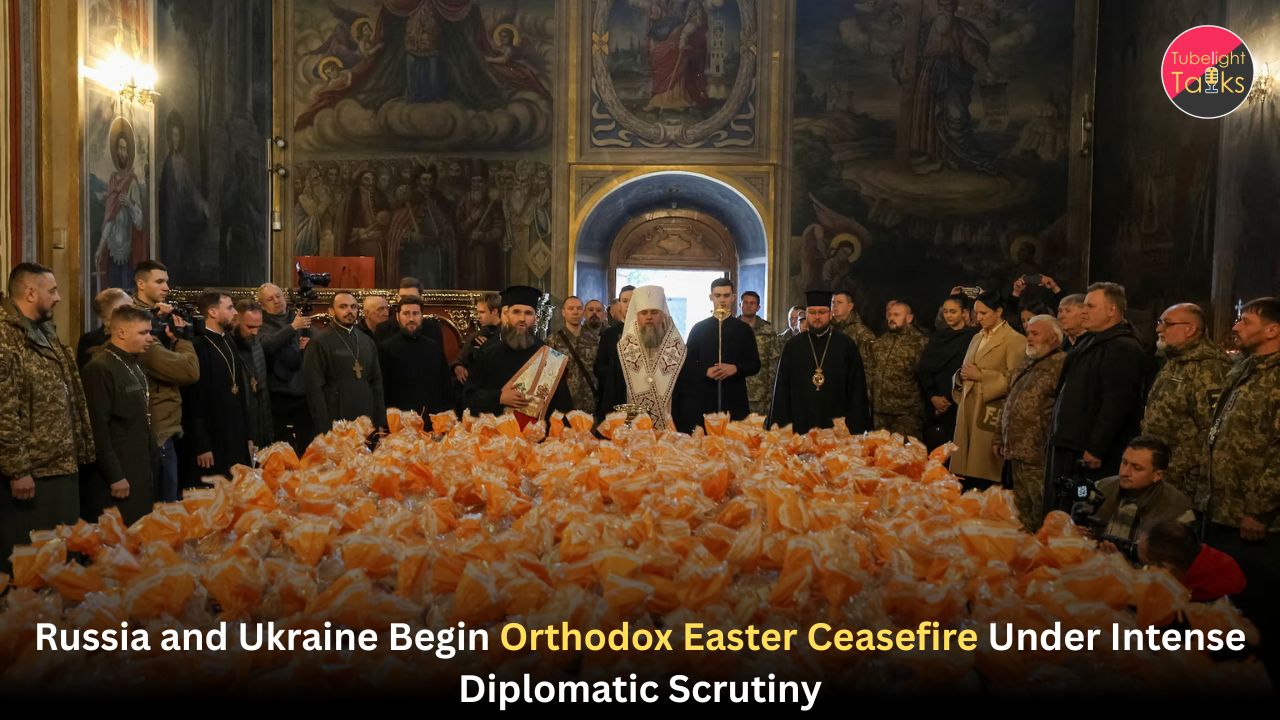
Orthodox Easter Ceasefire Begins in Russia-Ukraine War, but the Truce Remains Fragile
Russia and Ukraine have entered a temporary Orthodox Easter ceasefire that, on paper, offers one of the rarest forms of relief seen in this war: a theatre-wide pause. Reuters reported that Russian President Vladimir Putin announced the truce to run from 4 p.m. on April 11 until the end of April 12, with the Kremlin saying Russian forces had been ordered to halt military activity while remaining alert to provocations.
Ukraine signaled it would observe the pause reciprocally, but even before and soon after it began, reports of alleged violations raised immediate doubts about whether the ceasefire could hold.
Why Even a Short Ceasefire Matters
After years of war, a 32-hour pause may seem minor. Yet in conflicts of this scale, even short ceasefires carry humanitarian, military, and symbolic value. They give civilians a momentary reduction in danger, allow religious observance without constant fear, create diplomatic space, and test whether both sides can comply with even limited restraint.
Reuters noted that Orthodox Easter is observed widely in both Russia and Ukraine, giving the truce emotional resonance beyond military calculation. That symbolic layer matters because ceasefires rooted in shared observance can sometimes create openings that purely technical military pauses cannot.
Also Read: U.S. and Iran Agree to Two-Week Ceasefire, Opening a Narrow Diplomatic Window
The Problem: Distrust Arrived Immediately
The truce began under conditions of deep distrust. AP reported that Ukraine said Russian drone attacks continued even after the Kremlin-declared ceasefire came into effect, while Russia accused Ukraine of strikes in its Kursk region. That pattern is familiar from previous attempts at limited pauses: the political announcement of restraint is followed by competing narratives of violation, each of which hardens domestic opinion and weakens confidence in extension.
A ceasefire can only build toward diplomacy if both sides believe violations are exceptional. If both believe violations are routine, the ceasefire becomes merely a public-relations instrument.
Prisoner Exchange Added Real Substance
One reason this truce is being taken seriously at all is that it was accompanied by an actual exchange of prisoners. Reuters reported that 175 servicemen from each side were swapped, with Ukraine also receiving civilians and Russia reporting the return of civilians from Kursk.
Such exchanges matter because they show functioning channels do exist even amid battlefield hostility. In long wars, prisoner swaps often become the only area where humanity and pragmatism still meet. They do not end wars, but they prove that communication is not fully broken.
Is This a Step Toward Peace Talks?
That remains uncertain. Reuters and AP both suggest that broader peace efforts continue to stall over major unresolved questions, especially territory and security guarantees. So while the Easter ceasefire may create a symbolic opening, the structural obstacles remain enormous. Still, successful short pauses can serve as laboratories of intent.
If both sides show some capacity for restraint, mediators gain material to work with. If the pause collapses instantly, it confirms how far away the war still is from any credible settlement architecture.
The Human Side of a Brief Silence
For civilians, even a partial ceasefire means more than analysts sometimes recognize. It means families hoping a church service can take place without sirens. It means relatives of prisoners seeing loved ones return. It means soldiers receiving a short interval in which death does not feel inevitable every minute. The emotional power of such moments is why even failed ceasefires leave a mark. They remind populations what normal life sounds like—and how far war has pushed them away from it.
Why the World Is Watching Closely
The truce is also being watched because it comes amid continued diplomatic efforts and competing global crises. A war that has entered its fifth year can easily become normalized in the international imagination. But moments like this force renewed attention. If a shared religious observance cannot sustain even a two-day quiet period, the message to diplomats is grim. If it can, even partially, then future pauses around infrastructure, humanitarian corridors, or negotiations may seem more plausible.
A Pause Is Not Peace—But It Can Teach
The great temptation in war is to treat every pause as weakness and every compromise as surrender. Yet civilizations survive because some pauses are allowed to mean something larger than tactical advantage. Sant Rampal Ji Maharaj’s teachings stress compassion, truth, and the abandonment of destructive ego.
In a conflict context, that message remains powerful: lasting peace begins not when one side feels humiliated, but when human life is valued above pride and revenge. Without that shift, ceasefires remain brief interruptions inside a much longer tragedy.
Call to Action
In war, claims and counterclaims come instantly. Readers should follow verified reporting on ceasefires, prisoner exchanges, and civilian safety rather than emotionally amplified misinformation.
FAQs: Russia and Ukraine Begin Orthodox Easter Ceasefire Under Intense Diplomatic Scrutiny
1. How long is the Easter ceasefire supposed to last?
Reuters reported that it was announced as a 32-hour truce from 4 p.m. on April 11 to the end of April 12.
2. Did both sides agree to it?
Russia announced it, and Ukraine said it would act reciprocally, though both sides have already accused each other of violations.
3. Was there any other breakthrough around the same time?
Yes. Russia and Ukraine exchanged 175 servicemen each, with additional civilians also returned.
4. Does this mean a full peace deal is near?
No. Current reporting says deeper talks remain stalled by major issues such as territory and broader security terms.
5. Why is Orthodox Easter important here?
It is a widely observed religious occasion in both countries, making a temporary pause symbolically powerful.
Related Stories





Discussion (0)