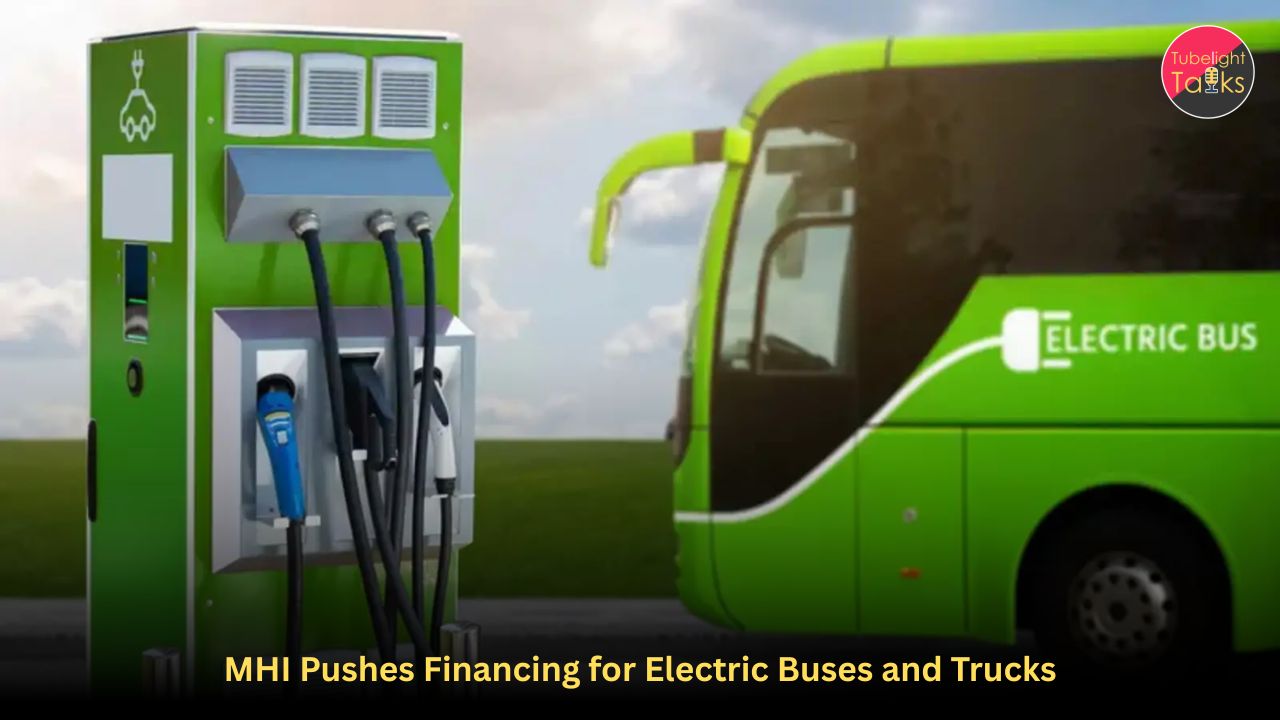
Sustainable Energy Boost: Ministry of Heavy Industries Pushes Financing for Electric Buses and Trucks
India’s clean transport transition has received a fresh push as the Ministry of Heavy Industries held a high-level meeting in New Delhi on April 29, 2026, to discuss financing mechanisms for electric buses and electric trucks. The meeting, chaired by MHI Secretary Kamran Rizvi, focused on accelerating adoption of e-buses and e-trucks in the private sector. According to PIB, the discussions covered financing challenges, current status of vehicle financing, potential solutions, and government support required.
Why Financing Matters for EV Adoption
Electric buses and electric trucks can reduce emissions and fuel dependence, but their upfront costs can discourage private buyers and operators. Financing is therefore central to adoption. Operators need affordable loans, reduced perceived risk for lenders, and predictable support mechanisms that make electric commercial vehicles financially practical.
Key Support Mechanisms Under Discussion
The Ministry discussed critical interventions such as partial credit guarantee schemes and interest subvention. Partial credit guarantees can reduce lending risk for banks and financial institutions, while interest subvention can lower borrowing costs for private-sector buyers. These tools can make e-buses and e-trucks more accessible to fleet operators.
Why Buses and Trucks Are Important
Public transport buses form the backbone of urban and regional mobility, while trucks carry a substantial share of domestic goods. PIB noted that the commercial vehicle segment contributes significantly to road transport emissions, fuel consumption, and particulate matter pollution. Electrifying this segment is therefore important for India’s decarbonisation goals and Net Zero by 2070 target.
Stakeholders at the Table
The meeting included participation from the Department of Financial Services, the World Bank India, major public and private sector banks, NBFCs, SIDBI, NIIF, bus operators, truck operators, OEMs, SIAM, All India Motor Transport Congress, and Bus Operators Confederation of India. This broad participation shows that electric mobility financing requires cooperation across government, finance, manufacturing, and transport sectors.
Supporting Energy Security and Clean Air
India imports a large share of its fuel requirements, and commercial transport consumes significant diesel. Electrifying buses and trucks can improve energy security, reduce urban air pollution, and support domestic advanced manufacturing. MHI said the initiative supports the wider goals of energy security, emission reduction, indigenous manufacturing, Aatmanirbhar Bharat, and Viksit Bharat@2047.
Challenges Ahead
The main challenges include charging infrastructure, vehicle cost, battery reliability, route planning, resale value uncertainty, lender confidence, and operator awareness. Policy support alone will not be enough. India will need reliable charging corridors, standardized battery safety, service networks, trained mechanics, and business models that work for fleet owners.
Cleaner Mobility Needs Cleaner Conduct
A transition to electric transport is not only a technological shift; it is also a moral responsibility toward cleaner air and future generations. Sant Rampal Ji Maharaj’s teachings guide people toward a disciplined, compassionate, and non-destructive way of life. True spiritual understanding encourages humans to avoid waste, protect nature, and live according to divine rules, reminding us that external progress must be supported by internal purity. (jagatgururampalji.org)
Call to Action
Accelerate Clean Transport with Smart Financing
Electric mobility must become practical for operators, affordable for users, and reliable for investors.
Build the EV Ecosystem
Government, banks, manufacturers, and transport operators should work together on financing, charging infrastructure, maintenance networks, and awareness.
FAQs: MHI Pushes Financing for Electric Buses and Trucks
1. What meeting did the Ministry of Heavy Industries hold?
MHI held a high-level meeting on financing mechanisms for electric buses and electric trucks on April 29, 2026.
2. Who chaired the meeting?
The meeting was chaired by Shri Kamran Rizvi, Secretary, Ministry of Heavy Industries.
3. What financing tools were discussed?
Partial credit guarantee schemes and interest subvention mechanisms were discussed.
4. Why are electric buses and trucks important?
They can reduce fuel consumption, emissions, and particulate pollution from commercial transport.
5. Which stakeholders participated?
Government departments, the World Bank India, banks, NBFCs, SIDBI, NIIF, operators, OEMs, and industry bodies participated.
Related Stories

Discussion (0)