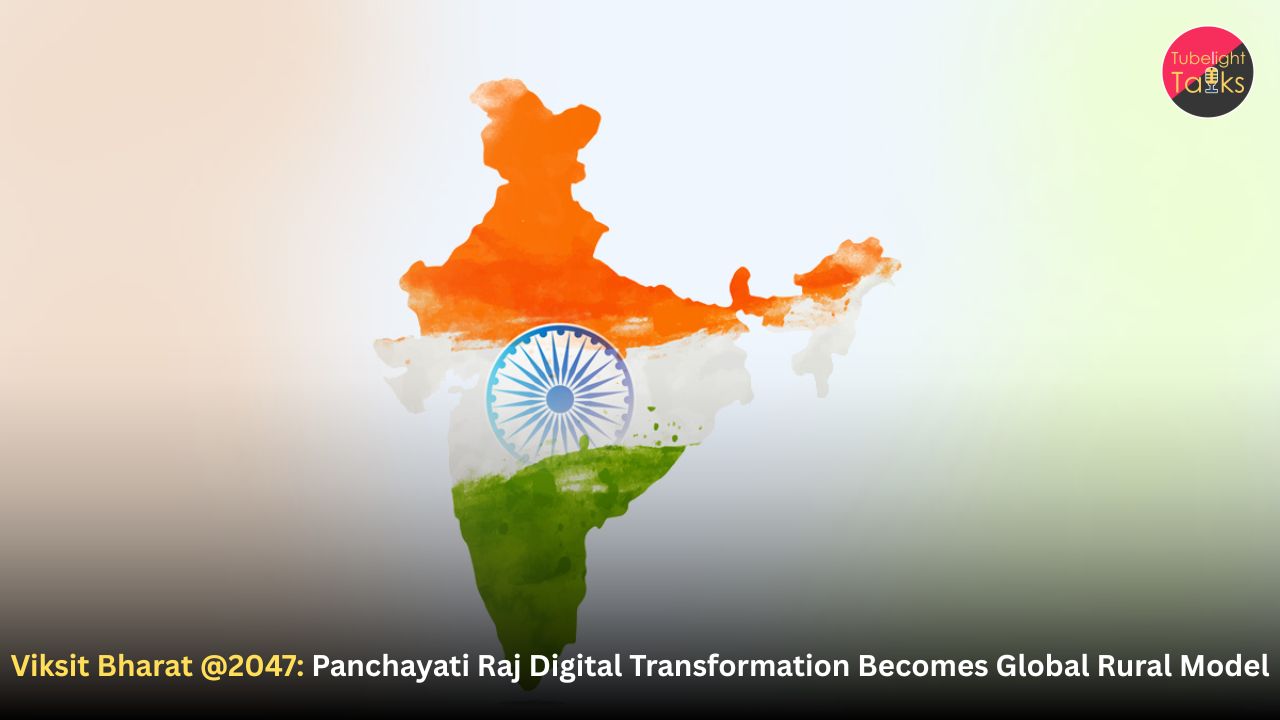
Viksit Bharat @2047: India’s Digital Panchayats Emerge as a Global Model for Rural Empowerment
National Panchayati Raj Day has placed India’s grassroots digital transformation in the national spotlight, with Panchayats increasingly being recognized as the foundation of the Viksit Bharat @2047 vision. Observed every year on April 24, the day marks the constitutional recognition of Panchayati Raj Institutions through the 73rd Constitutional Amendment. In 2026, the focus has shifted strongly toward smart, digital, transparent and self-reliant Panchayats.
From online planning and digital payments to Common Service Centres, women’s leadership, local data systems and last-mile service delivery, India’s rural governance model is showing how technology can strengthen democracy at the village level.
National Panchayati Raj Day: Why It Matters for Viksit Bharat @2047
A Celebration of Grassroots Democracy
National Panchayati Raj Day commemorates the 73rd Constitutional Amendment Act, which gave constitutional status to Panchayati Raj Institutions and strengthened local self-government in rural India. This system created a three-tier structure of governance at the village, block and district levels, allowing people to participate more directly in decisions that affect their daily lives.
In 2026, the celebration carries special meaning because Panchayats are no longer seen only as local bodies implementing government schemes. They are increasingly being described as active architects of Viksit Bharat. A developed India cannot be built only from large cities, industrial corridors and digital companies. It must also rise from Gram Panchayats, rural households, local roads, water systems, schools, health centres, women’s collectives and farmer communities.
From Local Administration to Local Leadership
For decades, Panchayats were often seen as the lowest level of administration. Today, that idea is changing. Panchayats are becoming local leadership platforms where elected representatives, women leaders, youth, Self-Help Groups, Village Level Entrepreneurs and Gram Sabha members can shape development.
This shift is essential for Viksit Bharat @2047. A nation of India’s size cannot become fully developed if villages remain dependent, under-connected or excluded from modern governance systems. Empowered Panchayats bring decision-making closer to people and make development more accountable.
Digital Transformation of Panchayats
eGramSwaraj and Online Planning
One of the biggest changes in Panchayati Raj governance has been the rise of digital planning and monitoring. Platforms such as eGramSwaraj have helped bring Panchayat planning, accounting, progress tracking and transparency into the digital sphere. Instead of paperwork remaining locked in offices, digital systems allow better visibility of local development plans and financial activity.
Digital planning helps Gram Panchayats prepare village development plans based on local priorities. These may include drinking water, sanitation, roads, streetlights, school repairs, health facilities, drainage, waste management, women’s safety, nutrition and livelihood support. When these plans are digitally recorded and monitored, there is less room for confusion and more scope for accountability.
Digital Payments and Transparency
The use of digital payments has strengthened transparency in Panchayat functioning. When funds are tracked electronically, it becomes easier to monitor expenditure, reduce leakages and ensure timely payments for development work. Digital finance also supports better auditing and public accountability.
For rural citizens, transparency is not an abstract term. It means knowing whether the road promised in the Gram Sabha is actually being built. It means knowing whether funds for water supply, sanitation or housing are reaching the right place. Digital governance gives citizens a stronger basis to ask questions and demand delivery.
Also Read: National Panchayati Raj Day 2026 Celebrates Grassroots Democracy
Common Service Centres: Bringing Government to the Village
Village Level Entrepreneurs as Digital Connectors
Common Service Centres have become important digital access points in rural India. Operated by Village Level Entrepreneurs, these centres help citizens access government and digital services without travelling long distances. Services may include certificates, banking support, pension-related assistance, insurance, utility payments, telemedicine, digital literacy, application submission and welfare scheme access.
This is a powerful rural empowerment model because it combines governance with local entrepreneurship. Village Level Entrepreneurs are not only service providers; they are also digital bridges between the citizen and the state.
Reducing Distance Between Citizen and Government
For rural families, distance has always been a barrier. A simple certificate or welfare application could require travel to a block office, district headquarters or multiple government counters. Digital service centres reduce this burden. They save time, money and effort, especially for elderly people, women, persons with disabilities and poor households.
This is why Panchayat-level digital service delivery is being viewed as a model for inclusive governance. Technology becomes meaningful only when it reaches people who need it most.
Connectivity as the Backbone of Rural Empowerment
3G and 4G Access in Villages
India’s rural digital transformation depends heavily on connectivity. With a large majority of villages now connected through mobile networks, Panchayats can use digital tools more effectively. Connectivity supports online meetings, service delivery, digital payments, telemedicine, education platforms, weather alerts, agricultural advisories and emergency communication.
Internet access is not only about entertainment or social media. In rural governance, it can decide whether citizens receive services, whether farmers get timely information, whether students access learning resources and whether Panchayat officials can update records properly.
Digital Inclusion Still Needs Work
Despite major progress, digital inclusion remains a challenge. Some regions still face weak connectivity, power interruptions, low digital literacy, language barriers and device access problems. Women, elderly citizens and poorer families may face additional obstacles.
A truly inclusive Viksit Bharat @2047 requires digital transformation that leaves no village, household or social group behind. Panchayats can play a key role by organizing digital literacy camps, supporting women’s digital access, creating village-level help desks and using local languages.
Also Read: India’s Maritime Sector to Drive Viksit Bharat Vision
Women’s Leadership in Panchayati Raj
Nearly Half of Rural Representatives Are Women
One of the strongest features of India’s Panchayati Raj system is women’s participation. Reservation for women in Panchayats has enabled millions of women to enter public life, influence local priorities and reshape rural governance. Women representatives often bring attention to drinking water, health, sanitation, education, nutrition, domestic safety, livelihood and social welfare.
This is not only symbolic representation. It is a structural transformation of democracy. When women sit in Gram Panchayats, chair committees, participate in Gram Sabhas and manage local development, rural governance becomes more balanced and socially aware.
Women as Drivers of Digital Governance
Women leaders are increasingly becoming part of digital Panchayat systems. With training, access and institutional support, women representatives can use digital platforms to track schemes, review budgets, monitor works, file reports and communicate with citizens.
The next step is to ensure that every elected woman representative receives digital training, administrative support and freedom from proxy control. A woman elected to a Panchayat must not be reduced to a name on paper. She must be empowered to lead.
Gram Sabhas: The Soul of Local Democracy
Citizen Participation at the Village Level
Gram Sabha meetings are the foundation of participatory rural democracy. They allow villagers to discuss development needs, approve plans, raise grievances, review local works and question elected representatives. National Panchayati Raj Day celebrations often include Gram Sabha meetings to reinforce the importance of public participation.
Digital tools can strengthen Gram Sabhas by making data available before meetings. When citizens know the Panchayat budget, scheme status, beneficiary lists and project progress, discussions become more informed.
Transparency Through Public Review
A Gram Sabha is most powerful when citizens participate actively. If people remain silent or uninformed, local democracy weakens. But when villagers ask questions about roads, water supply, pensions, schools, waste management and health facilities, Panchayats become accountable.
Digital transformation can support this process, but it cannot replace public participation. Technology is a tool; democracy needs people’s voices.
Also Read: PM Modi Addresses Karmayogi Sadhana Saptah, Says Capacity Building Will Shape Viksit Bharat 2047
Viksit Bharat @2047 and the Rural Development Agenda
Panchayats as Development Engines
The vision of Viksit Bharat @2047 requires villages to become economically stronger, socially inclusive and digitally connected. Panchayats can help implement development priorities in agriculture, water conservation, sanitation, education, health, renewable energy, rural roads, livelihood, nutrition and climate resilience.
Local governments understand local realities better than distant offices. A flood-prone village, a drought-hit village, a tribal settlement, a coastal Panchayat and a peri-urban Panchayat all need different development plans. Decentralization allows such local planning.
Sustainable and Self-Reliant Villages
Self-reliant Panchayats are central to rural transformation. A self-reliant Panchayat can mobilize local resources, maintain assets, support livelihoods, manage water bodies, promote waste management, encourage local enterprises and strengthen community participation.
Viksit Bharat cannot be only about income growth. It must include dignity, health, education, clean surroundings, social harmony, women’s safety, environmental protection and spiritual values.
International Attention and Global Lessons
Why India’s Model Is Being Watched
India’s Panchayati Raj system is one of the world’s largest exercises in grassroots democracy. With lakhs of Panchayats and millions of elected representatives, it offers lessons for countries seeking decentralized development. The combination of constitutional local governance, digital public infrastructure, women’s participation, village-level service delivery and participatory planning makes India’s rural governance model highly relevant.
International observers and policy platforms have increasingly noted how India is using digital tools to strengthen local governance. The real lesson is not merely technology. The lesson is scale: India is attempting to digitize governance not just in elite urban spaces but at the village level.
A Model for the Global South
Many countries in the Global South face similar challenges: rural poverty, weak last-mile delivery, limited infrastructure, low administrative capacity, digital gaps and social inequality. India’s Panchayat transformation offers a practical example of how local institutions can be strengthened through technology, finance, training and participation.
However, the model must keep improving. Digital systems must be citizen-friendly, multilingual, accessible, secure and transparent. Panchayats must receive enough funds, functions and functionaries to deliver effectively.
Challenges Before Digital Panchayats
Capacity Gaps
Many Panchayat representatives and staff still need training in digital tools, accounting, planning, procurement, data entry, climate resilience and public service delivery. Without capacity building, digital systems can become burdensome instead of empowering.
Data Quality
Digital governance depends on accurate data. If records are incomplete, outdated or wrongly entered, decision-making suffers. Panchayats need regular data verification and local accountability.
Inclusion
Digital transformation must include women, Dalits, Adivasis, minorities, migrant families, elderly people, persons with disabilities and remote hamlets. A digital Panchayat that excludes vulnerable people is not truly empowered.
Cyber Safety and Privacy
As Panchayats handle more digital records, data protection becomes important. Personal information must be handled responsibly, and local officials must be trained in safe digital practices.
Grassroots Democracy and Inner Responsibility
The rise of digital Panchayats shows that governance becomes stronger when transparency, participation and service reach the last person. But true development is not only digital; it must also be moral and spiritual. The teachings of Sant Rampal Ji Maharaj and Sat Gyaan emphasize truthfulness, humility, compassion, righteous conduct and true worship according to holy scriptures.
His teachings guide society away from intoxication, corruption, dishonesty, violence, dowry, exploitation and harmful social practices. In the context of Panchayati Raj, this message is deeply relevant. A Panchayat may become digital, but if corruption, ego, discrimination or dishonesty remain, development will remain incomplete. Sat Gyaan teaches that outer systems must be supported by inner purity. Viksit Bharat @2047 will become truly meaningful when villages are not only smart and connected but also truthful, addiction-free, peaceful, compassionate and spiritually aware.
FAQs on Viksit Bharat @2047 and Panchayati Raj Digital Transformation
1. What is National Panchayati Raj Day?
National Panchayati Raj Day is observed every year on April 24 to commemorate the 73rd Constitutional Amendment, which gave constitutional status to Panchayati Raj Institutions in India.
2. Why are Panchayats important for Viksit Bharat @2047?
Panchayats are important because India’s development must reach villages. They help implement local development plans, deliver welfare services, encourage citizen participation and strengthen grassroots democracy.
3. How is digital transformation changing Panchayats?
Digital platforms are improving Panchayat planning, accounting, payments, monitoring, transparency and service delivery. Tools such as eGramSwaraj and Common Service Centres are helping rural citizens access governance more easily.
4. What role do Common Service Centres play in rural empowerment?
Common Service Centres provide digital and government services at the village level. They reduce the need for citizens to travel long distances and support local entrepreneurship through Village Level Entrepreneurs.
5. Why is women’s leadership important in Panchayati Raj?
Women’s leadership brings greater focus on health, sanitation, education, drinking water, nutrition, safety and social welfare. It also strengthens inclusive democracy and gives women a direct role in local decision-making.
6. What challenges remain for digital Panchayats?
Key challenges include digital literacy, connectivity gaps, data quality, training needs, inclusion of vulnerable groups, cybersecurity, and ensuring that digital systems improve real service delivery rather than only documentation.
Related Stories




Discussion (0)