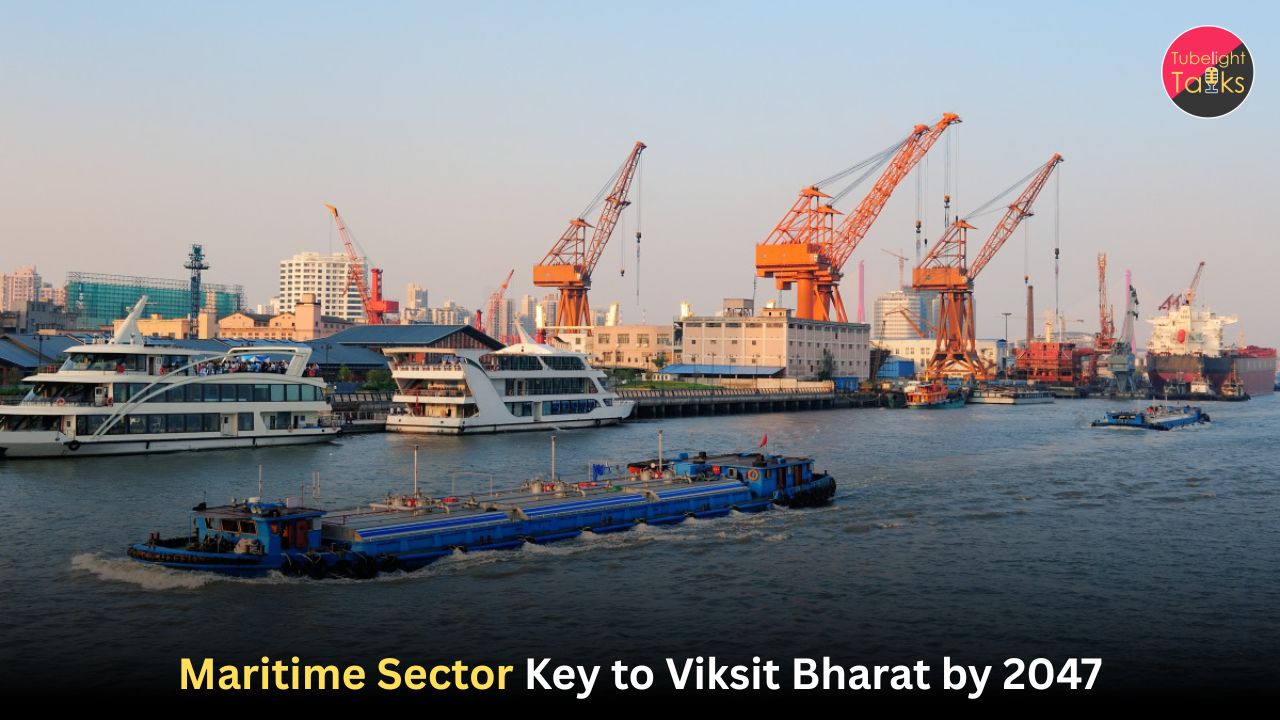
India’s Maritime Sector to Drive Viksit Bharat Vision
Maritime Sector Key to Viksit Bharat: Union Minister Sarbananda Sonowal has emphasised that India’s maritime sector will be a critical pillar in achieving the Viksit Bharat vision by 2047. Ports, shipbuilding, inland waterways, coastal development, logistics, fisheries, and blue economy initiatives are becoming increasingly important for national growth. A strong maritime sector can reduce logistics costs, improve export competitiveness, create jobs, and strengthen India’s position in the Indian Ocean region.
Modern ports and cleaner shipping systems can also support sustainable trade. India’s coastline gives it a natural advantage, but the sector needs investment in infrastructure, green fuels, digital port systems, and shipbuilding capacity. Maritime development can become a major driver of India’s long-term economic transformation.
Maritime Growth at the Heart of Development
Union Minister Sarbananda Sonowal has repeatedly highlighted the importance of India’s maritime sector in the Viksit Bharat vision. News On AIR reported earlier that he said the maritime sector would play a crucial role in achieving Viksit Bharat by 2047.
Ports as Growth Engines
Ports are gateways for trade. Faster cargo handling, modern terminals, better rail-road connectivity, and digital port operations can reduce logistics costs and improve India’s export competitiveness.
Shipbuilding and Self-Reliance
India is seeking to strengthen domestic shipbuilding and reduce dependence on foreign vessels. PIB has reported that Sonowal described a self-reliant shipbuilding industry as important for employment, strategic standing, and economic resurgence.
Blue Economy Opportunities
The maritime sector includes ports, shipping, fisheries, marine tourism, coastal industrial zones, green fuels, and inland waterways. These areas can create jobs and support coastal communities.
Green Maritime Transition
India is also exploring methanol bunkering and cleaner fuel infrastructure at ports. PIB reported that Kandla Port’s methanol bunkering work was linked to India’s Viksit Bharat ambitions.
Strategic Importance
India’s location in the Indian Ocean gives it a natural maritime advantage. Strong ports and shipping capacity can improve trade security, disaster response, naval logistics, and regional partnerships.
Oceans Teach Balance
Sant Rampal Ji Maharaj teaches that nature is created by God and must be used responsibly. Maritime growth should protect coastal ecology, fishermen’s livelihoods, and marine biodiversity. Development with responsibility reflects true wisdom.
Call to Action
India must invest in green ports, coastal skills, shipbuilding, and logistics reform. Citizens should support sustainable development and protect marine environments from pollution.
FAQs on Maritime Sector Key to Viksit Bharat by 2047
Q1. Why is the maritime sector important for India?
It supports trade, logistics, jobs, exports, and strategic strength.
Q2. What is the Viksit Bharat link?
A strong maritime sector can help India become a developed economy by 2047.
Q3. What is the blue economy?
It refers to sustainable use of ocean resources for growth and livelihoods.
Q4. Why is shipbuilding important?
It reduces dependence on foreign vessels and creates skilled jobs.
Q5. What reforms are needed?
Port modernisation, green fuels, logistics connectivity, shipbuilding capacity, and coastal development.
Related Stories







Discussion (0)