Green Chemistry Innovation: King’s College London Creates New Aluminum Compound That Could Replace Rare Heavy Metals
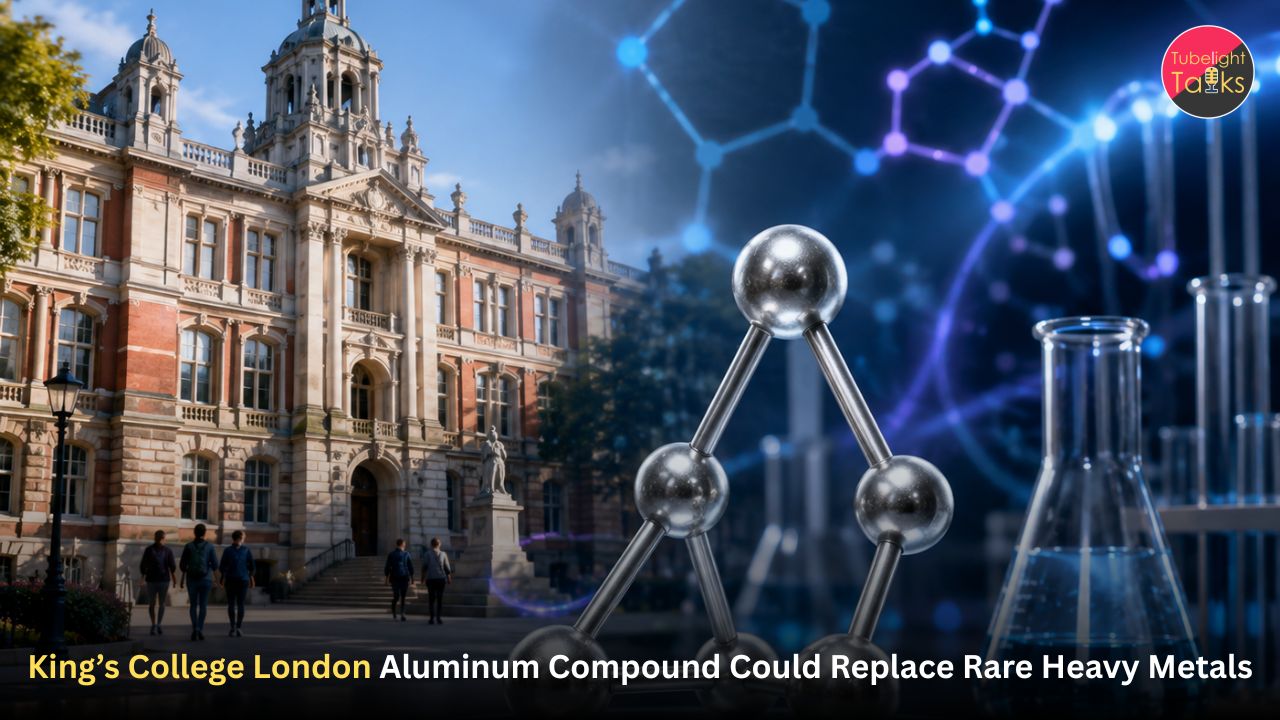
A major green chemistry innovation from King’s College London is drawing global attention after researchers created a new aluminum compound that may offer a cheaper and more sustainable alternative to precious heavy metals used in chemical manufacturing. The compound, known as a cyclotrialumane, contains three aluminum atoms arranged in a triangular structure and shows unusual stability and reactivity.
Scientists say it can activate strong chemical bonds and create new molecular structures, opening possibilities for cleaner industrial chemistry. Although the work is still exploratory, it could reduce dependence on costly metals such as platinum and palladium and support more sustainable chemical production.
King’s College London Aluminum Compound: What Has Been Discovered?
A New Form of Aluminum Chemistry
Chemists at King’s College London have isolated a new form of aluminum that challenges traditional expectations about how this common metal can behave in chemical reactions. The research team, led by Dr Clare Bakewell from the Department of Chemistry, developed highly reactive aluminum molecules able to break apart tough chemical bonds. King’s College London reported that the work was published in Nature Communications and has unlocked molecular structures that had not been observed before.
The most important molecule in the discovery is called a cyclotrialumane. In simple language, it is a cyclic aluminum compound made of three aluminum atoms arranged in a triangular structure. This three-aluminum core gives the compound a rare combination of stability and reactivity. The molecule remains intact when dissolved in different solutions, which is important because many useful chemical reactions happen in solution.
Why the Triangular Structure Matters
The triangular structure is not only visually interesting; it changes what aluminum can do. The Nature Communications paper describes two neutral aluminum(I) trimers, called cyclotrialumanes, and reports that they activate small molecules and unsaturated substrates including hydrogen, alkynes, benzene, and ethylene. The study also says the cyclotrialumanes react directly as trimers to form new 5- and 7-membered aluminum-carbon ring systems.
This matters because aluminum is usually associated with packaging, aircraft materials, construction, and everyday metal products. But in low oxidation states, aluminum can show transition-metal-like reactivity. That means it may perform certain chemical tasks normally associated with more expensive metals.
Why This Is a Green Chemistry Innovation
Green Chemistry Means Cleaner Design
Green chemistry is not simply chemistry that sounds environmentally friendly. The U.S. Environmental Protection Agency defines green chemistry as the design of chemical products and processes that reduce or eliminate the use or generation of hazardous substances. It applies across a product’s life cycle, including design, manufacture, use, and disposal.
The King’s College London aluminum compound fits this vision because it may help replace precious metals in catalytic and synthetic processes. Precious metals can be expensive, difficult to extract, and environmentally damaging to mine. If abundant aluminum can perform some of the same chemistry, manufacturers may eventually reduce costs, supply-chain risk, and environmental pressure.
Aluminum Is Abundant and Cheaper
King’s College London reported that the team chose aluminum because it is highly abundant and far cheaper than precious metals. Dr Clare Bakewell said aluminum is “super abundant” and about 20,000 times less expensive than platinum and palladium.
This cost difference is crucial for industry. Platinum, palladium, rhodium, iridium, and related metals are widely valued in catalysis, clean technologies, electronics, and chemical manufacturing. But their scarcity and price volatility can make industrial processes expensive. Aluminum, by contrast, is one of the most abundant metals in Earth’s crust. The Nature Communications study also notes that aluminum is cheap and readily available, even though its extraction remains energy intensive.
Also Read: Superconductors by Design: Argonne Scientists Rewrite the Rules of Materials Discovery
Replacing Precious Heavy Metals in Chemical Manufacturing
Why Precious Metals Are Used
Chemical manufacturing often depends on catalysts. A catalyst helps a chemical reaction happen faster, more efficiently, or under milder conditions without being consumed in the reaction. Many of the most effective catalysts use transition metals and precious metals because these metals can manage electron transfer, activate strong bonds, and control complex reaction pathways.
For decades, metals such as platinum, palladium, rhodium, ruthenium, and iridium have been central to industrial chemistry. They are used in pharmaceutical synthesis, fuel processing, polymer production, fine chemicals, and many advanced materials. However, these metals are often expensive, limited in supply, and associated with mining and geopolitical concerns.
Why Aluminum Could Be a Sustainable Alternative
The new aluminum compound does not mean precious metals will disappear from chemical manufacturing tomorrow. But it shows that main-group elements such as aluminum may be able to mimic or even go beyond some transition-metal chemistry. King’s College London reported that the cyclotrialumane can split dihydrogen and enable stepwise insertion and chain growth of ethene, a simple two-carbon hydrocarbon.
These reactions are important because hydrogen activation and carbon-chain growth are central themes in industrial chemistry. If aluminum-based compounds can perform such reactions efficiently and selectively, they could open new routes for making fuels, polymers, pharmaceuticals, agricultural chemicals, and advanced materials.
What Is Cyclotrialumane?
A Simple Explanation
Cyclotrialumane is a molecule containing three aluminum atoms in a ring-like triangular arrangement. “Cyclo” means cyclic, “tri” means three, and “alumane” refers to aluminum-containing chemistry. The key discovery is that neutral aluminum(I) trimers of this type had been missing from known aluminum chemistry. The Nature Communications paper states that neutral trimeric aluminum(I) structures had remained notably absent before this work.
In chemistry, the exact arrangement of atoms changes everything. The same element can behave very differently depending on its bonding, charge, oxidation state, surrounding ligands, and molecular geometry. In this case, the three-aluminum core produces unusual electronic behavior that enables new reactions.
Stable Yet Reactive
A useful industrial molecule must not fall apart instantly, but it must also be reactive enough to do useful chemistry. This is a difficult balance. The cyclotrialumane appears promising because its trimeric structure is retained in solution while still being highly reactive.
King’s College London highlighted that this stability makes the molecule robust enough for a range of chemical reactions. The team also found that the compound can build completely new aluminum-carbon rings through reactions with ethene.
Why the Discovery Is Important for Industry
Cheaper Chemical Production
Industrial chemistry works at scale. Even a small reduction in catalyst cost can become significant when millions of tonnes of products are manufactured. If aluminum-based catalysts can replace precious metals in even selected processes, companies could reduce raw material costs and make supply chains more resilient.
This is especially important for countries and industries that import expensive metals. Heavy dependence on scarce or geopolitically sensitive materials creates risk. The European Commission says reliable access to certain raw materials is a growing global concern, and it maintains a list of critical raw materials because some materials have high economic importance and supply risk.
Greener Manufacturing
Mining, refining, and transporting precious metals can be environmentally intensive. Replacing them with more abundant materials could reduce the ecological burden of chemical production. However, the sustainability claim must be handled carefully. Aluminum production itself can be energy intensive, and the new compound is still at an early research stage. The real environmental benefit will depend on future catalytic efficiency, recyclability, toxicity, energy use, solvent choice, and industrial scalability.
Still, the direction is promising. Dr Bakewell said the chemistry could support a shift toward cleaner, greener, and cheaper chemical production.
Scientific Breakthrough Beyond Cost Saving
New Molecular Structures
The discovery is not only about replacing expensive metals. It also expands chemical knowledge. King’s College London reported that the aluminum trimer can be used to build compounds with reactivity that had not been observed before, including 5- and 7-membered aluminum-carbon rings formed through reaction with ethene.
This means the aluminum compound may not simply imitate precious metals. It may also create new chemical pathways that precious metals do not easily access. Such discoveries are valuable because they can lead to materials and products that do not currently exist.
Main-Group Chemistry Enters a New Phase
The Nature Communications paper places the discovery within a larger scientific trend: developing metal-based redox chemistry beyond the d-block of the periodic table. In simpler terms, chemists are exploring whether elements outside the traditional transition-metal zone can perform sophisticated reactions once thought to require transition metals.
This is a major direction in modern chemistry. It can reduce dependence on rare metals, expand the available toolbox for synthesis, and challenge long-standing assumptions about what common elements can do.
Potential Applications of the New Aluminum Compound
Chemical Synthesis
The most direct application is chemical synthesis. If cyclotrialumane-based systems can activate strong bonds and build new carbon-containing structures, they may help create new reaction routes for manufacturing fine chemicals, pharmaceuticals, polymers, and specialty materials.
The compound has already shown reactivity with hydrogen, ethylene, benzene, alkynes, and other substrates in the research setting. Future studies will need to determine whether these reactions can be made catalytic, selective, safe, efficient, and scalable.
New Materials
The King’s College London team suggested that this chemistry could help build larger molecular architectures with unique properties, potentially leading to new materials and products. This is important because materials science often begins with unusual molecular structures.
New aluminum-carbon frameworks could one day inspire advanced polymers, electronic materials, coatings, energy-related materials, or specialty chemicals. The path from laboratory molecule to commercial product is long, but the discovery creates a foundation.
Cleaner Industrial Processes
If aluminum compounds can replace precious heavy metals in some transformations, chemical plants may reduce dependence on high-cost catalysts. This could make green chemistry innovation more accessible to industries and countries that cannot afford expensive metals at scale.
The broader goal is not only cheaper chemistry but better chemistry: lower waste, safer reagents, lower energy demand, more abundant materials, and less environmental damage.
Also Read: New Imaging Technique Captures Matter in Trillionths of a Second
What the Discovery Does Not Mean Yet
Not a Ready-Made Industrial Catalyst
It is important to avoid exaggeration. The new aluminum compound is not yet a commercial catalyst ready to replace platinum and palladium in factories. King’s College London clearly describes the work as exploratory, and Dr Bakewell said the team is just beginning to unlock the capability of earth-abundant materials.
Many steps remain before industrial use: improving yields, proving catalytic turnover, testing stability under industrial conditions, ensuring safety, examining toxicity, reducing waste, scaling synthesis, and comparing performance with existing catalysts.
Not a Complete Replacement for Rare Metals
Precious metals are used in many different industries for very specific reasons. Some applications may still require platinum-group metals because of their unique electronic, thermal, or catalytic properties. The new aluminum compound may replace rare heavy metals in selected chemical reactions, but it will not automatically replace all rare metals everywhere.
The real breakthrough is that aluminum chemistry has gained a powerful new structure and reaction platform. That alone is a major achievement.
Why This Matters for Sustainable Development
Reducing Mining Pressure
Mining is often associated with land disturbance, water use, energy consumption, waste generation, and community impacts. While responsible mining is necessary for many modern technologies, reducing unnecessary dependence on scarce metals is an important sustainability goal.
Green chemistry innovation can support this by redesigning chemical processes at the molecular level. Instead of treating pollution and waste after production, green chemistry aims to prevent environmental harm from the beginning. The EPA’s definition makes this prevention-based approach central to the field.
Strengthening Supply Chains
The COVID-19 pandemic, geopolitical conflicts, export controls, and critical mineral competition have shown that supply chains can be fragile. If chemical manufacturing depends heavily on rare metals concentrated in limited regions, industries face both economic and strategic risk.
By using abundant aluminum, future processes may become more resilient. The European Commission’s concern over critical raw materials shows that secure access to economically important materials is already a major policy issue.
India and Global Industry: Why This Research Is Relevant
Opportunities for Indian Chemical Manufacturing
India has a large and growing chemical industry, including pharmaceuticals, agrochemicals, polymers, specialty chemicals, and materials. Green chemistry innovation matters deeply for India because cleaner and cheaper chemical processes can improve competitiveness while reducing environmental stress.
If aluminum-based catalysts mature, they could benefit industries that currently depend on imported precious metals or expensive catalytic systems. India’s push for sustainable manufacturing, circular economy, and green industrial growth could eventually align with such discoveries.
Academic and Industrial Collaboration
This breakthrough also shows the value of university-led fundamental science. Many world-changing technologies begin in academic laboratories before they move to pilot plants and commercial production. For countries seeking innovation-led growth, supporting chemistry, materials science, catalysis, and engineering research is essential.
The King’s College London aluminum compound is a reminder that basic research can open practical industrial pathways. A molecule created to test chemical boundaries may later become the foundation of cleaner manufacturing.
Challenges Before Commercial Adoption
Scalability
The first challenge is scalability. A compound that works in a laboratory flask must be synthesized reliably in larger quantities. It must also remain stable during handling, storage, transport, and use. Scaling reactive low-valent aluminum compounds may require specialized equipment and safety protocols.
Catalytic Efficiency
Industrial catalysts must be efficient. They should work at low loading, deliver high selectivity, tolerate impurities, and function repeatedly without rapid decomposition. The current research shows unusual reactivity, but future studies must show whether the compound can act as a practical catalyst in real manufacturing contexts.
Environmental Life-Cycle Assessment
A green chemistry innovation must be evaluated across its full life cycle. This includes raw material sourcing, energy demand, solvents, by-products, purification, catalyst recovery, waste treatment, and end-of-life handling. Only then can scientists and industry confirm whether the aluminum compound offers a genuine environmental advantage.
Also Read: Scientists Solve the 200-Year-Old Dolomite Problem
A Turning Point in Aluminum Chemistry
From Common Metal to Advanced Reactivity
Aluminum is familiar and ordinary in daily life. It is found in utensils, cans, windows, vehicles, aircraft, electrical systems, and packaging. But this research shows that common elements can behave in extraordinary ways when chemists control their structure precisely.
The idea is powerful: sustainability does not always require exotic materials. Sometimes, the future lies in reimagining abundant elements.
Chemistry That Challenges Assumptions
For years, transition metals have been considered the workhorses of chemical synthesis and catalysis. King’s College London reported Dr Bakewell’s view that these metals are becoming harder to access and extract, often because of geographic and political challenges.
The new aluminum compound challenges the assumption that advanced reactivity must depend on scarce metals. It proves that molecular design can change how an element behaves.
Science, Simplicity, and Responsible Progress
This green chemistry innovation shows that great progress can emerge when human intelligence uses abundant resources wisely instead of exploiting rare materials carelessly. The teachings of Sant Rampal Ji Maharaj and Sat Gyaan emphasize righteous living, honest conduct, compassion, and freedom from harmful actions such as intoxication, corruption, violence, dishonesty, and greed.
In the same way that sustainable chemistry seeks cleaner processes and reduced harm, Sat Gyaan guides human beings toward inner purification and a life aligned with true worship according to holy scriptures. Scientific discoveries become truly beneficial when they serve humanity, reduce exploitation, and protect nature rather than increasing greed or destruction.
Sant Rampal Ji Maharaj’s teachings remind society that material innovation should be accompanied by moral discipline and spiritual wisdom, because lasting welfare comes only when outer development is supported by inner truth.
Call to Action: Support Cleaner Chemistry and True Knowledge
The King’s College London aluminum compound is a hopeful step toward cleaner, cheaper, and more sustainable chemical manufacturing. Scientists, industries, policymakers, and students should support green chemistry research, earth-abundant materials, responsible innovation, and safer industrial processes. The world needs technologies that reduce waste, lower costs, and protect natural resources without compromising human welfare.
At the same time, every individual should also seek true spiritual knowledge. Listen to the spiritual discourses of Sant Rampal Ji Maharaj, understand Sat Gyaan, and adopt a disciplined life based on truth, devotion, compassion, and moral conduct. The writing sequence and article style follow the uploaded Team 5 content reference.
FAQs on Kings College London Aluminum Compound
1. What has King’s College London discovered?
King’s College London chemists have created a new aluminum compound called a cyclotrialumane, made of three aluminum atoms arranged in a triangular structure. It shows unusual stability and reactivity.
2. Why is this aluminum compound important?
It may help replace expensive precious metals in some chemical reactions, making chemical manufacturing cheaper, greener, and less dependent on rare or difficult-to-mine metals.
3. What is green chemistry?
Green chemistry is the design of chemical products and processes that reduce or eliminate hazardous substances across the life cycle of a chemical product.
4. Can this compound replace platinum and palladium immediately?
No. The research is still exploratory. It shows promising reactivity, but industrial use will require more testing, scale-up, safety evaluation, and proof of catalytic efficiency.
5. What reactions can the cyclotrialumane perform?
The compound can activate small molecules and substrates including hydrogen, alkynes, benzene, and ethylene. It also forms new 5- and 7-membered aluminum-carbon ring systems.
6. Why is aluminum considered a sustainable choice?
Aluminum is abundant, widely available, and far cheaper than precious metals such as platinum and palladium. However, its full sustainability depends on energy use, recycling, reaction efficiency, and life-cycle impacts.
Related Stories









Discussion (0)