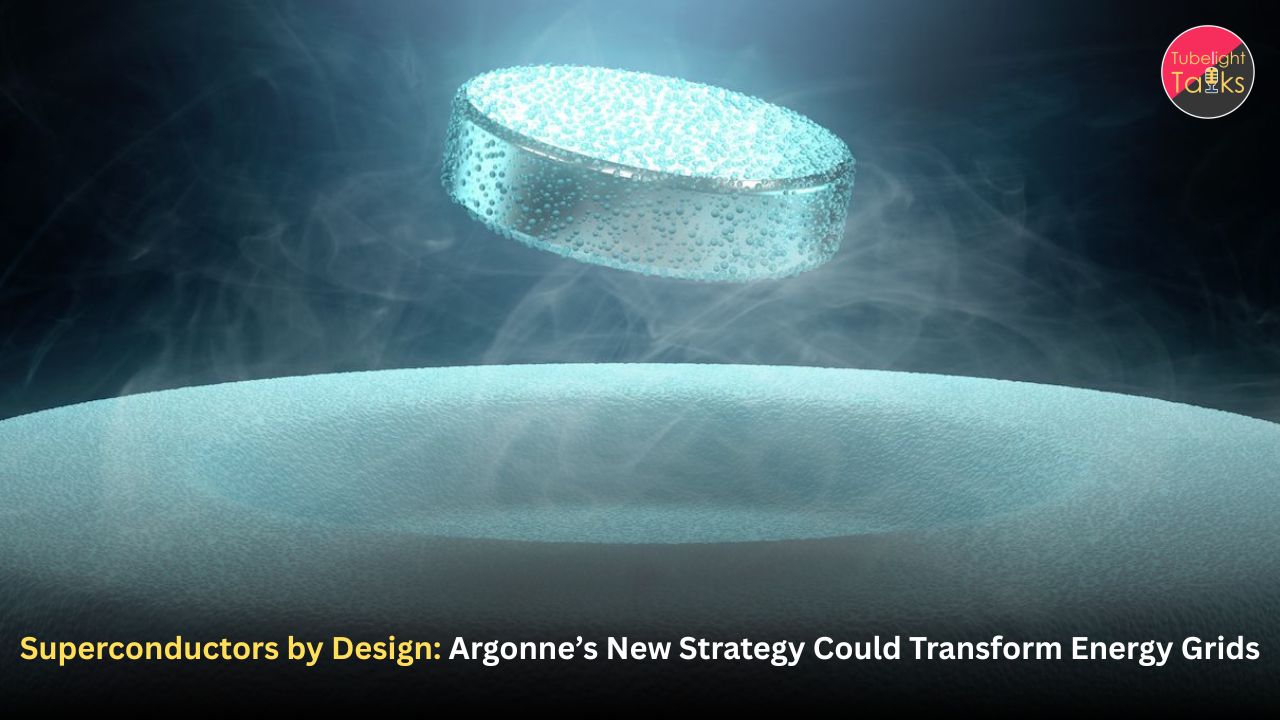
Superconductors by Design: Argonne Scientists Rewrite the Rules of Materials Discovery
Scientists at Argonne National Laboratory and Northwestern University have announced a major materials science breakthrough that could change how the world searches for superconductors. Their new “Superconductors by Design” strategy focuses on using chemical understanding, atomic structure control, and repeatable synthesis rules to predict new materials instead of waiting for accidental discovery.
Superconductors are valuable because they can conduct electricity without energy loss under specific conditions. Although this research does not claim a ready-to-use room-temperature superconductor, it creates a promising pathway toward designing quantum materials that may one day transform global energy grids, electronics, medical imaging, computing, and sustainable technology.
What Is the “Superconductors by Design” Breakthrough?
The “Superconductors by Design” breakthrough is a new strategy in solid-state chemistry and materials science. It aims to make the discovery of future superconductors more systematic, predictable, and faster. For decades, many superconducting materials were discovered by accident or through long trial-and-error experiments. Argonne’s new work shifts the focus from random discovery to design-based discovery, where scientists study how atoms arrange themselves and then use those rules to create new material families.
Why Superconductors Matter for the World
Superconductors are materials that conduct direct current electricity without energy loss when cooled below a critical temperature. They also expel magnetic fields when entering the superconducting state. This makes superconductivity one of the most powerful quantum phenomena known to science. The U.S. Department of Energy explains that ordinary materials lose some electrical energy as heat because of resistance, but superconductors can conduct electricity without that kind of loss under the right conditions.
This property matters because modern civilization depends on moving electricity from one place to another. Power grids, computers, data centers, electric vehicles, trains, hospitals, research laboratories, and communication networks all depend on efficient electricity flow. If scientists can develop superconductors that work under more practical conditions, they could reduce energy waste, improve power transmission, strengthen renewable energy systems, and support advanced technologies such as quantum computing and ultra-sensitive sensors.
The Shift From Accident to Design
The Old Problem: Superconductors Are Hard to Find
Superconductors are rare because they need very specific atomic structures and physical conditions. Many require extremely low temperatures, and some need very high pressure. That is why the scientific search for practical superconductors has remained difficult despite more than a century of research. The first known superconductor was discovered more than 100 years ago in mercury cooled close to absolute zero, and many later discoveries also came from educated guesses and experimental persistence rather than complete prediction.
Argonne’s latest research directly addresses this challenge. Instead of asking only “Which known material might become superconducting?”, the team asked a deeper question: “Can we learn chemical rules that help us build entirely new material families with controlled structures?” That question is important because the structure of a material often determines its electrical, magnetic, optical, and quantum behavior.
The New Strategy: Chemical Rules and Atomic Control
The research team focused on a family of inorganic materials made from barium, antimony, sulfur, and tellurium. These materials follow the general formula BaSbQ₃, where Q represents sulfur or tellurium. The key point is that the overall ratio of elements stayed the same, but the internal atomic arrangements changed in systematic ways as sulfur replaced tellurium.
This is where the breakthrough becomes exciting. Normally, when two related elements are swapped in a material, scientists may expect a random mixture called a solid solution. But in this case, replacing tellurium with sulfur did not simply produce random mixing. It produced a series of distinct compounds, each with its own ordered crystal structure. Argonne reported that the team demonstrated 10 distinct compounds with the same 1:1:3 elemental ratio but different structures.
Also Read: New Imaging Technique Captures Matter in Trillionths of a Second
Understanding the Science in Simple Language
What Is a Crystal Structure?
A crystal structure is the organized pattern in which atoms are arranged inside a solid material. Two materials may contain similar elements but behave very differently if their atoms are arranged in different ways. This is similar to how the same bricks can create a house, a bridge, or a tower depending on how they are assembled.
In superconductors and quantum materials, atomic structure is extremely important. Small changes in structure can change how electrons move, how magnetic behavior appears, and whether superconductivity becomes possible. That is why the Argonne and Northwestern work is significant: it shows a controlled way to create multiple new structures from nearly the same chemical recipe.
What Is a Homologous Series?
The researchers found that the new compounds belonged to a homologous series. In simple terms, a homologous series is a family of related compounds built from similar basic units arranged in a repeatable pattern. Each new compound is like another step in a sequence. Once scientists understand the pattern, they can begin to predict what the next structure may look like.
This idea is powerful because prediction is the foundation of design. If scientists know how a material family evolves when one element is changed, they can plan experiments more intelligently. That can reduce wasted effort, save time, and open pathways toward materials with desired properties.
Argonne’s Advanced Tools Made the Discovery Possible
Advanced Photon Source and X-Ray Analysis
To confirm the new structures, the team used advanced research tools at Argonne. The Advanced Photon Source helped the researchers study the crystal structures using X-ray scattering and high-resolution powder X-ray diffraction. These tools allow scientists to see how atoms are arranged inside materials at a very detailed level.
The Advanced Photon Source is one of the world’s major X-ray light source facilities, supporting research in materials science, chemistry, condensed matter physics, life sciences, and engineering. Argonne notes that more than 5,000 researchers use the facility every year, producing thousands of publications and discoveries.
Center for Nanoscale Materials and Electron Microscopy
The researchers also used the Center for Nanoscale Materials at Argonne to verify material composition through scanning electron microscopy and energy-dispersive X-ray spectroscopy. Transmission electron microscopy at Northwestern University further helped the team image and validate the atomic-level structures.
These advanced facilities matter because designing new quantum materials is not only a theoretical exercise. Scientists must actually synthesize materials, confirm their composition, measure their structures, and test their properties. Without high-quality instruments, even a promising chemical idea may remain incomplete.
Also Read: Scientists Solve the 200-Year-Old Dolomite Problem
Published Research: What the Study Shows
Science Journal Publication
The research was published in Science under the title “A stoichiometrically conserved homologous series with infinite structural diversity.” PubMed lists the study as published on December 4, 2025, in Science, with authors from Argonne National Laboratory, Northwestern University, Georgetown University, the Advanced Photon Source, and related research groups.
The study describes a compositionally guided structural evolution within BaSbQ₃, where changing the sulfur-tellurium balance produced distinct phases. It also describes modular building blocks involving double rocksalt slabs and polytelluride zigzag chains. In simpler words, the research shows how a material family can grow into many different structures while keeping a similar chemical ratio.
Why This Is More Than One Material
The major achievement is not only the creation of 10 new compounds. The bigger achievement is the framework behind them. The strategy gives scientists a new way to think about chemical design. If the same logic can be applied to other systems, it may help researchers create more families of quantum materials with desirable electronic behavior, including superconductivity, magnetism, charge density waves, and other exotic effects.
This is why the phrase “Superconductors by Design” is powerful. It does not mean that a perfect superconductor has already been delivered to the market. It means that scientists are developing the rules needed to guide the search. In a field where discovery has often depended on luck, even a partial design rule can be a major leap.
How This Could Transform Global Energy Grids
Zero-Resistance Electricity and Energy Savings
Power grids lose energy when electricity travels through ordinary wires. Some of that loss happens because electrical resistance turns energy into heat. Superconductors could reduce or eliminate such losses under the right operating conditions. If practical superconducting cables become widely available in the future, cities could transmit electricity more efficiently, renewable energy could be integrated more effectively, and long-distance power movement could become cleaner and more reliable.
The keyword here is “practical.” Today, many superconductors still require expensive cooling or extreme pressure. The Argonne breakthrough does not remove these barriers immediately, but it may help scientists search more intelligently for materials that work under easier conditions. That could make future energy grids more sustainable.
Renewable Energy and Storage Systems
Renewable energy systems need efficient transmission and storage. Solar and wind power are often generated far from where electricity is consumed. Better superconducting materials could one day improve transmission from renewable energy zones to cities. They may also support advanced magnetic energy storage, high-efficiency motors, and compact power technologies.
For countries trying to reduce carbon emissions while meeting rising electricity demand, materials science breakthroughs can become as important as policy decisions. A new material can quietly change the economics of entire industries.
Impact Beyond Energy: Medicine, Computing, and Transport
Medical Imaging and Scientific Instruments
Superconductors already play a major role in MRI machines and high-field magnets. The DOE notes that superconducting wires opened new technological uses, including powerful magnets used in magnetic resonance imaging. More advanced superconductors could improve medical diagnostics, reduce operating costs, and support better research instruments.
Quantum Computing and Electronics
Quantum computing depends on controlling delicate quantum states. Superconducting circuits are one of the major approaches in quantum technology. Better quantum materials could help create more stable devices, reduce noise, improve energy efficiency, and support faster scientific computing.
Electronics could also benefit. If future superconducting materials become easier to operate, they may support ultra-fast circuits, lower-energy data centers, and more efficient sensors. This is especially important as artificial intelligence, cloud computing, and digital infrastructure increase global electricity demand.
Transport and Magnetic Levitation
Superconductors are also connected with magnetic levitation and high-efficiency motors. In theory, better superconductors could support faster trains, lighter electric motors, advanced ships, and cleaner industrial equipment. The road from laboratory discovery to public infrastructure is long, but every successful design rule brings that future closer.
Why Human Chemical Intuition Still Matters in the Age of AI
AI Is Useful, but Chemistry Still Leads
Artificial intelligence is increasingly used in materials science, but the Argonne release highlights an important point: AI is trained on existing data, while new scientific intuition can reveal patterns that were not already present in databases. The researchers emphasized that chemical understanding and synthesis science remain essential for discovering new material families.
This is a balanced message for the modern research world. AI can screen large datasets, predict possible compounds, and accelerate calculations. But human scientists still need to ask the right questions, understand chemical behavior, perform experiments, interpret unexpected results, and create new frameworks that AI can later learn from.
Science of Synthesis
The “science of synthesis” means studying not only what material is made, but how and why it forms. In the past, synthesis was sometimes treated as a practical laboratory step. Now it is becoming a central scientific discipline. If researchers can understand why atoms choose one structure over another, they can design materials with greater confidence.
The Argonne work shows that careful synthesis can reveal hidden order. What looked like a simple element swap became a map of structural evolution. That is the kind of discovery that can reshape a field.
Also Read: Microbial Batteries Use Soil to Generate Clean Electricity
What This Breakthrough Does Not Claim
Not a Commercial Superconductor Yet
It is important to be clear: this announcement does not mean that scientists have created a room-temperature superconductor ready for power grids. The study demonstrates a new family of compounds and a strategy for designing structures that may be investigated for superconductivity and other quantum phenomena. Argonne itself describes each new compound as worth investigating for superconductivity, quantum behavior, and exotic effects.
This distinction matters because superconductivity is a field where exaggerated claims can create confusion. The real achievement is still significant: scientists now have a stronger design pathway. Future research will need to measure properties, test whether any members of this or related families become superconducting, and determine whether they can work under practical conditions.
A Foundation for Future Discovery
Breakthroughs in science often begin as frameworks rather than finished products. The transistor, MRI, solar cell, and internet all emerged from layers of basic research. Similarly, “Superconductors by Design” may be remembered as a step toward future materials that are not yet known today.
Global Significance of the Discovery
A New Race in Materials Science
Countries and institutions around the world are investing in quantum materials, energy materials, and advanced manufacturing. The ability to design new materials can influence economic competitiveness, energy independence, defense technology, healthcare, and climate resilience.
Argonne National Laboratory’s work shows how national research facilities, universities, and advanced instruments can combine to solve difficult scientific problems. It also shows why long-term public investment in basic science is valuable. The study was funded by the DOE Office of Basic Energy Sciences and Argonne’s Laboratory Directed Research and Development programme.
Hope for Cleaner and Smarter Infrastructure
The long-term promise of superconductors is not limited to laboratories. It touches ordinary life. Lower energy waste can mean cheaper electricity. Better medical magnets can mean stronger diagnostics. Faster computing can mean improved scientific modelling. Cleaner transport can reduce pollution. Stronger grids can support growing cities.
The “Superconductors by Design” strategy is therefore not just a chemistry story. It is a story about the future of human infrastructure.
Knowledge, Responsibility, and the Purpose of Discovery
Scientific breakthroughs like “Superconductors by Design” show the incredible intelligence given to human beings, but they also remind us that knowledge must be used responsibly. The teachings of Sant Rampal Ji Maharaj and Sat Gyaan emphasize righteous living, honesty, humility, and true worship as essential foundations of meaningful progress.
Sant Rampal Ji Maharaj’s teachings discourage corruption, dishonesty, intoxication, violence, and harmful conduct, while promoting good karmas, moral discipline, and a peaceful way of life. When science is guided by ethics, it becomes a blessing for society; when it is guided only by greed, it can increase inequality and harm.
Just as scientists search for zero resistance in electricity, Sat Gyaan inspires human beings to remove the inner resistance created by ego, ignorance, and wrong actions. True progress is not only the creation of advanced materials but also the purification of human conduct through true spiritual knowledge and devotion according to scriptures.
Call to Action: Support Science, Ethics, and True Knowledge
The Argonne superconductors breakthrough should encourage students, researchers, policymakers, and citizens to value basic science and long-term innovation. Materials discovery may appear distant from everyday life, but it can shape electricity bills, hospital technology, transport systems, climate solutions, and national development. At the same time, society must remember that scientific power should be guided by moral responsibility.
Listen to the spiritual discourses of Sant Rampal Ji Maharaj through his official platforms, understand Sat Gyaan, and adopt a life based on truth, discipline, and true worship. The article format follows the uploaded Team 5 content style reference.
FAQs on Superconductors by Design
1. What is the “Superconductors by Design” strategy?
“Superconductors by Design” is a materials discovery strategy in which scientists use chemical rules and atomic structure control to create and predict new material families, instead of relying only on accidental discovery.
2. Did Argonne scientists discover a room-temperature superconductor?
No. The research does not claim a commercial room-temperature superconductor. It presents a new design strategy and a family of compounds that can be investigated for superconductivity and other quantum properties.
3. Why are superconductors important?
Superconductors can conduct electricity without energy loss under specific conditions. This could help reduce power waste, improve energy grids, support quantum computing, improve MRI machines, and enable advanced transport systems.
4. What materials did the researchers study?
The researchers studied a family of barium-antimony compounds with sulfur and tellurium, represented by the general formula BaSbQ₃. Changing the sulfur and tellurium balance created distinct crystal structures.
5. How many new compounds were demonstrated?
Argonne reported that the team demonstrated 10 distinct compounds with the same elemental ratio of 1:1:3 but different crystal structures.
6. How could this research help global energy grids?
If future superconductors become practical, they could transmit electricity with far less energy loss. The Argonne strategy may help scientists discover such materials more efficiently, supporting cleaner and more reliable energy infrastructure.
Related Stories










Discussion (0)