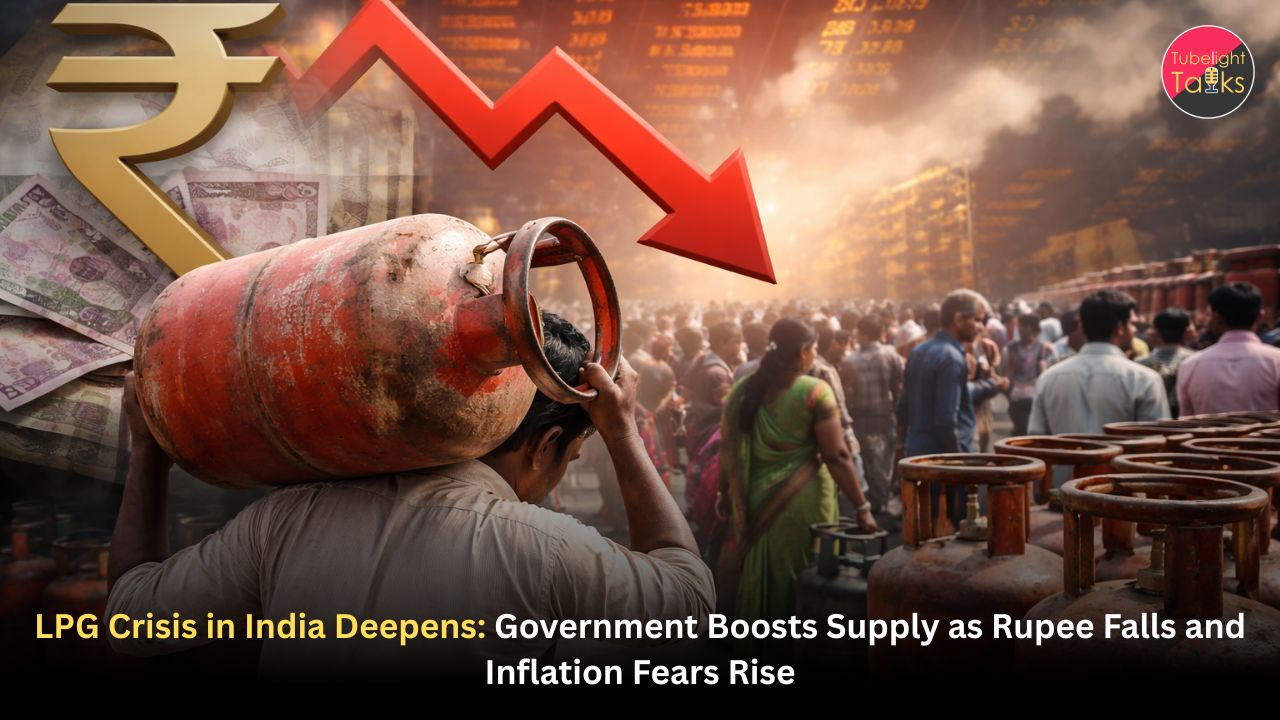
India Faces LPG Crisis in India as Supply Shock and Rupee Slide Raise Inflation Concerns
India’s economic landscape is witnessing significant turbulence as global disruptions begin to reflect in domestic markets. Over the past 24 hours, the government has taken urgent steps to address the LPG crisis in India by increasing allocation, while the Indian rupee has weakened sharply against the US dollar. At the same time, political debates over inflation and fuel pricing are intensifying, signaling potential economic pressure in the coming months.
LPG Shortage Pushes Government to Act
Additional 20% Allocation Announced
To address the immediate supply crunch, the government has approved an additional 20% allocation of commercial LPG to states. This brings the total increase to 50%, aimed primarily at supporting sectors such as hospitality, food processing, and small businesses that rely heavily on LPG for daily operations.
The shortage has been linked to disruptions in global energy supply chains, especially due to tensions in West Asia. As LPG imports become uncertain, domestic distribution systems have come under stress, forcing authorities to act quickly.
Impact on Businesses and Consumers
The hospitality industry, including restaurants and catering services, has been among the worst affected. Rising input costs and inconsistent supply have forced many businesses to either increase prices or cut down operations.
For consumers, while domestic LPG cylinders remain under controlled pricing mechanisms, indirect effects such as higher food prices are already being felt in urban and semi-urban areas.
Rupee Depreciation Raises Alarm Bells
Currency Falls to 93.71 Against US Dollar
The Indian rupee has dropped significantly, settling at 93.71 against the US dollar. This sharp depreciation has raised concerns among economists and policymakers, as it increases the cost of imports—especially crude oil and LPG.
A weaker rupee also impacts inflation directly, as higher import costs translate into increased prices for goods and services across sectors.
Is the 100-Mark in Sight?
Market analysts are increasingly speculating whether the rupee could breach the psychological 100-mark if global conditions worsen. Factors such as rising oil prices, capital outflows, and geopolitical instability are contributing to this downward pressure.
Political Debate Over Inflation Intensifies
Rahul Gandhi’s Warning
Congress leader Rahul Gandhi has warned of a “sharp inflation wave” after the ongoing elections. He has alleged that the government is deliberately holding back fuel price hikes to avoid political backlash during the polling period.
This statement has triggered a political debate, with opposition parties accusing the government of masking the real economic situation, while the ruling side maintains that it is taking proactive steps to stabilize the economy.
Fuel Prices at the Center of the Debate
Petrol, diesel, and LPG prices remain key indicators of inflation in India. Any upward revision post-elections could have a cascading effect on transportation, manufacturing, and household expenses.
Global Factors Driving India’s Economic Stress
West Asia Crisis and Energy Supply Disruptions
The ongoing geopolitical tensions in West Asia have played a major role in triggering the current economic situation. Disruptions in key shipping routes and uncertainty in oil supply have led to volatility in global energy markets.
India, being heavily dependent on energy imports, is particularly vulnerable to such external shocks.
Supply Chain Pressures
Apart from energy, broader supply chain disruptions are also contributing to rising costs. Delays in shipments, increased freight charges, and insurance premiums for cargo have added to the economic burden.
Government’s Balancing Act
Relief Measures vs Fiscal Pressure
While increasing LPG allocation provides immediate relief, it also adds to the government’s fiscal burden. Subsidies, logistical adjustments, and emergency allocations require significant financial resources.
The government is walking a tightrope between providing relief and maintaining fiscal discipline.
Monitoring and Future Steps
Officials have indicated that the situation is being closely monitored. Further measures, including possible price adjustments or additional subsidies, may be considered depending on how global and domestic conditions evolve.
What This Means for the Common Citizen
For the average Indian, these developments could translate into higher living costs in the near future. From food prices to transportation expenses, multiple aspects of daily life may be impacted.
However, government interventions like increased LPG supply aim to cushion the immediate shock and prevent a sudden spike in inflation.
Material Stability and Inner Balance
In times of economic uncertainty, Sant Rampal Ji Maharaj emphasizes the importance of spiritual stability over material fluctuations. According to His teachings, worldly challenges such as financial stress and inflation are temporary, but inner peace achieved through true devotion remains constant.
Sat Gyaan teaches that by focusing on righteous living and devotion to the Supreme God, individuals can maintain mental balance even during crises. This perspective encourages people to remain calm, make wise decisions, and avoid panic-driven actions during economic instability.
FAQs: LPG Crisis in India
1. Why has the government increased LPG allocation?
To address shortages caused by global supply disruptions and support affected industries.
2. What is the current value of the Indian rupee?
The rupee has fallen to 93.71 against the US dollar.
3. Will LPG prices increase soon?
There is no official confirmation yet, but political debates suggest possible revisions after elections.
4. How does a weak rupee affect inflation?
It makes imports more expensive, increasing overall costs of goods and services.
5. Which sectors are most affected by LPG shortages?
Hospitality, food processing, and small businesses are the most impacted.
6. What can citizens do during this economic phase?
Stay informed, manage expenses wisely, and avoid panic decisions while focusing on long-term stability.
Related Stories



Discussion (0)