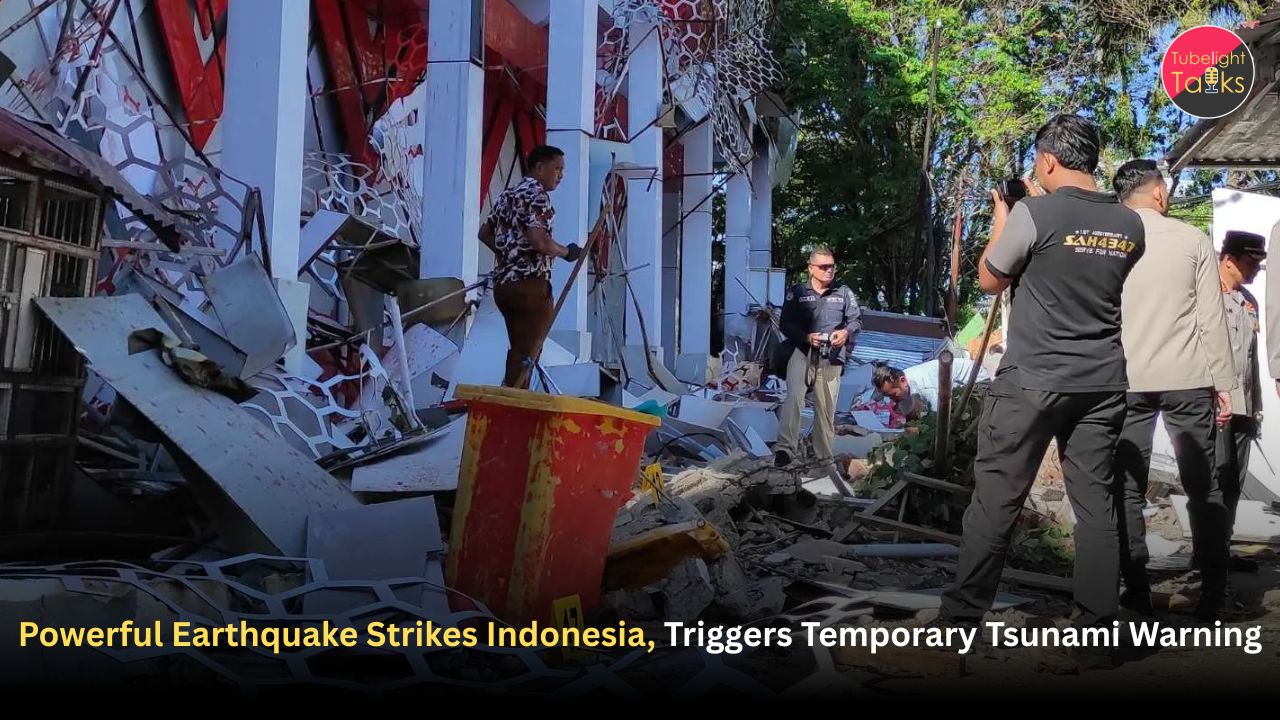
Powerful Earthquake Strikes Indonesia, Triggers Temporary Tsunami Warning and Renewed Regional Seismic Concern
Earthquake Strikes Indonesia: A powerful undersea earthquake struck near Indonesia’s North Maluku region on April 2, triggering a temporary tsunami warning, causing building damage and leaving at least one person dead. The headline figure needs one clarification: early and widely circulated reports described the quake as magnitude 7.4, but Reuters and Indonesia’s BMKG-linked reporting later placed it at 7.6 after revisions.
The quake was centered in the Northern Molucca Sea near Ternate, generated small tsunami waves, and was followed by numerous aftershocks before authorities lifted the warning.
The quake was first reported as 7.4, but later updates revised it upward
Why the magnitude appears different in reports
The user’s 7.4 figure matches many early reports, including AP and several other outlets that initially carried the quake at magnitude 7.4. Reuters, however, later reported the event as a 7.6 earthquake in the Northern Molucca Sea region, while BMKG-linked Antara reporting also referred to it as 7.6 after the agency’s later assessment. That means the safest and most accurate wording is that the quake was initially reported around 7.4 and later revised higher in updated reporting.
Where the earthquake struck
Reuters said the epicenter was in the Northern Molucca Sea, about 580 km south of the Philippines and about 1,000 km from Malaysia, at a depth of 35 km. Other current coverage placed it near Ternate in North Maluku, with strong shaking also felt in Bitung and Manado in North Sulawesi. That location explains why the quake quickly raised regional concern beyond Indonesia alone.
Also Read: Japan’s Heart Stops at 07:42 AM: 6.7 Quake Triggers Tsunami Terror — Then a Miracle in 93 Minutes
The tsunami warning was real, but it did not last long
Small waves were recorded before alerts were lifted
The quake triggered tsunami alerts in Indonesia, the Philippines and Malaysia, according to Reuters. Waves up to 0.75 meters were recorded in North Minahasa, while AP reported a small tsunami and said the warning was later lifted. BMKG-linked Antara also confirmed that Indonesia’s warning was withdrawn after assessment.
Why the warning still mattered
Even when tsunami waves are limited, a warning after a quake of this size is taken seriously because coastal communities often have little time to react. The short-lived alert still forced evacuations and heightened anxiety across nearby islands and coastal zones, showing how quickly a tectonic event in eastern Indonesia can ripple across the region. This is an inference drawn from the warning scope and recorded wave activity described in current reporting.
There was confirmed loss of life and visible structural damage
At least one death and multiple injuries were reported
Reuters reported one fatality, while AP identified the dead as a 70-year-old woman in Manado after a building collapsed. AP also said several people were injured, including at least three hospitalized in Ternate. That means this was not only a seismic event measured by instruments, but a disaster with direct human consequences on the ground.
Damage ranged from light to moderate, with some severe impact
Reuters said Indonesia’s disaster agency reported moderate damage to homes and a church. AP described damage from light to severe, including houses, a church and other structures, while residents also experienced power outages and fled damaged buildings. Early assessments are still evolving, but the quake clearly caused more than minor disruption.
Aftershocks and geological risk are keeping authorities cautious
Numerous aftershocks followed the main shock
Reuters reported about 50 aftershocks, including one of magnitude 5.8, while AP said dozens followed and noted a notable 6.2-magnitude tremor among them. Authorities warned residents to remain cautious and stay away from damaged structures because aftershocks can further weaken buildings and increase risk even after the main warning ends.
The wider tectonic concern is real
Indonesia lies on the Pacific Ring of Fire, one of the world’s most seismically active belts, and AP noted that the country frequently experiences earthquakes and volcanic activity. Reuters also cited USGS analysis describing the Molucca Sea region as active but assessing the likelihood of very large additional casualties and economic losses as relatively low for this specific event.
Why this earthquake drew regional attention across Southeast Asia
It affected more than one coastline psychologically and operationally
Because the alert footprint extended beyond Indonesia to nearby countries and because the epicentral region sits between major island groups, the quake quickly became a Southeast Asia story rather than only a local one. Even where no destructive tsunami materialized, regional authorities and coastal communities had to respond to the possibility.
It also arrived amid broader sensitivity to seismic risk
Large undersea quakes in this part of the world always revive memory of past regional disasters. Current coverage repeatedly emphasized the Ring of Fire context and the region’s exposure to tectonic instability, which is why even a warning that is later lifted can still heighten public fear and official vigilance.
Nature’s force is a reminder of human fragility
Events like this earthquake reveal how quickly human confidence can be shaken by forces beyond control. That connects naturally with the teachings of Sant Rampal Ji Maharaj, which emphasize humility, compassion, truthful living and spiritual awareness instead of pride in temporary worldly security. In moments of natural disaster, people are reminded that material structures are fragile and that inner steadiness, moral conduct and care for others matter deeply when fear spreads.
Call to Action
Follow official warnings and local safety instructions first
People in quake-affected regions should treat aftershock advisories seriously, avoid damaged buildings, and rely on official disaster-management and meteorological updates rather than social-media rumor. The biggest immediate risk after the lifting of a tsunami warning is often not the sea, but weakened structures and complacency.
FAQs: Earthquake Strikes Indonesia
1. Was the Indonesia earthquake 7.4 or 7.6?
Early reports widely described it as 7.4, but later Reuters and BMKG-linked reporting revised the event to 7.6.
2. Did the quake trigger a tsunami warning?
Yes. Indonesia, the Philippines and Malaysia were placed under tsunami alerts before the warning was later lifted.
3. Were tsunami waves actually recorded?
Yes. Reuters reported waves up to 0.75 meters in North Minahasa.
4. Was anyone killed?
Yes. Current reporting confirmed at least one death, a woman in Manado, after a building collapse.
5. Where was the quake centered?
It struck in the Northern Molucca Sea near Ternate in eastern Indonesia.
6. Is the tsunami warning still active?
No. Reuters, AP and BMKG-linked reporting all said the warning was later lifted.
Related Stories










Discussion (0)