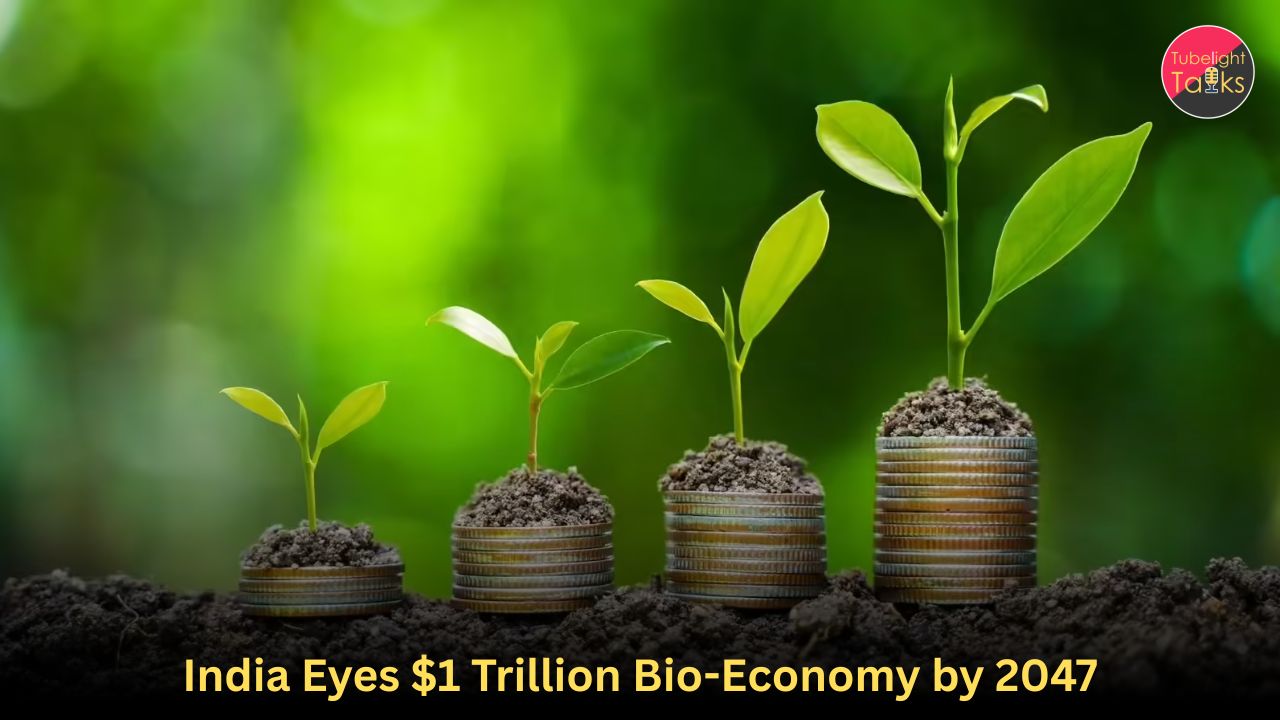
India’s Bio-Economy Set to Reach $1 Trillion by 2047
Union Minister Dr. Jitendra Singh has said that India is on track to build a $1 trillion bio-economy by 2047. The announcement highlights the rapid growth of India’s biotechnology sector, which has expanded significantly in recent years through startups, research institutions, vaccine development, bio-manufacturing, genomics, and agri-biotech innovation. India Eyes $1 Trillion Bio-Economy is expected to play a major role in healthcare, agriculture, climate solutions, green energy, and industrial development.
India’s biotech startups and research ecosystem are becoming central to this transformation. The $1 trillion target reflects the government’s confidence that science-led growth can generate jobs, improve public health, support farmers, and position India as a global leader in affordable and sustainable biotechnology solutions.
Union Minister Dr. Jitendra Singh said India’s bio-economy is projected to reach $1 trillion by 2047, placing biotechnology at the centre of India’s future growth. PIB reported that he described the 21st century as belonging to Bharat and highlighted the country’s expanding biotech strength.
Growth From $10 Billion to $165 Billion
India’s bio-economy has grown from $10 billion in 2014 to more than $165 billion today, according to reports citing the Ministry of Science and Technology. The growth rate of nearly 18% annually shows how quickly biotech is moving from laboratories to markets.
Also Read: India’s Forex Reserves Surge Past $703 Billio
Startups Driving Innovation
The number of biotech startups has grown from around 50 to more than 11,000. This shows that young entrepreneurs, researchers, universities, incubators, and private companies are now working together to create new solutions in healthcare, agriculture, energy, and environment.
Healthcare and Pharma Benefits
Biotechnology can transform healthcare through affordable vaccines, new diagnostics, gene-based research, biologics, and drug discovery. India’s strength in affordable medical innovation can help not only domestic patients but also developing countries that need low-cost healthcare solutions.
Agriculture and Climate Impact
Bio-economy growth is also linked with agriculture, biofertilisers, climate-resilient crops, waste-to-value solutions, and sustainable fuels. These areas can help farmers, reduce chemical dependence, support food security, and provide greener alternatives to traditional industrial processes.
A Roadmap for Viksit Bharat
The $1 trillion bio-economy target is directly linked with Viksit Bharat @2047. If India invests in research, regulatory clarity, biotech manufacturing, skilled manpower, and public-private collaboration, biotechnology can become one of the country’s strongest future sectors.
Science Needs Spiritual Responsibility
Scientific progress becomes beneficial when guided by ethics and compassion. Sant Rampal Ji Maharaj teaches that true knowledge must lead to human welfare, not ego or exploitation. Biotechnology should therefore be used to reduce suffering, protect nature, and improve life, while humanity also remembers the higher aim of spiritual liberation.
Call to Action
Students should explore biotechnology, research careers, bioinformatics, pharmacy, and life sciences. Citizens should support science-led development while also seeking true spiritual knowledge for a balanced and purposeful life.
FAQs on India Eyes $1 Trillion Bio-Economy
Q1. What is India’s bio-economy target?
India aims to reach a $1 trillion bio-economy by 2047.
Q2. Who announced the projection?
Union Minister Dr. Jitendra Singh highlighted the projection.
Q3. How large is India’s bio-economy today?
Reports say it has grown to more than $165 billion.
Q4. How many biotech startups does India have?
Reports state that India has more than 11,000 biotech startups.
Q5. Why is bio-economy important?
It supports healthcare, agriculture, climate solutions, jobs, exports, and innovation.
Related Stories










Discussion (0)