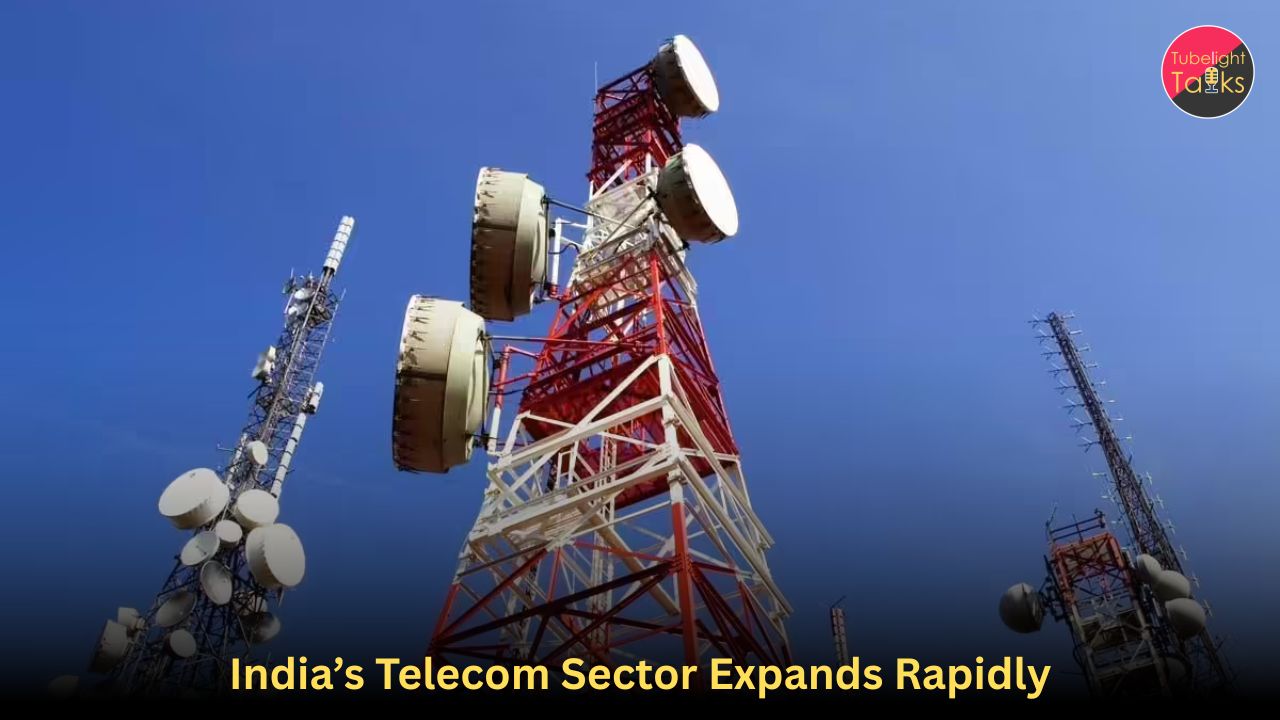
India’s Telecom Sector Expands With Focus on Rural Connectivity
India’s telecom sector has grown significantly over the past decade, with major improvements in mobile connectivity, affordable data, 5G deployment, digital payments, and rural network expansion. Recent reports show that telecom revenue reached ₹3.72 lakh crore in FY25, reflecting the sector’s growing economic importance.
The next major focus is achieving wider connectivity in rural, remote, and border regions. Telecom access is now essential for online education, telemedicine, digital banking, e-governance, agriculture advisories, startups, and emergency communication. India is also preparing for the Bharat 6G Vision, which will require stronger research and development investment.
The sector’s future depends on better service quality, cybersecurity, indigenous technology, and universal digital access.
Revenue Touches ₹3.72 Lakh Crore
PIB reported that India’s telecom sector generated ₹3.72 lakh crore in FY25. The government has highlighted that India is at an inflection point, with policy support, infrastructure, talent, and scale already in place.
Decade of Transformation
News On AIR reported that India’s telecom sector has witnessed transformative growth over the past decade. Affordable data, expanding mobile networks, and large-scale digital adoption have changed how Indians work, study, pay, communicate, and access services.
Rural Connectivity as a Priority
The next major challenge is reaching 100% connectivity in rural and remote regions. Connectivity in villages is vital for telemedicine, online learning, digital payments, e-governance, crop advisories, and rural entrepreneurship.
Bharat 6G Vision
The government has emphasised the Bharat 6G Vision and called for greater industry participation in research and development. PIB noted that Indian operators spend less than 1% of revenue on R&D compared to much higher levels by global majors.
Economic and Social Benefits
Telecom expansion supports startups, digital banking, OTT platforms, emergency communication, logistics, agriculture platforms, and small businesses. It reduces distance between citizens and public services.
Need for Quality and Innovation
India must improve service quality, reduce call drops, strengthen cybersecurity, expand fibre networks, and build domestic telecom equipment capability. Growth must be matched with reliability and trust.
Connectivity Should Serve Knowledge
Sant Rampal Ji Maharaj’s teachings remind us that communication tools should spread truth, wisdom, and positive values. Digital access should not become a path for misinformation, addiction, or negativity. Technology should help people receive true spiritual knowledge and live responsibly.
Call to Action
Citizens should use digital connectivity for education, skill-building, verified information, and social welfare. Youth should explore careers in telecom, cybersecurity, AI networks, and 6G research.
FAQs on India’s Telecom Sector Expands Rapidly
Q1. What was India’s telecom revenue in FY25?
It reached ₹3.72 lakh crore.
Q2. What is the next focus area?
Rural connectivity, R&D, and Bharat 6G Vision.
Q3. Why is telecom important?
It supports education, healthcare, banking, governance, business, and communication.
Q4. What is the R&D concern?
Indian operators spend less than 1% of revenue on R&D.
Q5. How does rural connectivity help?
It brings digital services, learning, telemedicine, and market access to villages.
Related Stories








Discussion (0)