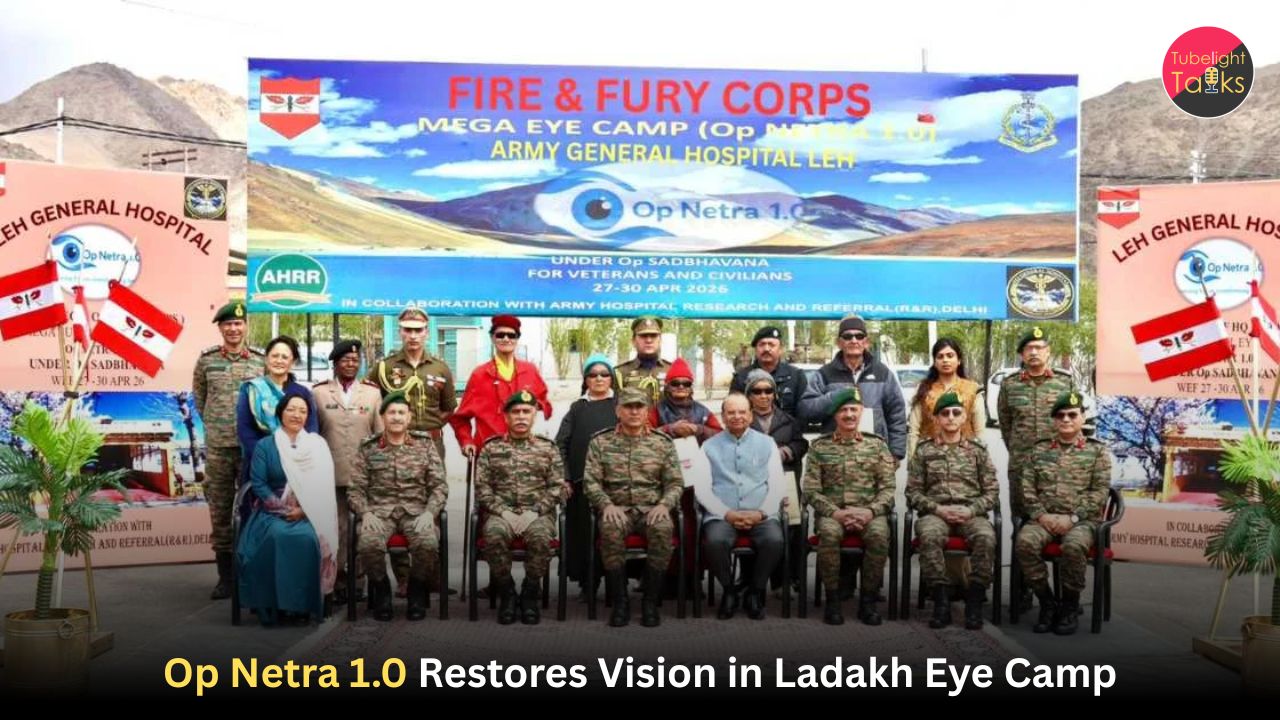
Op Netra 1.0 Success: Indian Army Restores Sight Through High-Altitude Eye Camp in Leh
The Indian Army has successfully conducted Op Netra 1.0, a four-day advanced surgical eye camp at 153 General Hospital in Leh, Ladakh, from April 27 to 30, 2026. The Press Information Bureau reported that the high-altitude mega camp screened 950 patients and performed 214 procedures, including 197 cataract surgeries. The initiative brought specialized eye care to residents from remote and difficult border areas.
Healthcare at 14,000 Feet
Delivering surgery in high-altitude regions is not easy. Ladakh’s difficult terrain, extreme weather, scattered settlements and limited specialist access create serious barriers to healthcare. Op Netra 1.0 addressed these challenges by bringing surgical expertise, equipment and patient support directly to Leh.
Hundreds Screened, Hundreds Treated
Times of India reported that the camp screened 950 patients across seven districts and performed 214 procedures, including 197 cataract surgeries. It also reported that 15 individuals who were previously blind had their vision restored. Patients came from remote regions such as Chushul, Hanle and Durbuk.
Role of Technology and Coordination
The mission used the Op Netra app for patient registration and surgical planning. Advanced medical equipment was airlifted with support from the Indian Air Force. Such coordination shows how technology, military logistics and medical expertise can combine to serve civilians in remote areas.
Why Cataract Surgery Matters
Cataract remains one of the leading causes of preventable blindness. A relatively short surgical procedure can restore vision, independence and livelihood. For elderly citizens and people in remote regions, vision restoration can mean the difference between dependency and dignity.
Also Read: Medical Advancement: Amgen’s Phase 3 TEPEZZA Injection Results Point to a More Convenient TED Option
Indian Army’s Humanitarian Outreach
Op Netra 1.0 shows that the Army’s role in border areas goes beyond security. Medical outreach, disaster response, community welfare and humanitarian assistance build trust and strengthen national integration in sensitive regions like Ladakh.
Restoring Vision, Restoring Dignity
Op Netra 1.0 has shown how targeted medical outreach can transform lives in remote high-altitude regions. For people suffering from cataract or other eye conditions, vision loss affects not only health but also independence, livelihood, mobility, and emotional well-being. When sight is restored, a person regains confidence, dignity, and the ability to participate actively in family and community life. This makes the Indian Army’s initiative deeply humanitarian and socially meaningful.
Healthcare Access in Remote Border Areas
The success of the eye camp also highlights the importance of taking advanced healthcare to areas where people cannot easily travel to large hospitals. Ladakh’s terrain, climate, and scattered population make regular access to specialist medical care difficult. By combining Army logistics, medical expertise, air support, technology, and local coordination, Op Netra 1.0 became a strong example of last-mile healthcare delivery. Such models can inspire more mobile surgical camps in remote mountain, tribal, and border regions.
Service That Brings Light
Restoring eyesight is an act of compassion because it returns independence, confidence and hope. Sant Rampal Ji Maharaj’s teachings emphasize that true service should uplift suffering humanity while guiding people toward spiritual truth. Just as eye surgery removes physical darkness, Sat Gyaan removes the darkness of ignorance and shows the soul the correct path of worship, discipline and salvation.
Call to Action
Bring Healthcare to the Last Mile
Remote communities need more mobile camps, specialist outreach and technology-enabled health services.
Support Preventable Blindness Programmes
Citizens and institutions should encourage eye check-ups, cataract awareness and timely treatment for elderly people.
FAQs: Op Netra 1.0 Restores Vision in Ladakh Eye Camp
1. What is Op Netra 1.0?
It is a high-altitude surgical eye camp conducted by the Indian Army in Leh, Ladakh.
2. When was the camp held?
It was held from April 27 to April 30, 2026.
3. How many patients were screened?
Around 950 patients were screened.
4. How many procedures were performed?
A total of 214 procedures were performed, including 197 cataract surgeries.
5. Why is this important for Ladakh?
It brought specialized eye care to remote, high-altitude communities that often struggle to access advanced medical services.
Related Stories







Discussion (0)