Brain Mapping Breakthrough: RNA Barcode Technique Reveals the Brain’s Hidden Wiring
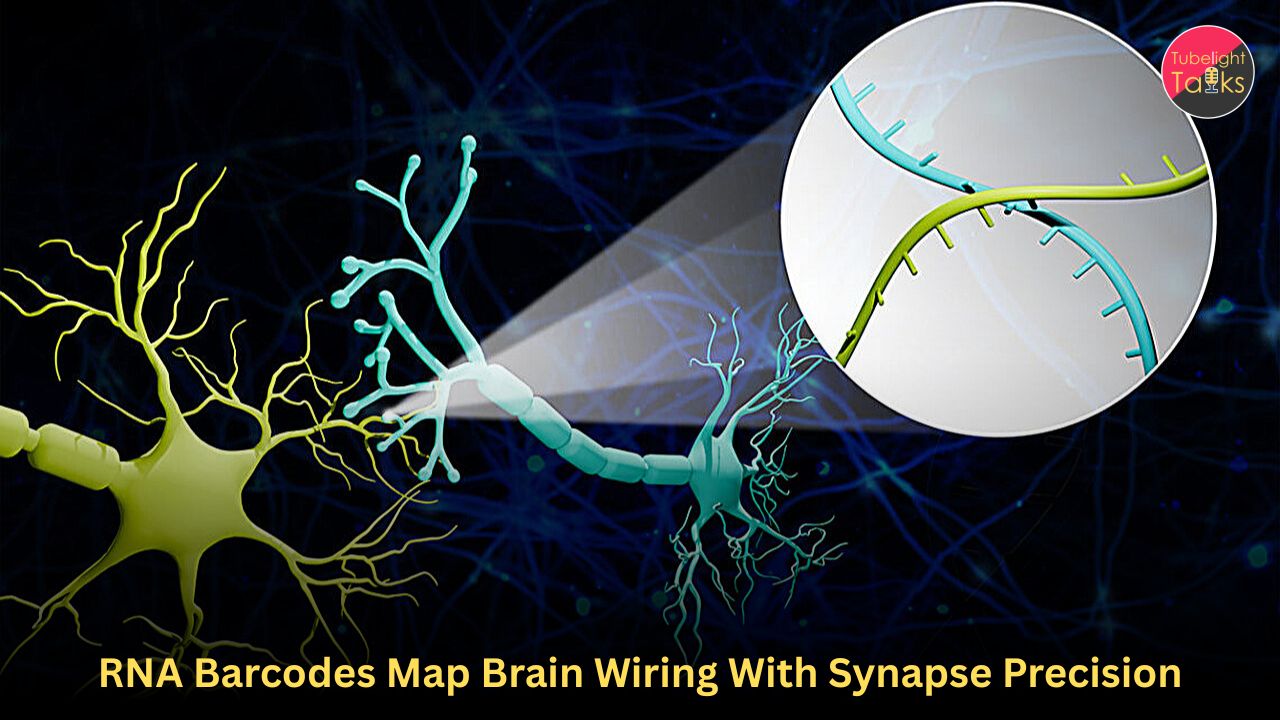
Researchers have developed a powerful new brain-mapping technique that uses RNA “barcodes” to track how neurons connect. The method, called Connectome-seq, was developed by a University of Illinois Urbana-Champaign team and published in Nature Methods. According to ScienceDaily, it can map thousands of neural connections with single-synapse precision, transforming brain wiring research into a faster sequencing-based task. In mouse experiments, the method revealed surprising new neural connections that were previously unknown.
Why Brain Wiring Matters
The brain works through networks of neurons. Understanding which neurons connect, where they connect, and how those circuits change is essential for understanding memory, movement, emotion, learning, and neurological disease. Traditional brain mapping is slow because scientists often need to slice brain tissue, image it, and reconstruct pathways manually.
What Connectome-seq Does
Connectome-seq assigns unique RNA barcodes to neurons. Specialized proteins carry those barcodes to synapses, where neurons communicate. Scientists then isolate synapses and use high-throughput sequencing to identify which barcode pairs are found together, revealing direct neuron-to-neuron connections.
Also Read: Cartilage Regeneration: Stanford Study Raises Hope for Natural Knee Repair
Single-Synapse Precision
The major breakthrough is precision at the synapse level. Study leader Boxuan Zhao said the technology enables simultaneous mapping of thousands of neural connections with single-synapse resolution, a capability not available in current technologies.
Why This Could Help Neurological Disease Research
Brain disorders often involve circuit dysfunction. Alzheimer’s disease, Parkinson’s disease, epilepsy, autism spectrum conditions, and psychiatric disorders may involve changes in how neural networks form, weaken, or misfire. A scalable wiring map could help researchers identify disease-related circuit changes earlier and design more targeted interventions.
A Breakthrough, Not a Treatment Yet
The RNA barcode technique is a research platform, not a direct treatment. It has been demonstrated in mice and must undergo further development before it can guide clinical decisions in humans. However, the ability to map neural circuits faster and at higher resolution may accelerate future therapies.
The Future of Brain Science
If refined further, RNA barcode brain mapping may combine with artificial intelligence, genomics, imaging, and disease models to create deeper maps of neural function. It could help scientists understand not just where neurons are, but how they communicate—and what breaks when disease begins.
Mapping the Mind, Understanding the Self
Brain mapping reveals how complex the human body is, but spiritual wisdom asks an even deeper question: who is the conscious soul within this body? Sant Rampal Ji Maharaj’s teachings explain that the human birth is precious because it offers the chance to know the Supreme God and attain salvation through true worship. Science maps neural circuits; Sat Gyaan guides the soul toward its eternal destination through scripture-based devotion.
Call to Action
Support Ethical Neuroscience
Brain-mapping research should advance with transparency, ethics, and focus on reducing human suffering.
Learn the Science Behind the Mind
Students and readers should follow verified neuroscience updates and understand that research breakthroughs require years of careful validation.
FAQs: RNA Barcodes Map Brain Wiring With Synapse Precision
1. What is the RNA barcode brain-mapping breakthrough?
It is a new technique that uses RNA barcodes to identify direct neuron connections.
2. What is Connectome-seq?
Connectome-seq is the platform that assigns RNA barcodes to neurons and reads barcode pairs at synapses through sequencing.
3. Who developed the method?
A University of Illinois Urbana-Champaign research team developed the technique.
4. Can it treat Alzheimer’s now?
No. It is a research tool, but it may help scientists understand disease circuits and develop future treatments.
5. Why is single-synapse precision important?
It allows scientists to identify exact connection points between neurons, improving understanding of brain networks.
Related Stories










Discussion (0)