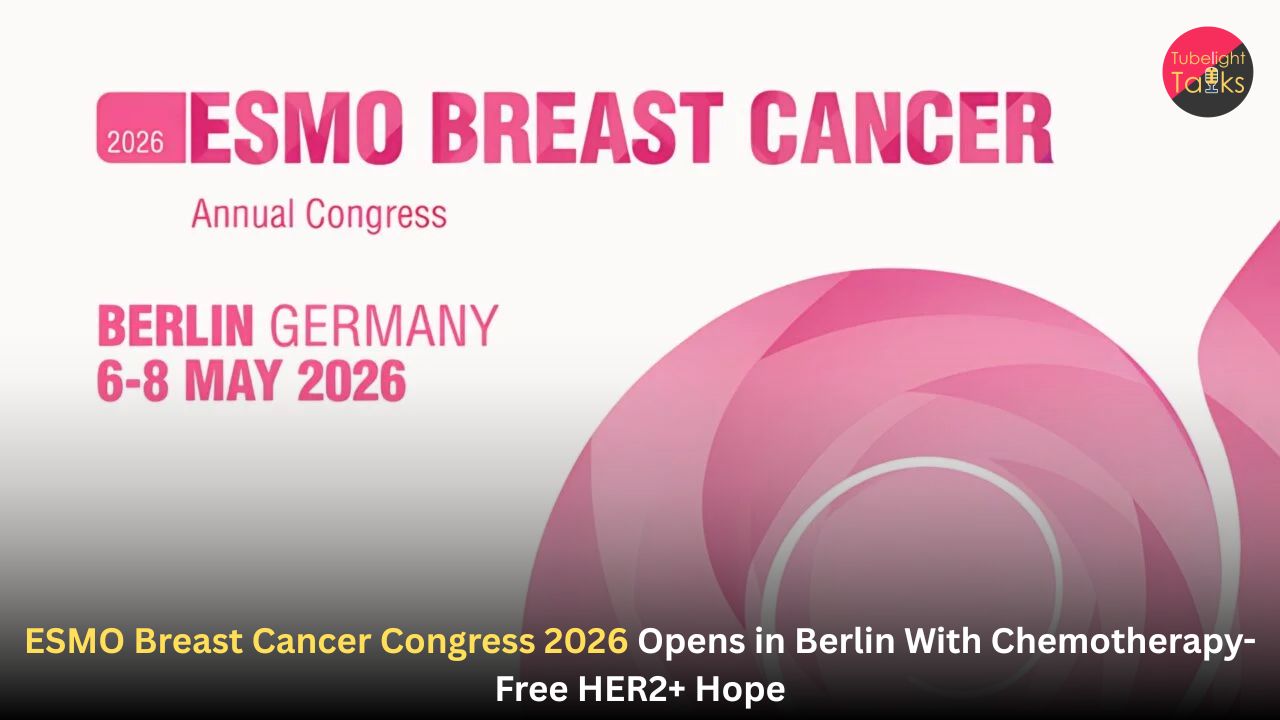
ESMO Breast Cancer Congress 2026 Opens in Berlin With New Hope for Chemotherapy-Free HER2-Positive Breast Cancer Care
The ESMO Breast Cancer Congress 2026 opened today in Berlin, Germany, bringing the global breast oncology community together from May 6 to 8 to discuss the latest advances in breast cancer science and clinical practice. This year, one of the most closely watched themes is chemotherapy-free and chemotherapy de-escalation strategies for HER2-positive breast cancer.
Leading oncologists are focusing on studies such as PHERGain-2, PHERGain follow-up, and DESTINY-Breast11, which aim to personalize treatment, reduce unnecessary toxicity, and identify patients who may safely avoid conventional chemotherapy. The data are promising, but experts continue to stress careful patient selection, long-term follow-up, and medical supervision.
ESMO Breast Cancer Congress 2026: Why Berlin Matters Today
A Global Meeting Dedicated to Breast Cancer Innovation
The ESMO Breast Cancer Congress 2026 is being held in Berlin and online from May 6 to 8, 2026. ESMO describes the meeting as a specialized event dedicated to advancing breast cancer care, bringing together clinicians, researchers, and the global breast cancer community.
The importance of this congress lies in its focused nature. Unlike broad cancer meetings that cover many tumor types, ESMO Breast Cancer concentrates deeply on one disease area. That allows specialists to examine detailed trial results, translational research, biomarkers, imaging strategies, targeted medicines, immunotherapy combinations, antibody-drug conjugates, patient quality of life, and survivorship.
Oncology Central reported that the congress returns to Berlin from May 6 to 8, 2026, with keynote lectures, educational symposia, and expert-led discussions across breast oncology. For patients and doctors, such meetings matter because new data presented at major congresses can influence future treatment guidelines, clinical trial design, regulatory decisions, and shared decision-making.
HER2-Positive Breast Cancer Takes Center Stage
HER2-positive breast cancer remains one of the most important areas of breast cancer research. The American Cancer Society explains that about 15% to 20% of breast cancers make too much HER2, a growth-promoting protein, and these cancers tend to grow and spread more aggressively than HER2-negative cancers.
This aggressive biology once made HER2-positive disease particularly feared. However, the development of HER2-targeted drugs such as trastuzumab, pertuzumab, T-DM1, tucatinib, and trastuzumab deruxtecan has transformed outcomes for many patients. The National Cancer Institute notes that several targeted therapy drugs may be used for HER2-positive breast cancer, including trastuzumab, pertuzumab, tucatinib, T-DM1-related approaches, and trastuzumab deruxtecan.
Now the question is changing. Doctors are not only asking how to treat HER2-positive breast cancer more aggressively; they are also asking when treatment can be safely reduced for selected patients.
Chemotherapy-Free Strategies: What Does the Term Mean?
Not No Treatment, But Smarter Treatment
A chemotherapy-free strategy does not mean that cancer is left untreated. It means selected patients may receive highly targeted anti-HER2 therapy, sometimes combined with endocrine therapy or antibody-drug conjugates, without conventional cytotoxic chemotherapy at certain stages of treatment. These strategies are designed for specific clinical settings and are tested through carefully controlled trials.
This is important because traditional chemotherapy can be effective but also physically demanding. Side effects may include fatigue, nausea, hair loss, neuropathy, blood count suppression, infection risk, fertility concerns, heart strain depending on regimen, and long-term quality-of-life issues. Reducing chemotherapy safely could be life-changing for selected patients.
However, chemotherapy-free care is not appropriate for everyone. HER2-positive breast cancer can be aggressive, and many patients still need chemotherapy as part of curative treatment. The central goal is personalization: giving enough treatment to cure or control cancer while avoiding unnecessary toxicity.
De-Escalation Is a Scientific Process
Chemotherapy de-escalation means reducing treatment intensity when evidence suggests that the same or nearly the same cancer control may be achieved with less toxicity. In breast cancer, this may involve using biomarkers, PET scans, MRI, early response data, pathological complete response, tumor biology, hormone receptor status, and residual disease information to guide treatment.
The ESMO 2026 discussion is therefore not about abandoning chemotherapy. It is about using modern tools to decide who truly needs it, who can receive less, and who should receive more.
PHERGain-2: A Key Chemotherapy-Free Study in Focus
What PHERGain-2 Is Testing
One of the major HER2-positive early-stage breast cancer presentations being watched at ESMO Breast Cancer 2026 is PHERGain-2. OncLive listed abstract 214O as “Chemotherapy-Free, Pathological Complete Response-guided Strategy With Trastuzumab-Pertuzumab and T-DM1 in HER2+ Early Breast Cancer: PHERGain-2,” scheduled for presentation on May 6, 2026.
PHERGain-2 is designed around the idea that treatment can be guided by pathological complete response, often called pCR. pCR generally means that after treatment before surgery, no invasive cancer is found in the breast and sampled lymph nodes. In HER2-positive disease, pCR can be an important indicator of prognosis, although it is not the only measure that matters.
A clinical trial listing describes PHERGain-2 as a multicenter, open-label, single-arm, phase II study assessing the efficacy of a chemotherapy-free pCR-guided strategy with trastuzumab and pertuzumab, given as a subcutaneous fixed-dose combination, and T-DM1 for patients with previously untreated HER2-positive early breast cancer.
Why T-DM1 Matters
T-DM1, also known as ado-trastuzumab emtansine, is an antibody-drug conjugate. It combines HER2 targeting with delivery of a cytotoxic payload to cancer cells. In simpler terms, it is a “targeted delivery” approach: the antibody helps direct the drug toward HER2-expressing cancer cells.
This makes T-DM1 important in chemotherapy-free discussions because it is not conventional chemotherapy in the traditional whole-body sense, even though it carries a cancer-killing drug payload. It may offer a way to intensify treatment for patients who need more therapy without returning directly to standard chemotherapy regimens.
Also Read: Cancer Treatment Breakthrough: Pfizer to Showcase Next-Generation Oncology Pipeline at ASCO 2026
PHERGain: Earlier Evidence Behind the Current Momentum
PET-Guided Chemotherapy De-Escalation
PHERGain is one of the most important studies behind the current chemotherapy-free conversation. The PHERGain trial was designed to test a chemotherapy-free treatment strategy based on dual HER2 blockade with trastuzumab and pertuzumab, using FDG-PET response and pathological response to guide treatment.
MedSIR’s trial description says PHERGain assessed early metabolic effects of neoadjuvant trastuzumab and pertuzumab, with or without endocrine therapy, on tumors and lymph nodes, and examined their predictive value for pathological complete response. It also assessed 3-year invasive disease-free survival in HER2-positive early breast cancer using an FDG-PET response-adapted strategy.
This approach is clinically meaningful because it uses early tumor response to guide later treatment. If a tumor responds strongly, a patient may be able to avoid some chemotherapy. If response is insufficient, treatment can be escalated. This is precision medicine in action.
Three-Year Results Created Major Hope
The 2024 PHERGain results published in The Lancet showed that a PET-based, pCR-adapted strategy could allow a meaningful proportion of patients to avoid chemotherapy while maintaining strong outcomes. PubMed describes PHERGain as designed to assess the feasibility, safety, and efficacy of chemotherapy-free treatment based on dual HER2 blockade in HER2-positive early breast cancer.
A MedSIR/PR Newswire summary stated that about 30% of patients with localized HER2-positive breast cancer could forego chemotherapy while maintaining excellent survival, and that 94.8% of patients following the adaptive strategy remained cancer-free three years after surgery.
These results helped move chemotherapy de-escalation from a theoretical hope into a serious clinical research pathway. At ESMO Breast Cancer 2026, longer-term PHERGain follow-up is again attracting attention because long-term survival data are essential before doctors can broadly change practice.
DESTINY-Breast11: Another Major HER2+ Update
T-DXd Moves Earlier in Treatment
Another major HER2-positive early breast cancer presentation at ESMO Breast Cancer 2026 concerns DESTINY-Breast11. OncLive reported that LBA1 will present residual cancer burden following neoadjuvant treatment with trastuzumab deruxtecan, followed by paclitaxel, trastuzumab, and pertuzumab, compared with dose-dense doxorubicin and cyclophosphamide followed by THP in high-risk HER2-positive early-stage breast cancer.
Trastuzumab deruxtecan, often called T-DXd or Enhertu, is another antibody-drug conjugate that has already reshaped treatment in advanced HER2-positive breast cancer. Reuters reported in December 2025 that the FDA approved Enhertu combined with Roche’s Perjeta as a first-line treatment for adults with advanced HER2-positive breast cancer, based on improved progression-free survival compared with standard treatment in a trial involving 1,157 patients.
The movement of T-DXd earlier into breast cancer treatment is a major research trend. It raises hope that some high-risk patients may achieve stronger responses, but also creates questions about sequencing, safety, cardiac monitoring, interstitial lung disease risk, and how to balance efficacy with toxicity.
Residual Cancer Burden as a Key Measure
Residual cancer burden, or RCB, measures how much cancer remains after neoadjuvant therapy. It provides more detail than a simple yes-or-no pCR result. At ESMO Breast Cancer 2026, experts are watching RCB analyses because they can help identify which patients are doing exceptionally well and which may need additional treatment.
OncLive quoted experts noting that DESTINY-Breast11 and PHERGain-related presentations assess different perspectives of escalation and de-escalation in the preoperative setting for HER2-positive disease. This reflects the modern direction of oncology: not every patient should be treated the same way.
Also Read: Cancer Breakthrough: Smart DNA Drug Shows New Hope for Precision Cancer Treatment
Why Chemotherapy-Free Strategies Are Patient-Centered
Reducing Toxicity Without Reducing Safety
Patients often fear chemotherapy not only because of immediate side effects but also because of the uncertainty it brings to everyday life. Work, caregiving, fertility, body image, emotional health, immune function, and long-term physical strength can all be affected.
A chemotherapy-free or chemotherapy-light pathway could reduce some of that burden for selected patients. But the word “selected” is crucial. Doctors must identify the right patients through tumor biology, stage, imaging response, biomarkers, hormone receptor status, surgery results, and long-term risk.
The goal is not undertreatment. The goal is right treatment.
Quality of Life as a Serious Endpoint
Cancer care is increasingly recognizing that survival is not the only endpoint. Quality of life, anxiety, fatigue, sexual health, fertility, neuropathy, work ability, and emotional recovery also matter. When a patient can achieve excellent cancer control with less toxicity, that is a meaningful medical success.
PHERGain-type strategies matter because they make quality of life part of scientific decision-making rather than an afterthought.
Why Experts Remain Cautious
Early Promise Must Be Confirmed Over Time
Chemotherapy de-escalation in curative breast cancer must be handled with caution because undertreatment can increase recurrence risk. Even strong early response does not always guarantee long-term cure. That is why 3-year, 5-year, and later invasive disease-free survival data are essential.
OncLive listed a PHERGain update at ESMO Breast Cancer 2026 involving 5-year invasive disease-free survival of the strategy-based randomized phase II PHERGain trial. Five-year data can help oncologists judge whether early chemotherapy avoidance remains safe over time.
Trial Patients Are Not Every Patient
Clinical trials use eligibility criteria. Patients may have certain tumor sizes, staging features, organ function, performance status, imaging requirements, and biomarker profiles. A strategy that works in a trial population may not apply to all real-world patients.
Therefore, patients should not stop or avoid chemotherapy based on headlines. Treatment decisions must be made with qualified oncology teams after careful review of pathology, imaging, genomic and biomarker data, stage, medical history, patient preferences, and guideline recommendations.
HER2-Positive Breast Cancer: From Aggressive Disease to Precision Treatment
Targeted Therapy Changed the Story
Before HER2-targeted therapy, HER2-positive breast cancer was associated with poorer outcomes. The arrival of trastuzumab and later pertuzumab, T-DM1, tucatinib, neratinib, and T-DXd changed the treatment landscape.
The NCI explains that HER2 is a protein that helps control breast cell growth, and in HER2-positive breast cancer, too much HER2 causes cells to grow and divide faster than normal. It also lists multiple HER2-targeted therapies used alone or with other treatments.
This transformation is one of the great success stories of targeted oncology. The next step is even more refined: using targeted therapy not only to improve survival but also to reduce unnecessary treatment.
The Rise of Antibody-Drug Conjugates
Antibody-drug conjugates, or ADCs, are among the most exciting areas of breast cancer treatment. T-DM1 and T-DXd are already central in HER2-positive disease. At ESMO Breast Cancer 2026, ADC sequencing in metastatic breast cancer is also being discussed, including studies after prior T-DXd exposure. OncLive reported that SATEEN and HER3-DXd presentations are among the data being watched for metastatic breast cancer ADC sequencing.
This matters because as more ADCs become available, doctors need to know which drug should be used first, which works after another ADC, and how resistance develops.
Also Read: Multi-Cancer Early Detection Blood Test Moves Into Global Spotlight
Imaging, Biomarkers and the Future of Personalization
PET and MRI as Decision Tools
PHERGain used FDG-PET response as part of its adaptive strategy. PHERGain-2 also draws attention to imaging-guided personalization. OncLive reported expert interest in PHERGain-2’s predictive use of MRI to understand whether imaging can help tailor treatment in early-stage HER2-positive breast cancer.
Imaging can show whether a tumor is shrinking, metabolically quieting, or remaining active. If imaging predicts response accurately, oncologists may be able to adjust therapy earlier, avoiding both overtreatment and delayed escalation.
pCR and Residual Disease
Pathological complete response is a powerful concept because it connects treatment response with surgical pathology. If no invasive cancer remains after preoperative therapy, prognosis is often better, especially in aggressive breast cancer subtypes such as HER2-positive and triple-negative disease. But pCR is not perfect. Some patients with pCR still relapse, and some with residual disease still do well.
That is why researchers are increasingly combining pCR, RCB, imaging, circulating tumor DNA, tumor subtype, immune markers, and genomic signatures to improve treatment decisions.
What This Means for Patients Right Now
No Immediate Self-Change in Treatment
Patients should not interpret ESMO Breast Cancer 2026 presentations as permission to skip chemotherapy without medical advice. Many findings presented at congresses require peer review, guideline assessment, regulatory evaluation, and real-world validation.
For now, the key message is hope with caution. Chemotherapy-free strategies are becoming more scientifically credible for selected HER2-positive early breast cancer patients, but the right approach depends on individual medical details.
Questions Patients Can Ask Their Doctors
Patients with HER2-positive breast cancer may ask their oncology team whether they are candidates for treatment de-escalation trials, whether imaging response will guide therapy, what role pCR plays in their plan, whether ADCs are appropriate, and how long-term recurrence risk is being evaluated.
Such conversations should be respectful and evidence-based. A patient’s desire to avoid chemotherapy is understandable, but the oncology team’s duty is to protect long-term survival.
Hope, Discipline and the Deeper Meaning of Healing
Scientific progress in cancer care shows how dedicated human effort can reduce suffering, but true healing also requires inner strength, compassion, and moral clarity. The teachings of Sant Rampal Ji Maharaj and Sat Gyaan emphasize that human life should be guided by true worship according to holy scriptures, righteous conduct, humility, and freedom from harmful habits such as intoxication, dishonesty, violence, corruption, and social evils.
In the context of cancer treatment, this spiritual understanding gives emotional support to patients and families facing fear, uncertainty, and pain. Medical science works to heal the body, while Sat Gyaan guides the soul toward peace and the true purpose of human life. Just as oncology is moving toward personalized treatment, spiritual life also requires the correct path shown by a complete Saint, not blind tradition or incomplete knowledge. True devotion gives courage, patience, and hope during difficult phases of life.
Call to Action: Follow Evidence, Support Patients and Seek True Knowledge
The opening of ESMO Breast Cancer Congress 2026 in Berlin is a hopeful moment for breast cancer care. Researchers are working to make HER2-positive treatment more precise, less toxic, and more patient-centered. Families, doctors, and patients should follow authentic medical sources, discuss treatment options with qualified oncologists, and avoid making decisions based only on headlines or social media posts.
At the same time, every individual should also seek true spiritual knowledge, listen to the discourses of Sant Rampal Ji Maharaj, understand Sat Gyaan, and adopt a life based on truth, compassion, discipline, devotion, and moral conduct. Scientific treatment can help protect the body, but true spiritual knowledge gives direction to the soul. The article structure follows the uploaded Team 5 content style reference.
FAQs on ESMO Breast Cancer Congress 2026 and HER2-Positive Chemotherapy-Free Strategies
1. When and where is ESMO Breast Cancer Congress 2026 taking place?
ESMO Breast Cancer Congress 2026 is taking place in Berlin, Germany, from May 6 to 8, 2026, with online participation also available.
2. Why are chemotherapy-free strategies important in HER2-positive breast cancer?
Chemotherapy-free strategies aim to reduce unnecessary toxicity for selected patients while maintaining strong cancer control. They are being tested through trials using targeted HER2 therapy, imaging response, pathological complete response, and residual disease assessment.
3. What is PHERGain-2?
PHERGain-2 is a phase II study testing a chemotherapy-free, pCR-guided strategy using trastuzumab-pertuzumab and T-DM1 in HER2-positive early breast cancer. It is one of the key studies being discussed at ESMO Breast Cancer 2026.
4. What did the earlier PHERGain study show?
PHERGain tested a PET-guided, response-adapted strategy based on dual HER2 blockade. Published summaries reported that about 30% of patients could avoid chemotherapy while maintaining excellent 3-year outcomes, with 94.8% remaining cancer-free three years after surgery under the adaptive strategy.
5. What is HER2-positive breast cancer?
HER2-positive breast cancer is a subtype in which cancer cells make too much HER2 protein, causing faster growth and division. The American Cancer Society says about 15% to 20% of breast cancers are HER2-positive.
6. Should patients stop chemotherapy because of these new studies?
No. Patients should never stop or avoid chemotherapy without advice from their oncology team. Chemotherapy-free strategies are being studied for selected patients and require careful medical evaluation, imaging, pathology, biomarkers, and long-term follow-up.
Related Stories










Discussion (0)