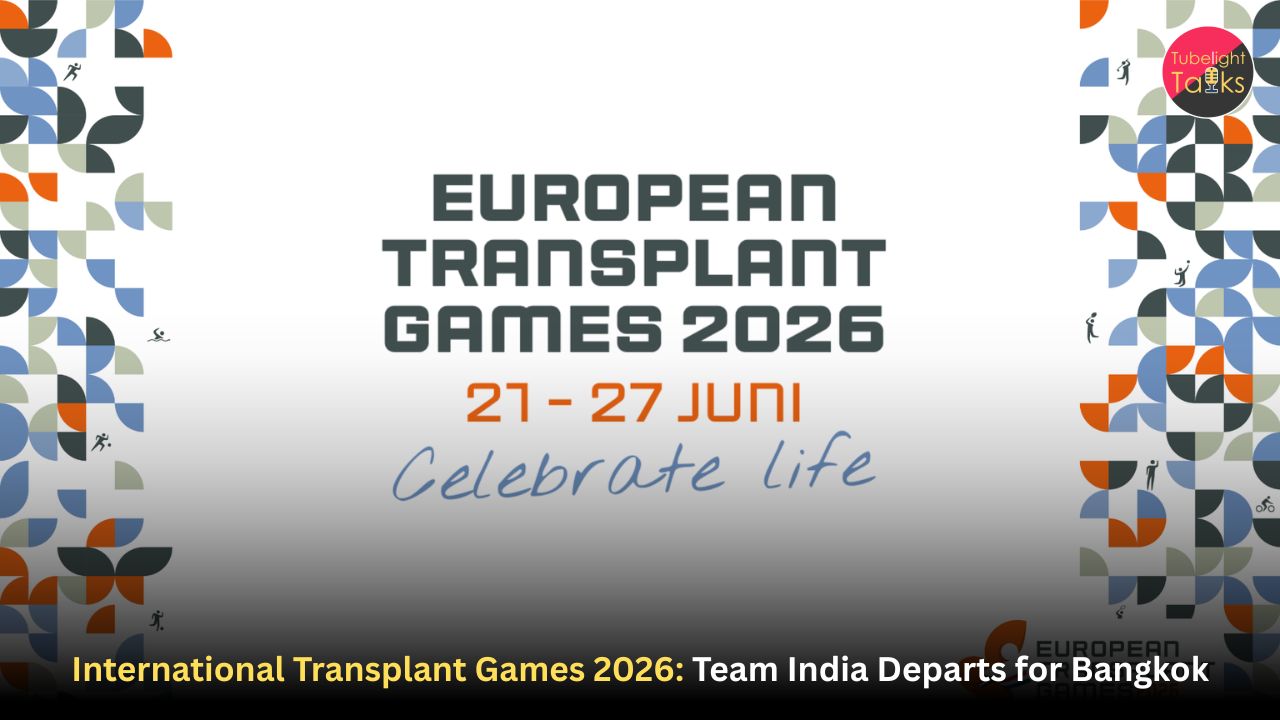
From Surgery to the Stadium: Indian Transplant Team Heads to International Games
A remarkable group of 15 Indian athletes has departed for Bangkok, Thailand, to participate in the International Transplant Games 2026. What makes this team unique is that every single member is a recipient of a life-saving organ transplant—ranging from kidneys and livers to hearts and lungs.
This departure marks a significant moment for India’s medical and athletic community, as these individuals seek to demonstrate that organ failure is not the end of a productive life, but rather the beginning of a second chance. Beyond the pursuit of medals, the team is traveling with a mission to advocate for better post-operative sports infrastructure in India.
The Miracle of Organ Donation and Recovery
The journey of these 15 athletes is a testament to the advancements in medical science and the altruism of organ donors. For many on the team, just a few years ago, walking a mile was an impossible task due to chronic organ failure. Through successful transplants and rigorous post-operative rehabilitation, they have transformed themselves into elite competitors. Their presence at the International Transplant Games serves as a living advertisement for the efficacy of organ donation, encouraging more people to register as donors and save lives.
Training for International Competition
Preparing for an international athletic meet while managing life as a transplant recipient requires a specialized approach. These athletes must balance intense physical training with a strict regimen of immunosuppressant medications and frequent medical check-ups. The team includes swimmers, sprinters, and table tennis players who have been training at various regional centers. Their preparation highlights the need for specialized coaches who understand the physiological limits and requirements of transplant survivors, ensuring they can push their limits safely.
Also Read: Global Health Assembly Approves Landmark Organ Transplant Initiative for 2026
Advocating for Sports Infrastructure in India
One of the primary goals of the team is to draw the government’s attention to the lack of dedicated sports facilities for transplant survivors in India. While there is significant focus on mainstream sports, the niche area of “Transplant Sports” remains largely ignored. The athletes are calling for the recognition of transplant sports by the Ministry of Youth Affairs and Sports, which would provide them with better funding, training facilities, and travel grants for international events. They argue that sports are the best form of long-term rehabilitation for survivors.
Diverse Backgrounds of the Athletes
The 15-member team represents a cross-section of Indian society, with members coming from small towns and large metropolitan areas alike. Among them is a 24-year-old kidney recipient from Maharashtra who took up swimming as part of his recovery and a 50-year-old liver recipient from West Bengal who is competing in race-walking. Their diverse backgrounds prove that the need for organ transplants—and the potential for recovery—cuts across all age groups and social strata, making it a truly national health priority.
Raising Awareness on the Global Stage
The International Transplant Games in Bangkok bring together thousands of athletes from over 50 countries. For the Indian team, this is an opportunity to interact with global counterparts and learn about the support systems available in other nations. Many developed countries have robust national transplant sports associations that receive significant corporate and government backing. The Indian contingent hopes to bring back these insights to help formalize and strengthen the transplant sports movement back home.
The Role of Support Groups and Families
Behind every athlete on the team is a network of supportive family members, doctors, and transplant coordinators. The emotional and financial cost of a transplant is high, and the journey toward athletic competition is even more demanding. The team has been supported by various NGOs and private healthcare groups that believe in the “Sports for Life” philosophy. These organizations emphasize that the goal of a transplant is not just survival, but the restoration of a full, active, and competitive lifestyle.
Overcoming Stigma and Misconceptions
In many parts of India, there is still a social stigma associated with organ transplants, with many believing that recipients are “fragile” or “incomplete.” By competing in high-intensity sports on a global platform, these 15 athletes are effectively shattering these myths. They are demonstrating that with the right medical care and a disciplined lifestyle, a transplant recipient can be as fit, if not fitter, than many people with their original organs. This helps in changing the societal narrative from one of “sickness” to one of “strength.”
Looking Toward the Podium and Beyond
As the team lands in Bangkok, the focus shifts to the competition. While winning medals for India is a high priority, the athletes maintain that their biggest victory has already been won on the operating table and during their recovery. Regardless of the final tally, their participation is a message of hope to the thousands of patients currently on transplant waiting lists across India. It serves as a reminder that a second chance at life can lead all the way to an international sports stadium.
The Precious Gift of the Human Body
Sant Rampal Ji Maharaj teaches that the human body is the most precious gift from the Almighty, provided to us so that we may perform the true worship of the Supreme God. He explains that while medical science can repair the body, the soul requires the “medicine” of the True Name (Satnam) to be healed. He advocates for a healthy lifestyle and the avoidance of all intoxicants, as the body is the “temple” in which the soul resides.
Sant Rampal Ji Maharaj emphasizes that we should use this second chance at life—whether given by a transplant or by finding a True Guru—to attain the ultimate goal of human birth: salvation. To understand the deep spiritual science of the human body and the soul, visit jagatgururampalji.org.
FAQs: International Transplant Games 2026
1. What are the International Transplant Games?
They are a global multi-sport event for individuals who have undergone life-saving organ transplants, aimed at promoting organ donation awareness.
2. How many athletes are representing India in Bangkok?
A team of 15 courageous transplant survivors has departed for Bangkok to represent India in various sporting events.
3. What types of transplants have these athletes undergone?
The team includes recipients of various organs, including kidneys, livers, hearts, and lungs.
4. What is the main challenge for these athletes?
They must balance rigorous athletic training with the management of their health and the intake of necessary immunosuppressant medications.
5. What are the athletes advocating for in India?
They are seeking better sports infrastructure, official recognition for transplant sports, and more funding for survivors to participate in international events.
Related Stories







Discussion (0)